
How the Islamic Regime\’s Policies Cripple Iran\’s Economy and Online Commerce
How the Islamic Regime\’s Policies Cripple Iran\’s Economy and Online Commerce Read More »
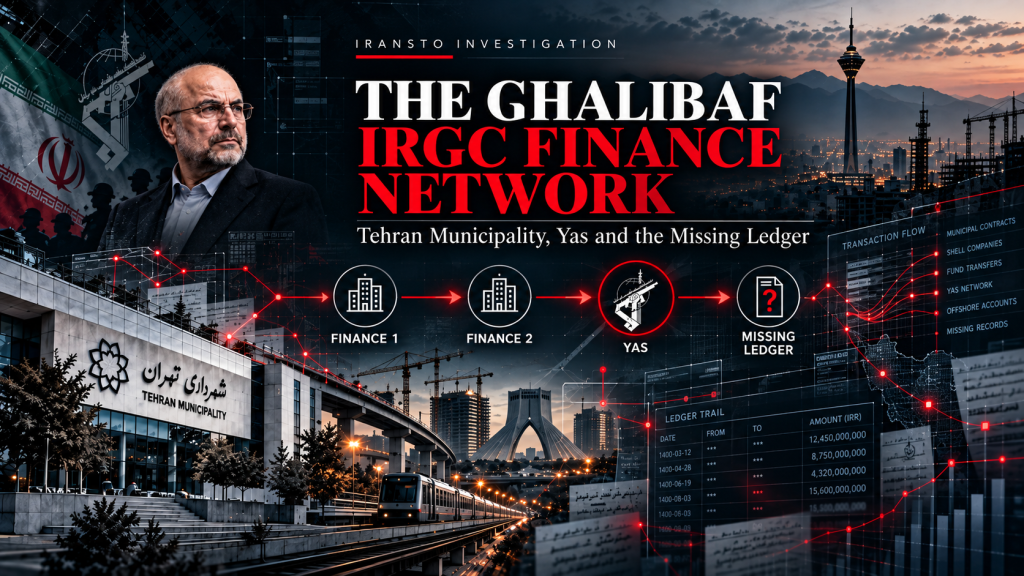
Introduction: The Ledger Behind the Network The Yas corruption case exposed only part of a much larger financial system built inside Tehran City Hall during Mohammad Bagher Ghalibaf’s mayoralty. From 2009 onwards, Tehran Municipality committed public property, development rights, municipal revenues and other city assets to financing arrangements with the IRGC Cooperative Foundation. IranSTO refers
The Ghalibaf IRGC Finance Network: Tehran Municipality, Yas and the Missing Ledger Read More »

Introduction: The Security Logic That Survived Command On 7 January 2026, one day before the principal lethal escalation of the nationwide uprising, Mohammad Bagher Ghalibaf chaired a closed parliamentary session in Tehran. Ahmad-Reza Radan, commander of FARAJA, the regime’s national Law Enforcement Command, and a deputy intelligence minister briefed MPs on the security and
Mohammad Bagher Ghalibaf: From Police Command to Managerial Repression Read More »
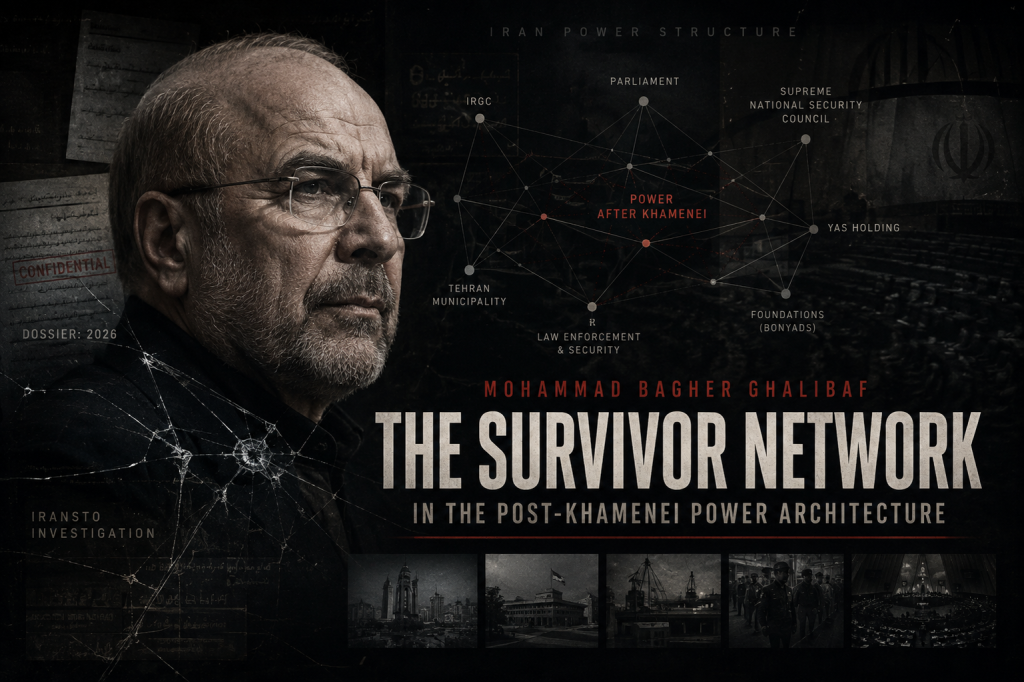
Introduction: The Man Who Survived the System Any serious attempt to map the Mohammad Bagher Ghalibaf power network has to begin with a problem that conventional factional analysis cannot explain. There is no formal organisation carrying his name, no stable military bloc publicly answerable to him and no evidence that the senior commanders, security
Mohammad Bagher Ghalibaf: The Survivor Network in the Post-Khamenei Power Architecture Read More »

Introduction: The Institution Between the Leader and the State The Supreme National Security Council (SNSC) serves as the point where the Islamic Republic translates supreme authority into coordinated state action. It brings the presidency, parliament, the judiciary, security ministries, senior military commanders and two representatives of the Supreme Leader into the same constitutional structure.
Inside the Supreme National Security Council: The Architecture of Security Power Read More »
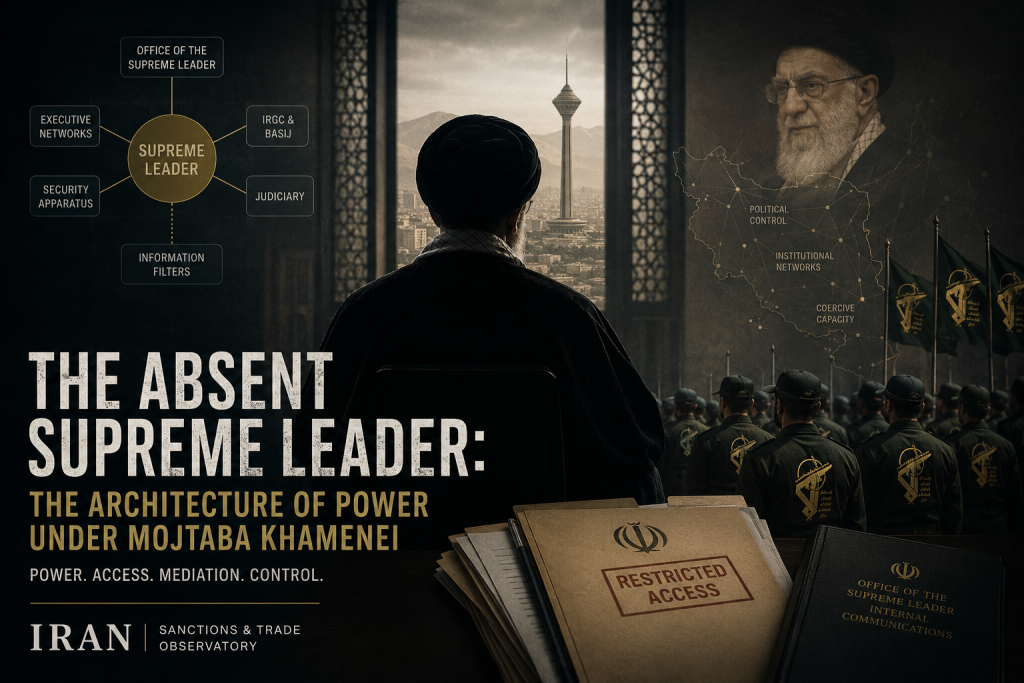
Introduction: The Leadership Changed. The Machinery Did Not Stop. On 8 March 2026, Mojtaba Khamenei became Supreme Leader of the Islamic Republic, formally placing him at the apex of a political system whose constitution concentrates extraordinary military, political and institutional authority in the office of the Leader. For years, the central question surrounding Ali
The Absent Supreme Leader: The Architecture of Power Under Mojtaba Khamenei Read More »
Introduction — The Authority the State Never Defined For more than two decades, Mojtaba Khamenei appeared repeatedly at the edges of the Islamic Republic’s most consequential political and security decisions. His name surfaced in accounts of electoral intervention, relations with the Islamic Revolutionary Guard Corps, the management of political crises and the increasingly restricted circle
Mojtaba Khamenei and the Architecture of Connective Authority Read More »
Introduction Vahid Haghanian’s role within the executive architecture of the Office of the Supreme Leader cannot be understood through biography alone. His significance lies not in the offices he formally occupied, but in the executive functions he performed inside one of the Islamic Republic’s most opaque institutions. Every political system relies upon an institutional mechanism
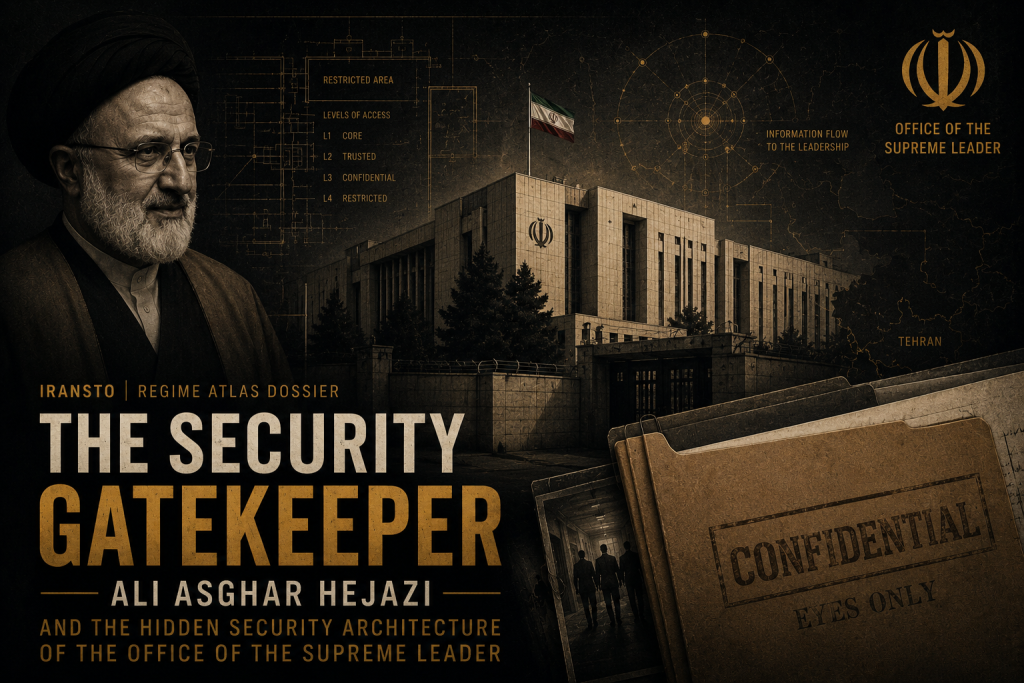
Introduction The Security Architecture of the Office of the Supreme Leader has received remarkably little scholarly attention despite occupying one of the most strategically important positions within the political system of the Islamic Republic. Political systems are usually analysed through the people who stand in front of them. Presidents deliver speeches, ministers announce policy,
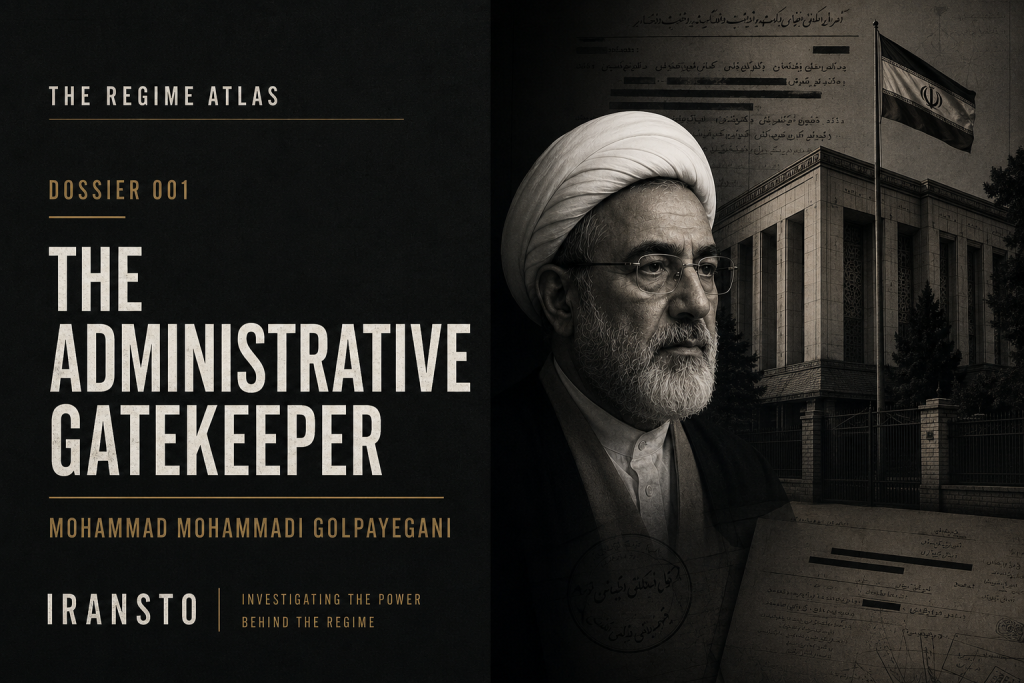
Introduction Power is commonly understood through those who exercise it in public. Presidents deliver speeches, ministers announce policy, military commanders appear before the media and heads of state dominate political headlines. They become the recognised face of government, shaping both domestic narratives and international perceptions. Yet the visible exercise of authority should not be confused
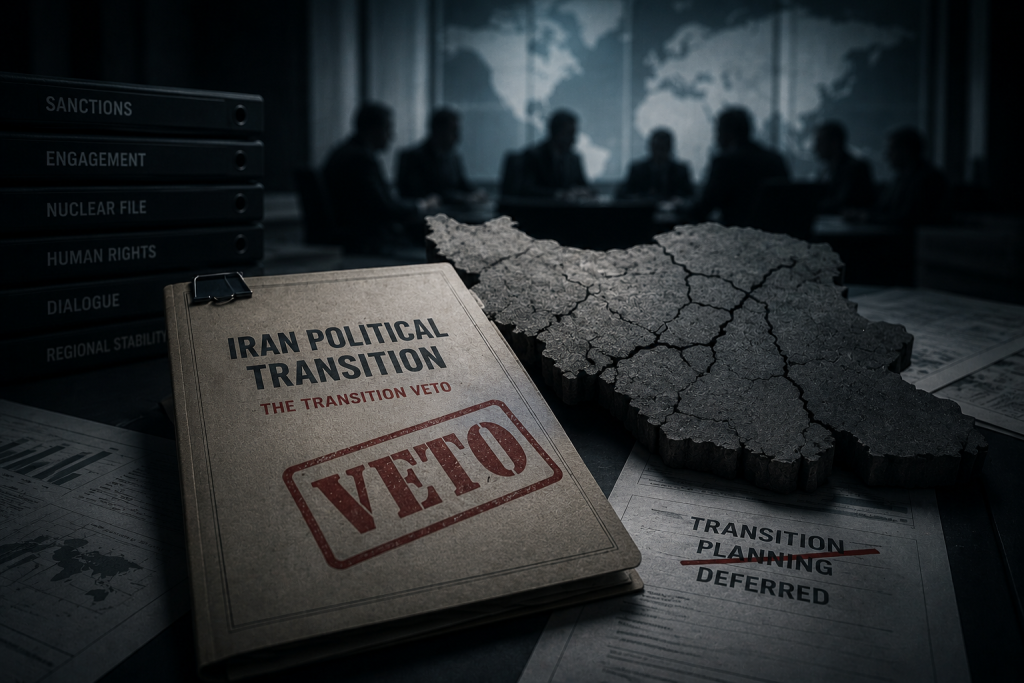
How Foreign Governments Keep Iran’s Political Future in Permanent Suspension Introduction The Transition Veto describes a recurring pattern in international policy towards Iran. If January 2026 did not fundamentally change the way foreign governments approached the Islamic Republic, it is reasonable to ask what possibly could. That question lies at the heart of this
The Transition Veto Read More »