

A Human Rights Report on the January 2026 Mass Killings in Iran
This report is based on open-source evidence, eyewitness testimony, medical documentation, and publicly available material. Due to the risk of retaliation, some sources remain anonymous.
SECTION I — EXECUTIVE CONTEXT: A STATE BUILT ON VIOLENCE
The Architecture of Killing in the Islamic Republic
The mass killings that unfolded during the January 2026 protests in Iran did not emerge from chaos, miscalculation, or momentary panic. They were the outcome of a long-standing system of governance built on coercion, impunity, and the routine use of lethal force against civilians. To understand what occurred during those days, it is essential to recognise a fundamental reality: violence in the Islamic Republic is not a failure of governance; it is one of its core instruments.
From its inception in 1979, the Islamic Republic established political survival through bloodshed. Executions, purges, mass arrests, and extrajudicial killings were not reactive measures but foundational tools used to eliminate dissent, consolidate authority, and instil fear. Over four decades later, that logic has not evolved; it has become more systematised, bureaucratised, and technologically refined.
The events of January 2026 represent not an aberration, but the most recent — and perhaps most revealing — manifestation of this structure.
A Pattern, Not an Anomaly
International observers often describe mass killings in Iran as “crackdowns”, implying a temporary deviation from normal governance. This framing is fundamentally misleading.
The Islamic Republic has demonstrated a consistent pattern:
- 1980s: Mass executions of political prisoners, culminating in the 1988 prison massacres
- 1999: Violent suppression of student protests
- 2009: Systematic killings during the Green Movement
- 2017–2019: Lethal force against economically driven protests
- 2022: Nationwide repression following the killing of Mahsa Amini
- 2026: Coordinated large-scale killings across multiple cities
Each phase follows the same operational logic:
- Delegitimise the protest as foreign-instigated
- Deploy security forces with broad lethal discretion
- Suppress information through internet shutdowns
- Intimidate the families of victims
- Deny responsibility
- Wait for international attention to fade
This cycle has repeated with alarming consistency.
January 2026: The Point of Escalation
What distinguishes the January 2026 killings is not only their scale, but their organisation.
Evidence collected from multiple cities indicates:
- Coordinated deployment of armed units
- Use of live ammunition against unarmed civilians
- Targeting of vital areas (head, neck, upper torso)
- Attacks carried out from elevated positions
- Assaults inside and around medical facilities
- Removal of bodies before identification
- Suppression of medical reporting
- Coercion of families to remain silent
These are not the hallmarks of crowd control. They are indicators of pre-authorised lethal engagement.
The Role of Command Responsibility
One of the most critical aspects of the January 2026 killings is command responsibility.
In Iran’s political structure:
- Security forces do not operate autonomously
- The judiciary does not act independently
- Provincial authorities do not control the rules of engagement
- Ultimate authority lies with the Supreme Leader
Operational doctrine, rules of engagement, and deployment of force fall under centralised command structures directly or indirectly linked to the Office of the Supreme Leader and the Islamic Revolutionary Guard Corps (IRGC). This eliminates ambiguity.
The scale, coordination, and consistency of killings across provinces indicate:
- Prior authorisation
- Clear operational guidelines
- Anticipation of civilian casualties
- Institutional tolerance for lethal outcomes
In international legal terms, this establishes command responsibility. [17][18]
Why This Report Exists
This report does not aim to document every death. It does not attempt to replace forensic investigations. It does not rely on emotional appeal.
Its purpose is more specific — and more consequential:
- To demonstrate systematic intent
- To document patterns of state violence
- To establish continuity across decades
- To expose the architecture behind the killings
- To show that January 2026 was not a breakdown of order, but its logical outcome
The Islamic Republic did not lose control. It exercised it.
What occurred was not chaos. It was governance by execution.
What Follows
The sections that follow will:
- Trace how mass killing becomes state policy
- Explain how the chain of command functions in practice
- Document how hospitals and legal systems were co-opted
- Analyse how information was suppressed domestically and abroad
- Demonstrate how international silence enabled escalation
- Establish why this moment marks a point of no plausible denial
This is not a narrative of tragedy. It is a record of responsibility.
SECTION II — COMMAND, CONTROL, AND RESPONSIBILITY
How Killing Becomes State Policy in the Islamic Republic
Any serious analysis of mass violence in Iran must begin with how power is structured. Unlike conventional states, the Islamic Republic does not operate under a dispersed or accountable chain of command. Authority is vertically concentrated, opaque, and deliberately insulated from legal scrutiny.
The Architecture of Authority
At the apex stands the Supreme Leader. Under Iran’s constitution and security doctrine:
- The Supreme Leader commands:
- the IRGC
- the Basij
- intelligence services
- the judiciary
- state broadcasting
- armed forces and internal security coordination
- The President and cabinet have no independent control over:
- rules of engagement
- crowd-control doctrine
- use of lethal force
- emergency security decisions
This is not symbolic. It is operational. Every large-scale internal security deployment, especially those involving lethal force, runs through command structures that ultimately report to the Office of the Supreme Leader.
2.2 How Orders Flow: From Political Decision to Trigger Pull
The Islamic Republic does not rely on spontaneous violence. It operates through layered command chains designed to distribute responsibility while preserving deniability:
- Strategic authorisation
- issued implicitly or explicitly by senior leadership
- framed as “national security” or “countering sedition”
- Operational translation
- carried out by IRGC command units
- coordinated with intelligence and law enforcement
- Tactical execution
- Basij forces
- special police units
- plainclothes operatives
- armed IRGC detachments
- Post-action management
- control of hospitals and morgues
- intimidation of families
- media suppression
- legal immunity for perpetrators
This architecture has been refined with each protest cycle since 1999.
2.3 Why These Killings Were Not “Excessive Force”
International law distinguishes between:
- excessive force (unauthorised or rogue actions)
- crimes committed under state policy
January 2026 falls squarely into the second category. Indicators include:
- Simultaneous live ammunition use across provinces
- consistent targeting patterns (head/neck/chest)
- elevated firing positions
- attacks near medical facilities
- rapid body removal
- suppression of forensic documentation
- threats against hospital staff
- demands for silence for body release
These are not panicked actions. They are hallmarks of pre-authorised lethal engagement.
2.4 Responsibility Leads to Ali Khamenei
Under the constitutional structure of the Islamic Republic, ultimate authority over all armed forces rests with Ali Khamenei. He is Commander-in-Chief of the IRGC and holds final authority in national security matters. There is no legal mechanism that allows a nationwide, multi-city lethal deployment at this scale without central authorisation or consent.
In authoritarian systems, silence from the top is not neutrality — it is approval.
2.5 Legal Responsibility Under International Law
Under:
- The Rome Statute [17]
- The ICCPR
- The UN Convention Against Torture
- The UN Basic Principles on the Use of Force and Firearms [18]
The following principles apply:
- Command responsibility: leaders are criminally responsible if they knew or should have known crimes were occurring and failed to prevent or punish them.
- Crimes against humanity: widespread or systematic attacks directed against civilians, including murder, torture, persecution.
- No statute of limitations: crimes against humanity do not expire.
2.6 The Judiciary: From Law to Laundering
One of the central enablers of mass killing in Iran is the judiciary itself. Rather than acting as a safeguard, it functions as:
- a legitimising body for repression
- a tool for post-crime normalisation
- a mechanism to block accountability
Pre-approved detention orders, closed-door rulings, charges based on coerced confessions, and death sentences following sham trials transform the judiciary into an extension of the security apparatus.
2.7 Transition
With the command structure established, the next step is unavoidable: to document how policy became practice, through weapons, shooting patterns, body handling, hospital raids, and forensic indicators.
SECTION III — FROM ORDERS TO BULLETS
How State Violence Was Executed on the Ground
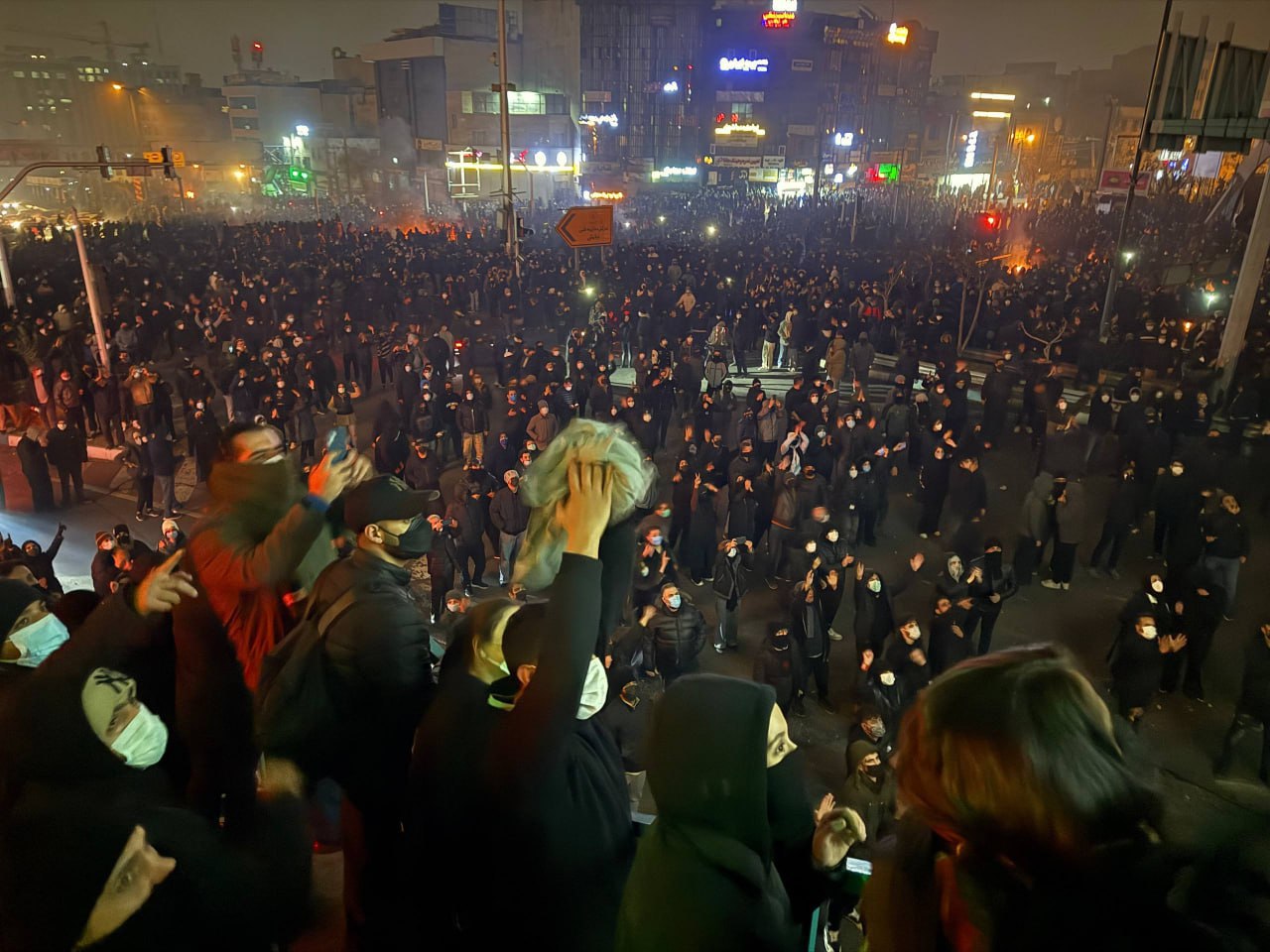
What unfolded during the January 2026 protests was not a breakdown of order. It was a centrally coordinated campaign of lethal repression, executed with repetition, precision, and political intent.
3.1 This Was Not Chaos — It Was Policy
The consistency of tactics across cities, the uniformity of injury patterns, and the synchronised behaviour of security forces leave no space for ambiguity. This was not crowd control. It was a state operation designed to kill, intimidate, and erase dissent.
3.2 A National Pattern of Killing
Across provinces, identical patterns emerged:
- live ammunition used against unarmed civilians
- shots fired at the head, chest, and spine
- targeting of fleeing protesters
- snipers positioned on rooftops
- fire directed into dense crowds
- blocking of medical access
- arrests of wounded individuals inside hospitals
No local commander independently reproduces identical tactics across dozens of cities without higher instruction.
3.3 Execution, Not Enforcement
Medical and visual evidence indicate patterns incompatible with lawful crowd control:
- entry wounds consistent with execution-style shots
- shots delivered from behind at close range
- multiple shots to the incapacitated bodies
- gunfire aimed at vital organs
- victims shot while attempting to flee
Under international law, this constitutes extrajudicial execution and supports classification as crimes against humanity.
3.4 Militarisation of Civilian Control
The Islamic Republic did not rely solely on riot police. It deployed:
- IRGC units
- Basij militias
- plainclothes operatives
- intelligence agents
- armed security forces with military-grade weapons
This is what authoritarian failure looks like: a state treating its people as an enemy force.
3.5 Intent Made Visible
Intent is not inferred from slogans. It is inferred from repeated operational choices:
- lethal targeting zones
- elevated firing positions
- coordinated multi-city engagement
- immediate concealment operations
- absence of any internal investigation
- public praise for forces after killings
This is not a question of “mistakes”. It is a record of design.
SECTION IV — HOSPITALS AS CRIME SCENES
Medical Neutrality Under Attack
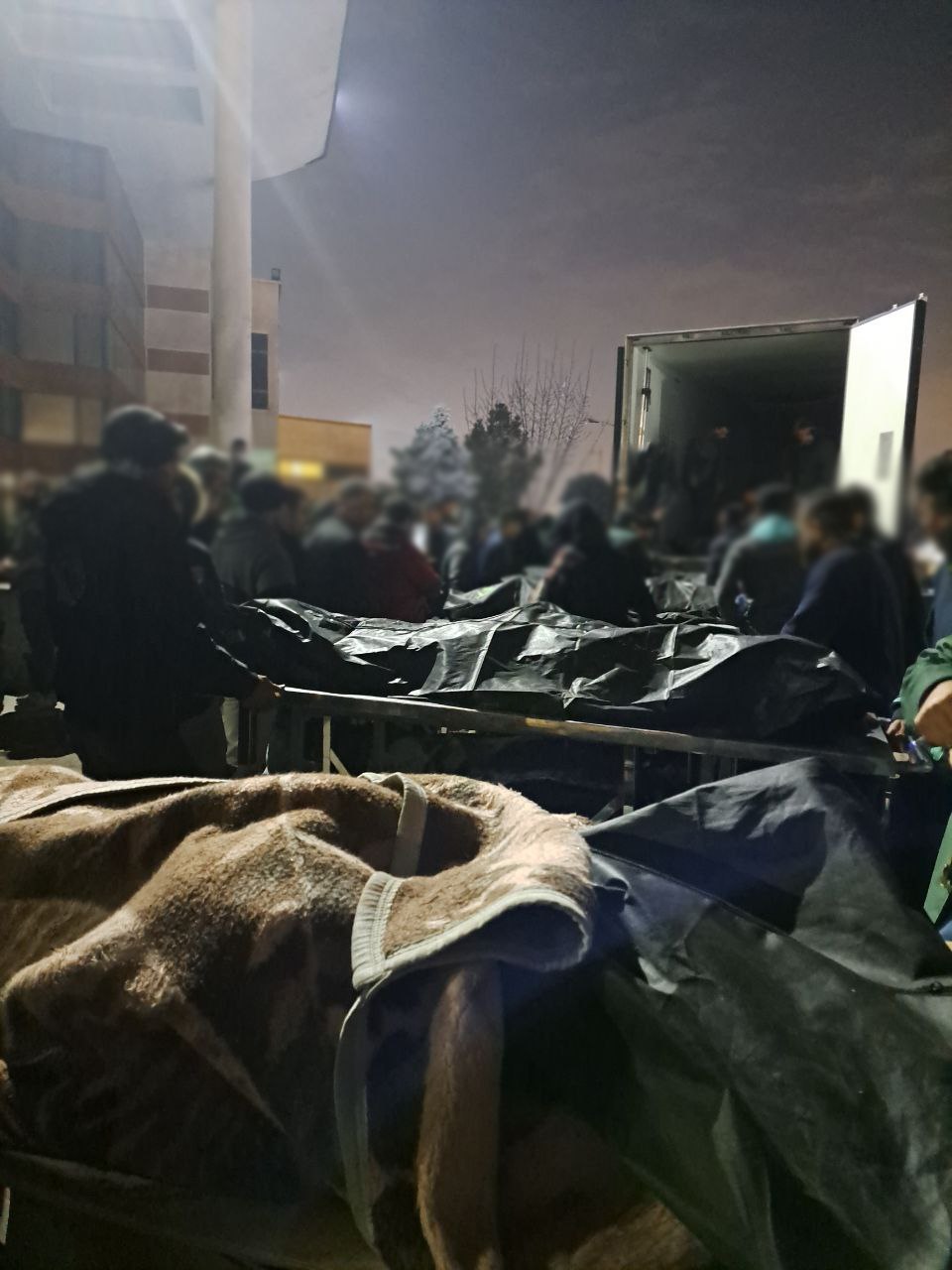
4.1 Hospitals Were Not Shelters — They Were Targets
During the crackdown, hospitals across Iran ceased to function as medical facilities. They were transformed into extensions of the security apparatus, used to:
- track wounded protesters
- prevent the documentation of injuries
- remove bodies before identification
- intimidate medical staff
- erase physical evidence of state violence
Hospitals became secondary execution zones.
4.2 Wounded Protesters as Targets of Arrest
Verified patterns include:
- armed forces entering hospitals without warrants
- Injured protesters removed from beds
- patients arrested while bleeding or unconscious
- medical records confiscated
- families denied access
- names removed from hospital logs
In multiple cases, injured individuals were taken directly from emergency rooms to detention facilities without stabilising care.
4.3 Execution Inside Medical Facilities
Evidence indicates some victims were killed inside or immediately outside hospitals:
- close-range gunshot wounds after admission
- shots to the head/upper torso
- security forces preventing treatment before death
- bodies removed without death certificates
These acts constitute extrajudicial executions under medical custody.
Abduction of the Wounded: Enforced Disappearance
Patterns reported:
- ambulances redirected
- patients transferred to unknown locations
- families denied information
- hospitals claiming patients were “never admitted”
- agents posing as medical staff
Some reappeared in detention. Others never resurfaced.
4.5 Threats Against Doctors and Nurses
Documented intimidation includes:
- threats of arrest for treating protesters
- forced confidentiality pledges
- interrogation of doctors
- detention of hospital administrators
- orders to falsify causes of death
This violates medical neutrality and fundamental ethical standards.
4.6 Confiscation and Concealment of Bodies
Bodies were:
- removed without family consent
- transferred to undisclosed locations
- buried without documentation
- returned only after a silent agreement
- withheld unless families paid large sums
Demands reportedly ranged from 200 million to over 1 billion tomans.
4.7 Hospitals as Instruments of Fear
By turning hospitals into danger zones, the regime:
- prevented the wounded from seeking care
- increased fatality rates
- destroyed trust in public institutions
- erased evidence before documentation
A wounded protester faced a calculated dilemma: seek help and risk disappearance — or bleed in silence.
4.8 Legal Assessment
The documented actions constitute:
- crimes against humanity
- enforced disappearance
- extrajudicial killing
- torture
- obstruction of medical care
- persecution on political grounds
These crimes accumulate. They do not expire.
SECTION V — THE ARCHITECTURE OF SILENCE
How the Regime Covered Its Crimes
5.1 Silence as Strategy, Not Consequence
What followed the killings was not chaos. It was coordination. The regime activated a multi-layered architecture of silence designed to erase evidence, isolate victims, and fracture public memory before it could harden into accountability.
Silence is not the absence of information. It is an operational objective.
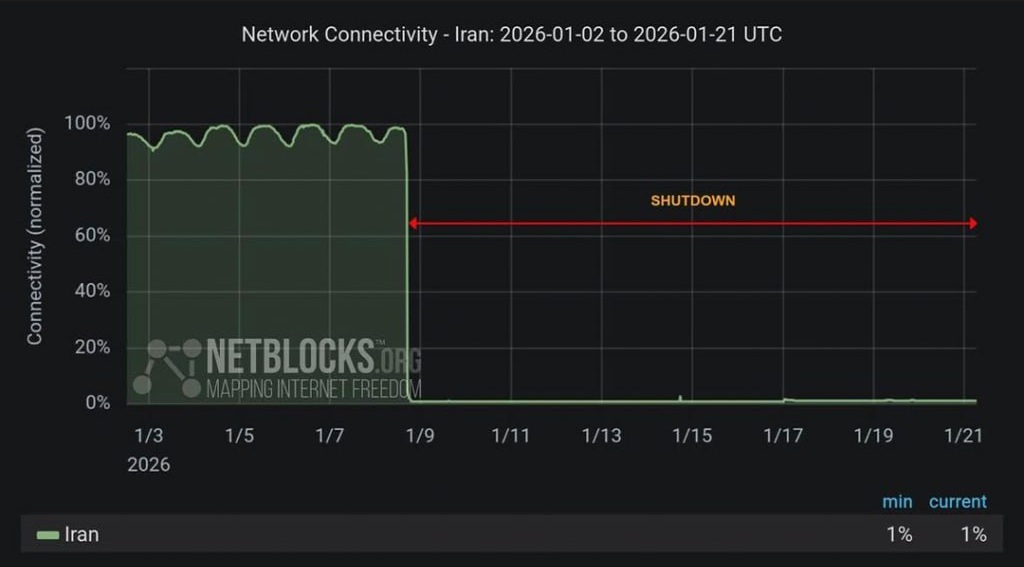
5.2 The Information Blackout
Authorities initiated:
- nationwide internet throttling
- regional blackouts
- disruption of mobile networks and SMS
- targeted VPN protocol blocking
- pressure on domestic ISPs to log and hand over metadata
The objective was to prevent coordination, block documentation, and delay global awareness.
5.3 The Militarisation of Medical Space
Hospitals became controlled security environments:
- armed presence inside the wards
- injured, detained before treatment
- staff interrogated
- patient identities transferred to security agencies
- families blocked from access
This eliminated witnesses and destroyed evidence.
5.4 The Management of the Dead
Patterns included:
- delayed or denied release of bodies
- forced burials under surveillance
- pressure to falsify causes of death
- compensation-for-silence offers
- threats preventing funerals
The dead were managed because the dead testify.
5.5 Narrative Control: Manufacturing Ambiguity
State media deployed a familiar script:
- victims labelled “rioters” or “agents”
- deaths blamed on “unknown attackers”
- Responsibility deflected to “chaos”
- independent reporting framed as propaganda
The aim is not belief. It is ambiguous because ambiguity blocks accountability.
5.6 Criminalising Witnesses
Those who documented or spoke faced:
- arrests
- phone confiscation
- coerced confessions
- propaganda charges
- threats against families
Truth became dangerous by design.
5.7 Why This Matters Legally
What emerges is a coherent pattern of state conduct:
- extrajudicial killings
- enforced disappearances
- denial of medical treatment
- obstruction of justice
- collective punishment
This supports classification as crimes against humanity.
5.8 Silence as the Final Weapon
The regime relies on fear, exhaustion, isolation, and time.
Silence is its final weapon, but silence only works when it is accepted.
This time, it is not.
INTERLUDE — HOW MASS KILLING WAS HIDDEN IN PLAIN SIGHT
In every mass atrocity, violence is only half the operation. The other half is narrative control.
From the first hours of the crackdown, the Islamic Republic activated a refined playbook: connectivity collapsed in protest-heavy areas first; hospitals were sealed off digitally before they were surrounded physically; images were contained before they could circulate. State media continued broadcasting calm and denial.
International response followed a predictable tempo: monitoring, restraint, dialogue, verification. This language created temporal distance between events and accountability. By the time statements were drafted, bodies had been removed, witnesses intimidated, and evidence degraded.
What the world initially saw was protest footage, smoke, crowds, and distant gunfire. What was missing were the close-range wounds, the body-handling, the hospital raids, the forced burials, and the intimidation of families. That absence was produced.
This interlude exists to make one point unavoidable: the killings did not occur in darkness. They occurred behind manufactured invisibility. The next section documents what that invisibility concealed, not as interpretation, but as evidence.
SECTION VI — THE MECHANICS OF KILLING
How the Islamic Republic Executed a Civilian Population
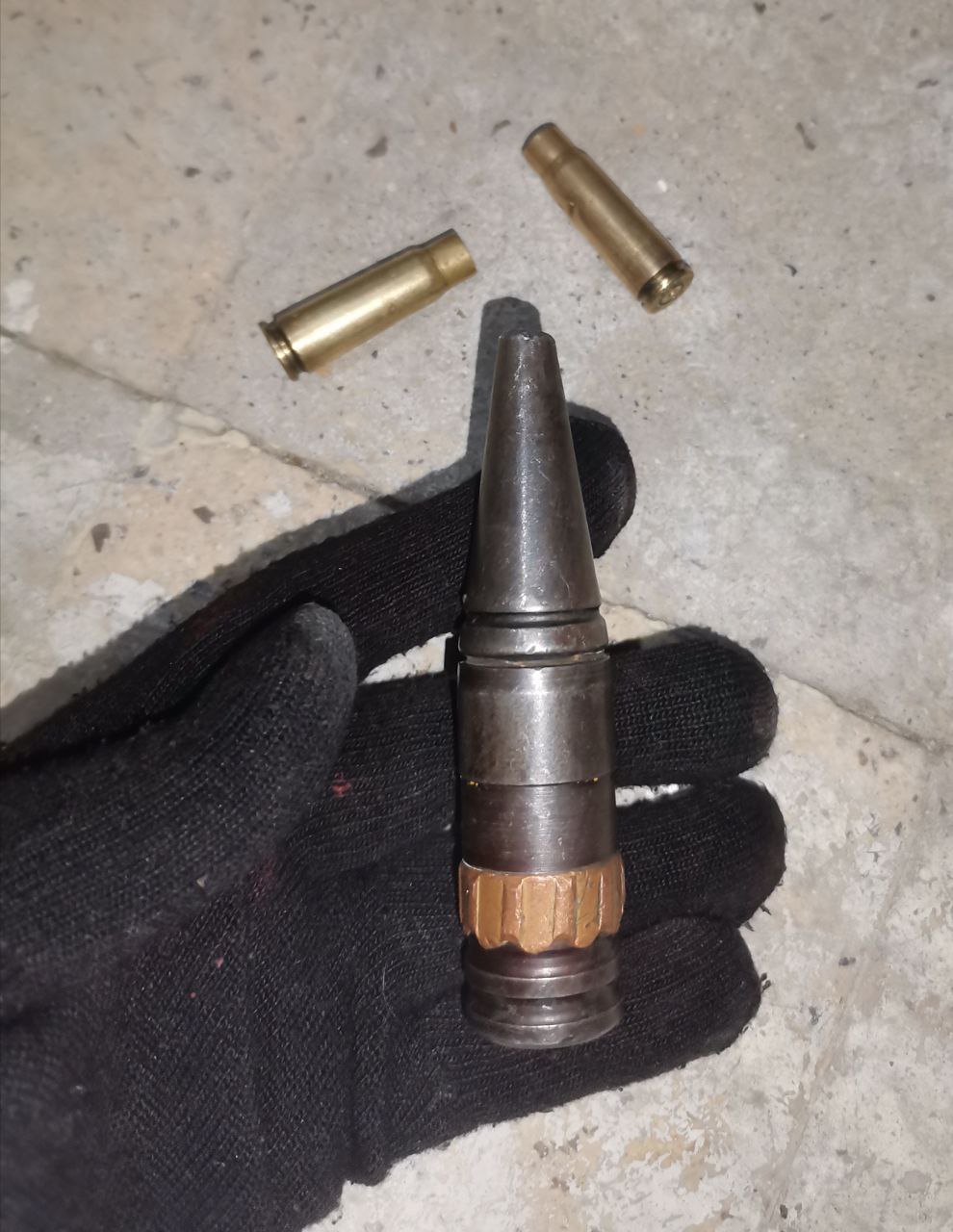
What unfolded in January 2026 was not crowd control. It was a coordinated killing operation executed by state forces under a unified chain of command.
6.1 Responsibility Is Not Diffuse
Ali Khamenei retains constitutional authority over the IRGC, Basij, intelligence services, and the judiciary. Operational coordination occurs through IRGC regional commands, FARAJA, the IRGC Intelligence Organisation, and provincial security councils chaired by regime-appointed governors.
Orders move downward. Compliance moves upward.
6.2 The Use of Lethal Force Was Deliberate
Evidence indicates:
- live ammunition deployed from early hours
- targeted shooting rather than warning fire
- concentration on upper body zones
- elevated firing positions
- coordination between ground and plainclothes units
In multiple cities, forces fired at fleeing protesters and into crowds without standard escalation protocols.
6.3 Hospitals as Enforcement Nodes
Hospitals were used as screening centres for repression:
- security inside emergency wards
- wounded, detained while being treated
- staff interrogated
- patient data seized or altered
- injuries disguised in records
This directly increased fatality risk and destroyed documentation.
6.4 Evidence of Execution-Style Killings
Patterns reported:
- shots to head/neck/upper torso
- close-range fire indicators
- bodies with signs of restraint
- victims shot while fleeing or incapacitated
The recurrence across crackdowns (2019, 2022, 2026) demonstrates institutional memory, not individual misconduct.
6.5 Disappearance and Control of the Dead
Families reported:
- forced burials without autopsy
- night burials under supervision
- threats against funerals
- extortion framed as “fees”
- falsified causes of death
Death itself became classified.
6.6 Why Accountability Was Impossible
No independent investigation was permitted. Instead:
- blanket denials
- state-media scapegoating
- self-investigation by security forces
- prosecution of families for “spreading lies”
This was a law used as cover for violence.
6.7 Why This Was a Crime, Not a Crackdown
Widespread and systematic attacks against civilians, coordinated by state actors, followed by concealment and intimidation, meet the threshold of crimes against humanity.
SECTION VII — THE BODIES, THE NUMBERS, AND THE DISAPPEARED
How Mass Killing Was Concealed and Normalised
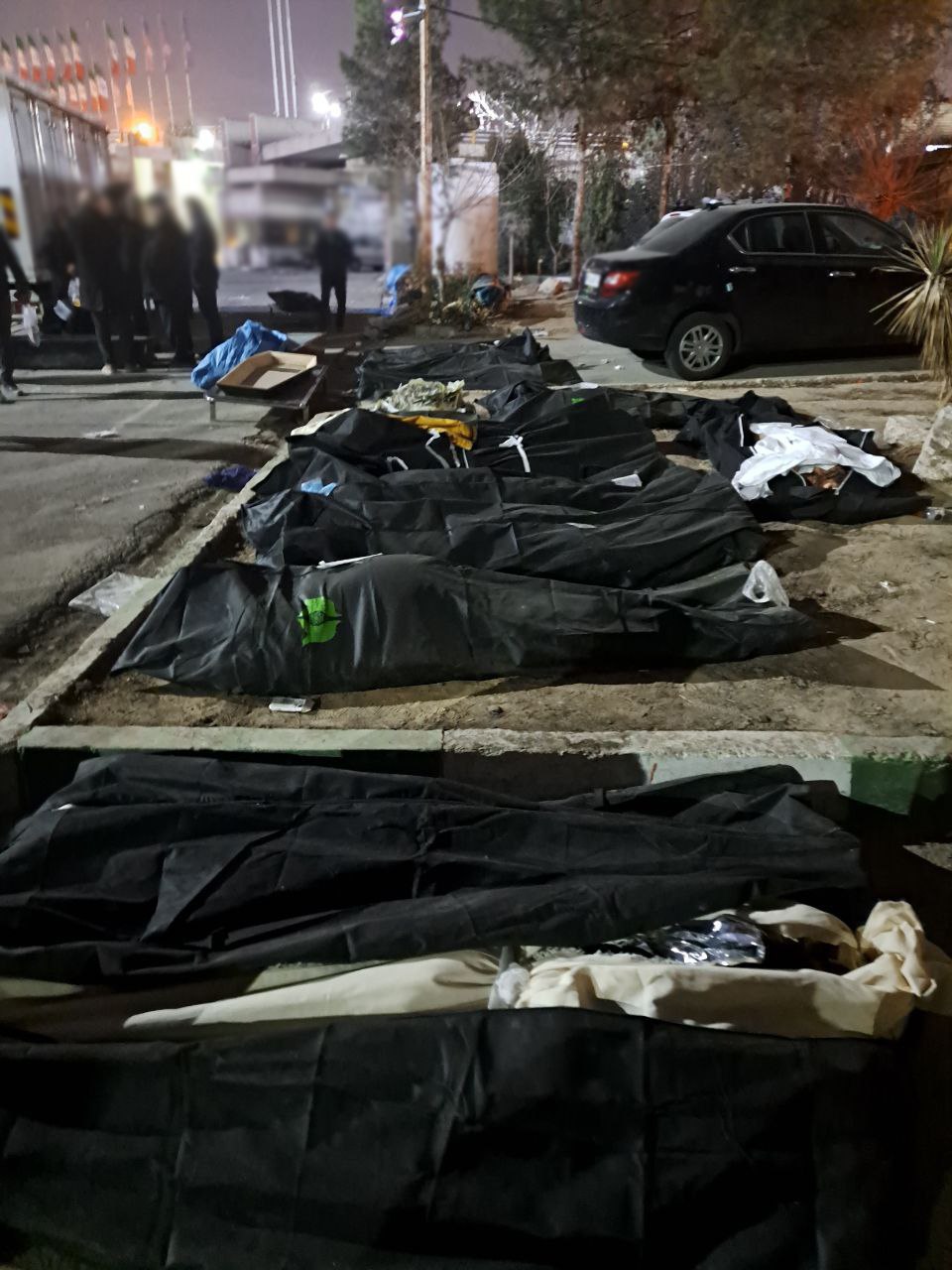
7.1 The Numbers They Admit, and the Numbers They Conceal
Official state-affiliated sources have acknowledged approximately 36,500 deaths. Independent field reporting, hospital testimony, and burial documentation indicate 43,000 to 80,000, with credible estimates above 100,000 once unregistered deaths are accounted for.
The discrepancy exists because:
- Many bodies never reached hospitals
- Many deaths were recorded under false causes
- victims were buried without documentation
- families were threatened into silence
- Medical records were altered or destroyed
In authoritarian systems, official numbers are not measurements; they are political tools.

7.2 Bodies That Never Reached Hospitals
Evidence indicates:
- bodies removed directly from protest sites
- victims dying in homes after being denied care
- families warned not to seek treatment
- armed units confiscating bodies before emergency services arrived
Preventing hospital admission reduces official numbers and removes a paper trail.
7.3 Hospitals as Crime Scenes
Armed control of wards, arrests from beds, threats to staff, altered records, and executions via denial of care mark a systematic attack on medical neutrality.
7.4 Mass Burials and Forced Silence
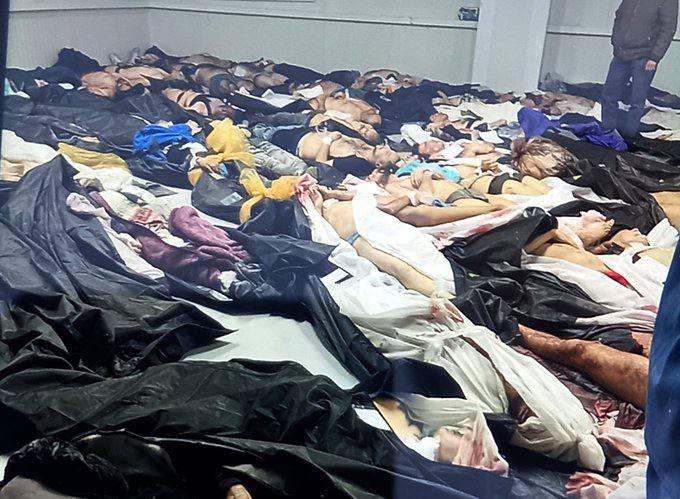
Patterns include:
- night burials under supervision
- transport in trucks used for waste/construction
- unmarked or mass graves
- denial of bodies to families
- threats to prevent memorials
- extortion for the return of bodies
Death was regulated. Grief was criminalised.
7.5 Those Still Alive — and in Immediate Danger
Thousands remain detained with untreated wounds, internal injuries, signs of torture, and no legal access. Many are held in unofficial facilities. Others have disappeared.
In authoritarian systems, disappearance is not the end of violence — it is its continuation.
7.6 Why These Numbers Will Never Be Final
Evidence is being destroyed: forensic access is restricted, certificates are manipulated, hospital data is suppressed, and witnesses are threatened. But erasure fails. Bodies leave records. Families remember. Crimes of this magnitude cannot be buried indefinitely.
7.7 What This Represents
This was a state-directed killing campaign designed to make dissent physically unaffordable. Its scale has pushed the regime beyond repression into historical crime.
SECTION VIII — INTERNATIONAL COMPLICITY
How Silence Enabled the Killings
The mass killing did not occur in a vacuum. It unfolded in view of actors with access to information and tools of pressure who chose restraint over responsibility.
8.1 The Myth of “Lack of Information”
By day two, evidence was circulating: videos, testimony, satellite indicators, leaked medical reporting. There was no information vacuum — there was political avoidance.
8.2 Governments That Chose Stability Over Lives
“Monitoring”, “restraint, “”, and “de-escalation” were not neutral. In the critical early days, major powers did not name perpetrators, demand accountability, threaten consequences, or call foran independent investigation.
When a state massacres its population and faces no immediate cost, it learns that escalation is safe.
8.3 Europe: Moral Posturing Without Action
European statements of “concern” coexisted with ongoing diplomatic and economic continuity. Behind closed doors: “complex”, “sensitive”, “risk of destabilisation”. The regime itself caused the destabilisation. Choosing not to act was calculated tolerance.
8.4 Media and the Failure of Urgency
Early reporting lagged, softened language, and often repeated official narratives. In the first 72 hours — the most lethal phase — hesitation translated into silence.
8.5 When Silence Becomes Participation
There is a point where inaction is not passive. When evidence exists, tools exist, and action is refused, actors become historically complicit.
8.6 The Cost of Complicity
Silence signals to other regimes that mass repression is survivable, weakens human rights norms, erodes international law credibility, and radicalises populations who see no peaceful path left.
SECTION IX — A CRIME AGAINST HUMANITY, NOT A DOMESTIC AFFAIR
9.1 Legal Threshold
Crimes against humanity include widespread or systematic attacks against civilians with knowledge and intent, including murder, torture, enforced disappearance, and persecution. January 2026 satisfies every element. [17]
9.2 Chain of Responsibility
Responsibility extends through commanders, officials coordinating forces, hospital administrators who cooperated, intelligence agencies that concealed evidence, and political leaders who authorised repression, and ultimately to Ali Khamenei, who retains absolute authority over armed forces, judiciary, and security services.
9.3 Why This Cannot Be Normalised
Normalising mass killing as an internal precedent invites repetition. Precedent becomes routine. Routine becomes atrocity.
9.4 What Justice Requires
Justice begins with documentation and preservation, international recognition, targeted sanctions, universal jurisdiction cases, protection of witnesses, and refusal to normalise relations.
Truth is the foundation of accountability.
9.5 Final Assessment
The Islamic Republic did not lose control. It exercised control, deliberately, violently, and at scale. What failed was legitimacy. No system built on mass graves can claim stability. No crime of this magnitude disappears with time.
CONCLUSION — A REGIME WITHOUT RETURN
What has unfolded in Iran is not a crisis in the ordinary sense. It is not a momentary breakdown, a failure of crowd control, or an unintended consequence of unrest. It is the exposure of a governing model that has reached the end of its political, moral, and institutional lifespan.
The January 2026 mass killings were not anomalies. They were the logical conclusion of a system built on coercion, secrecy, and impunity. A system born through violence has reverted to violence as its only remaining language.
This report has demonstrated that the killings were not spontaneous. They followed identifiable chains of command, repeated tactical methods, and a consistent political logic. Live ammunition, execution-style shootings, targeting of the head and torso, hospital raids, enforced disappearances, and removal of bodies without documentation were not the actions of rogue units. They reflect coordination, authorisation, and intent.
At this point, denial is no longer credible.
A State That Crossed Its Final Threshold
The Islamic Republic has crossed a threshold from which authoritarian systems do not return: the normalisation of mass killing as governance.
When a state executes wounded protesters inside hospitals, removes bodies to prevent documentation, intimidates medical staff, extorts families for the return of the dead, and criminalises mourning, it is no longer maintaining order; it is erasing evidence.
There is no institutional path back to legitimacy once legitimacy has been replaced by terror.
The End of Plausible Deniability
For decades, external actors relied on ambiguity: uncertainty, complexity, and lack of verification. That era is over.
Evidence exists in civilian footage, injury patterns, hospital testimony, burial documentation, and consistent eyewitness accounts across cities. No responsible actor can now claim:
- “We did not know.”
- “It was unclear.”
- “Both sides committed violence.”
- “This is an internal matter.”
The scale and uniformity remove plausible deniability. This is not chaos. This is policy.
Responsibility, Not Rhetoric
This report does not call for revenge. It does not advocate violence. It does not offer political prescriptions.
It does something far more dangerous to authoritarian power: it documents.
It records names, patterns, decisions, and outcomes. It preserves memory where erasure is policy. It establishes a factual record that cannot be undone.
Accountability does not always arrive quickly. But it always begins with documentation — and documentation has now begun.
Final Statement
What has occurred in Iran is not a domestic issue, not a security matter, and not a cultural conflict. It is a mass crime carried out by a state against its own population.
The Islamic Republic has not merely failed to protect its citizens; it has declared war on them. And in doing so, it has made one truth unavoidable:
This system has no future. Only a reckoning.
This document is intended for historical record, legal analysis, and accountability, not political advocacy
REFERENCES & SOURCES
- Primary Media & First-Hand Testimony
- LBC News – Interview with Paul (First Appearance)
https://www.youtube.com/watch?v=XlStk8sEOCc - LBC News – Extended Interview with Paul (Second Appearance)
https://www.youtube.com/watch?v=L0dHsnkiA-Y
- Iranian State Media & Semi-Official Sources
- IRNA — https://www.irna.ir
- Fars News — https://www.farsnews.ir
- Tasnim — https://www.tasnimnews.com
III. International Human Rights Organisations
- Amnesty International — https://www.amnesty.org
- Human Rights Watch — https://www.hrw.org
- OHCHR — https://www.ohchr.org
- International Media & Investigative Reporting
- BBC News — https://www.bbc.com/news
- Reuters — https://www.reuters.com
- The Guardian — https://www.theguardian.com
- Associated Press — https://apnews.com
- Medical & Forensic Evidence
- Physicians for Human Rights — https://phr.org
- Iran Human Rights (IHRNGO) — https://iranhr.net
- Open-Source & Visual Evidence
- Amnesty Citizen Evidence Lab — https://citizenevidence.org
- Social platforms and encrypted submissions (archived for security reasons)
VII. Legal & Accountability Frameworks
- Rome Statute (ICC) — https://www.icc-cpi.int
- UN Basic Principles on the Use of Force and Firearms — https://www.ohchr.org
Pingback: Mohammad Bagher Ghalibaf: Managerial Repression | IranSTO