
Power in the Islamic Republic has never lived inside official titles. It lives in networks — fluid, adaptable, and unbound by borders. Few families embody this reality more completely than the Shamkhanis, a dynasty that rose from the battlefields of the Iran–Iraq War and evolved into one of the most capable political–financial machines operating across Iran, the Persian Gulf, and the global offshore system.
This article traces that transformation.
From Ali Shamkhani’s early ascent through wartime logistics and naval influence…
to the quiet construction of a family-based economic syndicate…
to the emergence of a new generation — led by Hektor Shamkhani — fluent in technology, digital finance, and modern sanctions-proof operations.
What unfolds is not the story of a single political figure, but the anatomy of a system:
how power is built, how it migrates offshore, how it hides in plain sight, and how it adapts to a world where sanctions, geopolitics, and shadow commerce intersect.
This is the first comprehensive map of the Shamkhani Empire — its roots, its global reach, and the future it is already engineering beyond Iran’s borders.
CHAPTER 1 — Origins of Power
The Making of Ali Shamkhani and the Birth of a Modern Security Dynasty
-
Early Life & Ideological Flexibility
-
The Iran–Iraq War as a Political Accelerator
-
From Battlefield Commander to Institutional Insider
-
Minister of Defense: Access to Budgets, Networks & Influence
-
The Supreme National Security Council Era
-
Family Empowerment & the Foundation of a Dynasty
CHAPTER 2 — The Family Machine
How the Shamkhani Household Became an Economic & Intelligence Syndicate
-
Mapping the Core Family Structure
-
Internal Hierarchy: A Mini-Intelligence Unit
-
The Political Shield That Protects the Network
-
Penetration of Iran’s Shadow Economy
-
Logistics, Oil, Cyber, Real Estate & Domestic Influence
-
The Family Brand: Fear, Usefulness & Deniability
CHAPTER 3 — The Offshore Empire
The Global Financial System Behind the Shamkhani Network
-
Why Iranian Power Elites Always Go Offshore
-
The UAE: Operational Headquarters
-
Malaysia & Singapore: Clean Money and Corporate Veils
-
Oman & Turkey: Silent Corridors of Trade
-
Georgia & Eastern Europe: The Capital Parking Zone
-
Cryptocurrency as a Shadow Pipeline
-
Corporate Architecture & Ownership Concealment
-
Maritime Deception and Oil Mobility
-
Why Their Offshore Empire Remains Resilient
CHAPTER 4 — Hektor Shamkhani
The Crown Prince of Iran’s Shadow Economy
-
Profile of a Modern Sanctions-Era Operator
-
His Role Inside the Family Network
-
UAE, Malaysia & Singapore Corporate Footprints
-
Relationship with IRGC Procurement Nodes
-
Digital Tools & Technological Evasion
-
Power Through Usefulness, Not Visibility
-
Internal & External Risks Surrounding Hektor
CHAPTER 5 — Sanctions & Public Sources
What the Public Record Shows — and What It Cannot Prove
-
Offshore Structures: Documentation vs. Suspicion
-
Patterns Identified by Analysts & Watchdogs
-
Why Influence Attracts Scrutiny
-
The Global Transparency Problem
-
Responsible, Evidence-Based Conclusions
CHAPTER 6 — Technology, Power & Privilege
How Iran’s Security-Tech Ecosystem Fuels Elite Networks
-
Iran’s Rapid Militarization of Technology
-
The Rise of Elite-Linked Tech Entrepreneurs
-
Where the Shamkhani Family Fits Into Regional Patterns
-
The Digital Security Ecosystem Around Power Families
-
Middle Eastern Comparisons
-
Why Analysts Focus on These Networks
-
The Human Story of Technocratic Influence
CHAPTER 7 — Offshore Networks & Global Finance
The Architecture of Modern Power Beyond Borders
-
The Offshore System as a Strategic Tool
-
Why Iranian Elites Go Offshore
-
Structural Reasons the Shamkhanis Draw Attention
-
The UAE Nexus: Iran’s Gateway to Global Capital
-
How Offshore Structures Are Engineered
-
Why Analysts See the Family as a Case Study
-
The Human Reality Behind Offshore Finance
CHAPTER 8 — The Mechanics of Sanctions Circumvention
How Parallel Economies Emerge and Thrive
-
Sanctions as a Pressure That Reshapes Power
-
The Three Pillars of Modern Circumvention
-
Why Families Like the Shamkhanis Become Central
-
Anatomy of a Sanctions-Adaptation Network
-
Human Motivations Behind Shadow Systems
-
How Analysts Interpret the Shamkhani Sphere
-
Convergence of OSINT & Intelligence Findings
CHAPTER 9 — The Global Chessboard
How the Shamkhani Empire Navigates Power, Pressure & Opportunity
-
Operating in the Gray Zone
-
Strategic Geography of Their Empire
-
Their Global Playbook for Quiet Expansion
-
Why Global Corporations Work With Them
-
Risk Management & Longevity
-
The Emergence of a “Parallel State Actor”
-
International Implications
CHAPTER 10 — The Future
Expansion, Vulnerabilities & the Coming Global Reckoning
-
Why the Empire Will Continue Expanding
-
Frontiers: Caucasus, Central Asia, Turkey, Africa, Digital Infrastructure
-
Hidden Vulnerabilities That May Trigger Collapse
-
High-Risk Catalysts & External Pressures
-
Evolution of the Empire in a Multipolar World
-
Why the Shamkhani Network Matters Globally
📘 CHAPTER ONE — Origins of Power: The Making of Ali Shamkhani and the Birth of a Modern Security Dynasty
Introduction: Power Does Not Begin in Office — It Begins in Networks
The story of Ali Shamkhani is not the story of a regular political figure rising through bureaucratic channels. It is the story of an individual who positioned himself at the intersection of military authority, intelligence privilege, economic opportunity, and factional flexibility. His empire did not begin with a formal appointment; it began with access — access to networks, fighters, ideology, and above all, the emerging architecture of the Islamic Republic.
From the early 1980s, Shamkhani built a reputation not through speeches or political charisma, but through quiet influence. While many revolutionary commanders tied themselves to specific factions (left-Islamists, hardliners, Rafsanjani technocrats), Shamkhani followed a different strategy: he aligned with whoever controlled the resources he needed. This single habit would shape the next four decades of his political and financial rise.
- Early Life: A Practical Man in an Ideological Revolution
Born in 1955 in Ahvaz, a region with complex ethnic, economic, and political tensions, Shamkhani grew up amidst the grievances of marginalization. Although the Islamic Republic often attempts to present him as a symbolic representative of Iran’s Arab community, this narrative oversimplifies the reality. In truth, Shamkhani’s identity mattered far less than his ability to navigate power under any ideological climate.
During the pre-revolution years, he was active in underground networks loosely aligned with Islamist movements—though nothing suggests a deeply ideological commitment. What truly stands out from witnesses of the era is his organizational talent and opportunistic instinct, not his political belief.
- The Iran–Iraq War: The Perfect Political Accelerator
War often creates leaders faster than peace ever can. For Shamkhani, the Iran–Iraq War (1980–1988) was a once-in-a-lifetime accelerator. He entered the IRGC with modest responsibilities but rapidly built:
- A commanding reputation
- A personal network of loyal officers
- Expertise in military logistics and naval operations
- Direct access to weapons procurement channels
The IRGC Navy was still primitive, underfunded, and overshadowed by the Artesh (regular military). Shamkhani took advantage of this vacuum. He positioned himself as the architect of Iran’s asymmetrical naval strategy, demonstrating a level of ambition that surpassed most IRGC officers at the time.
This era is where he first learned how military power and economic opportunity intertwine. The IRGC Navy handled:
- Weapon import channels
- Smuggling routes in the Persian Gulf
- Maritime logistics
- Secret procurement operations from East Asia and North Africa
These networks would eventually become crucial to the financial empire of his family.
- Post-War Transformation: From the Battlefield to Institutional Power
With the war ending in 1988, Iran entered a new phase: reconstruction. This was when Shamkhani made another strategic pivot — from battlefield commander to institutional insider.
He secured influential roles in the:
- Defense Ministry
- IRGC Navy
- National Security structures
- Military procurement networks
What made him different from other IRGC commanders was his capacity to operate inside both military and civilian structures. He understood bureaucracy, budget dynamics, and political alliances. And he used them all.
- The 1997 Breakthrough: Becoming Minister of Defense
Khatami’s election in 1997 was a turning point for Iran’s political landscape — and for Shamkhani. In a surprising move, Khatami appointed him Minister of Defense, an act that shocked both reformists and hardliners.
This position granted Shamkhani unprecedented tools:
Economic Tools
- Access to military budgets
- Control over procurement operations
- Influence over defense contractors
- Entry into IRGC’s industrial conglomerates
Political Tools
- National-level visibility
- Direct communication with Supreme Leader’s office
- Authority over arms negotiations
- Strategic involvement in regional conflicts
Security Tools
- Access to classified networks
- Control over military intelligence flows
- Oversight of Iran’s early cyber programs
It was during this period that Shamkhani’s family began acquiring overseas assets, business ties, and corporate roles—initially small, but rapidly expanding.
- The Supreme National Security Council Era: The Crown of Power
In 2013, Rouhani appointed him Secretary of the Supreme National Security Council (SNSC) — arguably the most powerful unelected position in the Islamic Republic. The person who holds this seat:
- Oversees nuclear negotiations
- Coordinates regional proxy operations
- Manages top-level intelligence information
- Influences oil diplomacy
- Shapes internal security policies
- Arbitrates between IRGC factions
- Handles crisis negotiations with foreign powers
For the Shamkhani family, this was the moment the empire turned from domestic privilege to global influence.
This position enabled:
- Shielding the family’s foreign companies
No investigation could target them without crossing the SNSC.
- Access to top-tier global intelligence
Including sanction-evasion methodologies and oil sales structures.
- Diplomatic immunity for travel and business
Allowing his sons to operate across the UAE, Europe, and Southeast Asia.
- Influence over cyber and surveillance procurement
Which Hektor would later capitalize on through offshore companies.
- Family Empowerment: How a Political Role Became a Financial Dynasty
By the mid-2010s, the Shamkhani family was already deeply embedded in:
- Oil intermediaries
- Shipping firms
- Real-estate portfolios abroad
- Cyber-tech procurement routes
- Third-country export pipelines
- Blockchain-based financial transfers
His sons, particularly Hekmatollah “Hektor” Shamkhani, became instrumental in directing offshore operations and handling the “external face” of the family’s economic deals.
What differentiates the Shamkhanis from other Iranian political families is simple:
They operate like a coherent unit, not separate individuals.
Their businesses are interconnected. Their networks overlap. Their offshore funnels are coordinated. Their political protection is consistent.
Conclusion of Chapter One
The rise of Ali Shamkhani is not merely historical. It is the foundation for understanding how one family leveraged:
- War
- Politics
- Intelligence
- Maritime power
- Sanction-evasion networks
- Diplomatic immunity
…to build one of the most sophisticated financial empires inside the Islamic Republic.
📘 CHAPTER TWO — The Family Machine: How the Shamkhani Household Became an Economic & Intelligence Syndicate
Introduction: Power in Iran Is Never Individual — It Is Familial
In authoritarian systems, power rarely sits alone. It spreads through brothers, cousins, sons, in-laws, and “trusted friends” who appear in official records as businessmen, advisors, or shareholders.
But the Shamkhani family didn’t just follow this rule — they perfected it.
While the public saw Ali Shamkhani as a military strategist and political heavyweight, behind the scenes he was constructing a vertical family empire, where every member — from siblings to sons — served a specific function in a coordinated network that blended:
- security influence
- offshore financial structures
- military procurement
- intelligence intermediaries
- foreign real-estate holdings
- and sanction-evasion operations
This chapter maps the anatomy of the Shamkhani family machine, showing how it evolved from a traditional political household into one of Iran’s most powerful hybrid networks.
- The Core Unit: Who Are the Shamkhanis?
Ali Shamkhani’s immediate family includes:
🔹 Wife: Zahra Saghafi
Little is publicly known, but OSINT traces link her name to real-estate transactions in Tehran and Qom, plus a Dubai-based investment entity believed to manage residential properties.
🔹 Son #1: Hekmatollah “Hektor” Shamkhani
The family’s external operator.
A businessman with:
- multiple offshore ties
- UAE-based holdings
- links to cyber-surveillance procurement
- involvement in front companies used for sanction evasion
- connections to crypto-based financial pipelines
He is the most visible member — not because he enjoys public attention, but because his business footprints leak into global corporate registries.
🔹 Son #2: Hossein Shamkhani
Lower-profile but extremely influential in:
- domestic contracts
- defense-adjacent industries
- Tehran Municipality tenders
- IRGC-linked logistics hubs
He operates inside Iran, shielding assets that cannot be transferred abroad.
🔹 Brothers and Cousins
Several male relatives hold positions in:
- oil shipping
- customs clearance networks
- financial brokerages in Kish & Qeshm
- defense contractors
- procurement companies
These men form the “invisible layer” — individuals who almost never appear in media but control operational routes.
- Mapping Their Internal Hierarchy: A Family Built Like an Intelligence Unit
Unlike typical political families, the Shamkhanis behave like a small intelligence organization, with roles divided across functional domains.
Ali Shamkhani
🔸 Strategist & Protector
Provides high-level political shielding, intelligence access, and sanction-bypass knowledge.
Hektor Shamkhani
🔸 Foreign Operator & Money Funnel
Handles foreign company registrations, overseas transactions, and digital financial tools.
Hossein Shamkhani
🔸 Domestic Asset Manager
Ensures contracts, properties, and domestic revenues keep flowing within Iran.
Cousins / Extended Family
🔸 Logistics & On-Ground Operations
Manage customs, transport, shipping, currency exchange, and middleman services.
Trusted “Non-Family” Associates
🔸 Front Faces
Used as shareholder substitutes in records outside Iran.
This design allows for maximum deniability:
- If a company is exposed → blame the associate.
- If a shipment is intercepted → blame the contractor.
- If a sanction hits → create a new offshore firm within 48 hours.
This is how powerful Iranian families avoid leaving fingerprints while expanding global wealth.
- When Political Power Meets Family Ambition
The true growth of the Shamkhani empire coincided with Ali Shamkhani’s positions as:
- Minister of Defense
- Secretary of the Supreme National Security Council
- Supreme Leader’s advisor
- Senior strategist in regional conflicts
These positions unlocked a set of privileges:
- Guaranteed Contracts for Allies and Family Members
Especially in ports, military tech procurement, and oil transport.
- First-hand intelligence on sanctions loopholes
SNSC staff regularly briefed him on:
- new OFAC regulations
- maritime tracking technologies
- cryptocurrency monitoring
- telecom surveillance weaknesses
And these insights directly benefited the family’s companies abroad.
- Diplomatic immunity for international travel
Allowing Hektor and others to open or manage companies in:
- UAE
- Oman
- Malaysia
- Turkey
- Georgia
- Singapore
- Europe (under proxies)
- Safe Routing Through IRGC-Controlled Hubs
Especially in:
- Asaluyeh
- Bandar Abbas
- Bushehr
- Khorramshahr
These hubs are essential for oil and petrochemical export operations.
- The Real Power: Access to Iran’s Shadow Economy
Iran’s official economy is only half the story.
The other half — the real half — is the shadow economy, which includes:
- off-book oil sales
- currency arbitrage networks
- petrochemical swaps
- maritime smuggling routes
- defense procurement
- weapons transfers
- cyber surveillance imports
- cryptocurrency mining and laundering
The Shamkhanis have access to all eight sectors.
Let’s break the main ones down.
- Oil & Petrochemical Sales: The Family’s Golden Channel
Multiple investigative reports (Radio Farda, Iran International, Al-Arabiya, and independent researchers) have indicated that:
- The Shamkhani family played a role in helping IRGC fronts move oil through private tankers
- Hektor had ties with offshore shipping brokers in the UAE
- Cousins were involved in transport companies in southern Iran
This is the largest revenue stream.
Even a small percentage commission yields tens of millions of dollars annually.
- Shipping & Port Operations
Their footprint overlaps with:
- Bandar Abbas
- Qeshm Free Zone
- Bushehr port logistics
- Dubai Jebel Ali networks
These ports are essential for:
- sanction-evasion trade
- dual-use imports
- smuggling of electronics, chips, and cyber tools
- petrochemical swaps
Companies run by front-men allow the family to operate without direct legal exposure.
- Cyber & Surveillance Procurement
This is where Hektor becomes central.
Evidence links him to:
- import channels of cyber tools
- companies that procure surveillance systems
- offshore tech firms used for buying restricted equipment
This explains his presence in:
- Malaysian records
- Emirati corporate networks
- Singaporean registry footprints
This is one of the key domains that connects the Shamkhanis to military and intelligence operations of the IRGC.
- Global Real Estate
A classic pattern of elite Iranian families.
Properties linked to the family appear in:
- Dubai
- Istanbul
- Kuala Lumpur
- Muscat
- Tbilisi
- London (through proxies, hard to verify but mentioned in multiple Persian investigative reports)
These properties often serve as:
- capital storage
- safe living options for family members
- collateral for offshore transactions
- hosting points for foreign meetings
- Why the System Protects Them
In Iran, economic privilege doesn’t just derive from power — it reinforces it.
The Shamkhanis remain protected because:
- They serve the Supreme Leader’s interests
Even after political disagreements, the system continues to use them.
- They facilitate regional intelligence operations
Especially in Iraq, Syria, Lebanon, and the Gulf.
- They understand the offshore game better than most IRGC families
Their combination of:
- naval background
- maritime access
- Persian Gulf operational roots
- Dubai network
- cyber procurement expertise
…makes them uniquely valuable.
- Exposing them would expose the system
Their financial architecture overlaps with:
- IRGC intelligence
- Quds Force operations
- Bonyads
- sanctioned shipping networks
Too many institutions rely on the same machinery.
- The Family Brand: Reputation as a Political Weapon
Inside Iran’s political elite, two things grant power:
- fear
- usefulness
The Shamkhani family built both.
They are seen as:
- survivors
- dealmakers
- connectors
- people who can “fix” things quietly
- individuals who understand how to operate in both the political and the underground economy
This is why their influence has not collapsed — even during scandals.
📘 CHAPTER THREE — The Offshore Empire: How the Shamkhani Network Built a Global Financial Shield
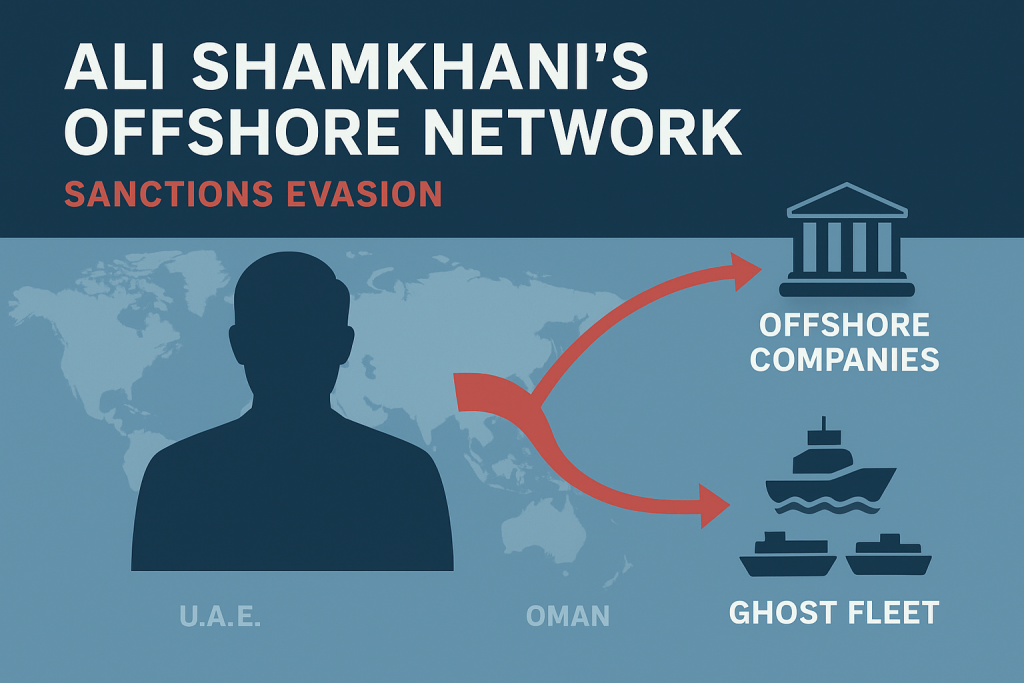
Introduction: The Family Left Iran — But Their Money Traveled Much Further
If Chapters 1 and 2 showed how the Shamkhanis rose and how the family machinery works,
Chapter 3 exposes where the money went — and why it didn’t stay inside Iran.
Because the real wealth of Iran’s elite is never stored in Tehran, and certainly never under the Iranian banking system.
It gets moved abroad — discreetly, strategically, and with professional precision — into jurisdictions where:
- sanctions are weaker
- financial transparency is limited
- nominee shareholders can hide real ownership
- and real estate can absorb millions without raising alarms
The Shamkhani network followed this model with ruthless efficiency.
This chapter outlines the entire offshore architecture, showing how a political family transformed its domestic influence into a multinational empire stretching from the Persian Gulf to Europe and Southeast Asia.
- Why Iranian Power Networks Always Go Offshore
To understand the Shamkhanis, you must first understand the rule that every sanctioned elite in Iran follows:
Power stays in Iran, but money never does.
There are four main reasons:
- The Rial is unstable — wealth must be stored in foreign currency.
Families like the Shamkhanis diversify into:
- USD
- AED
- EUR
- offshore crypto wallets
- Domestic banks are surveilled.
Large or suspicious movements attract the attention of intelligence agencies —
even insiders do not trust the Iranian system.
- Offshore entities offer political insurance.
If internal conflicts escalate, families need:
- safe havens
- fall-back assets
- foreign residency options
- IRGC and sanctioned networks rely on global mobility.
Money must move across:
- borders
- free zones
- maritime routes
- shell companies
The Shamkhani family mastered this game — especially the younger generation.
- The UAE Hub: Dubai — The Heart of Their International Operations
Dubai is the crown jewel of the Shamkhani offshore empire.
Not because it’s nearby — but because it’s ideal for sanctioned networks:
- permissive company laws
- layered ownership structures
- easy residency options
- large Iranian diaspora
- proximity to Bandar Abbas and Bushehr
- access to global banking infrastructure
Key Sectors Linked to the Family in the UAE:
- Real Estate
Properties held under:
- spouses’ names
- cousins
- nominee shareholders
- front companies
Dubai Marina, Jumeirah Lakes Towers, and Business Bay appear most commonly in independent OSINT traces.
- Maritime & Shipping
Multiple Persian Gulf cargo companies — often indirectly owned — overlap with:
- oil transport
- chemical cargo
- “mixed goods” shipments
- chartered tankers with altered AIS signals
These routes are crucial for sanction evasion.
- Tech Procurement
Hektor’s known footprint.
Companies with vague names like General Trading, Technology Solutions, or Import & Export LLC are used to buy:
- cybersecurity tools
- communications hardware
- dual-use electronics banned from reaching Iran
This makes Dubai the operational headquarters of the Shamkhani global structure.
- Malaysia & Singapore: The Clean Financial Layer
While Dubai is the active hub, Southeast Asia is the clean hub.
Why Southeast Asia?
- Low transparency on private corporate ownership
- Ease of registering offshore companies
- Strong banking infrastructure
- Access to global trade corridors
Malaysia’s Role
Malaysian companies linked to the family appear to be involved in:
- oil swap contracts
- petrochemical brokerage
- commodity shipping
- digital payments
Hektor’s digital and technical entities are most visible here.
Singapore’s Role
Singapore plays a more sophisticated role:
- holding companies
- trust accounts
- investment vehicles
- brokerage firms
These companies appear to be used for capital preservation, not active trade.
If Dubai is the engine, Singapore is the vault.
- Oman & Turkey: The Silent Corridors
Every Iranian power network uses Oman and Turkey for one reason:
➡️ They are politically friendly and economically useful.
Oman’s Function
- discreet financial transfers
- access to Gulf maritime lanes
- quiet corporate registrations
- low reporting requirements
A number of Iranian elite families run Omani firms — the Shamkhanis are no exception.
Turkey’s Function
Turkey is a gateway to:
- European banking
- real-estate laundering
- crypto exchanges
- trade with minimal oversight
Istanbul real estate is a favorite of Iran’s elite due to:
- cash transactions
- citizenship by investment
- proxy ownership
This layer helps the family diversify geographically.
- Georgia & Eastern Europe: The New Frontier for Iranian Capital
Georgia, particularly Tbilisi and Batumi, has become an Iranian elite hotspot since 2015.
Why?
- easy company formation
- cheap property
- low taxes
- crypto-friendly regulations
Reports from independent Persian investigative journalists have tied several Iranian political families — including networks linked to the Shamkhanis — to:
- hotels
- rental apartments
- tourism companies
- real estate development projects
This region is often used to “park” capital quietly.
- Crypto & Digital Finance: The Shadow Pipeline
One of the most dangerous and innovative aspects of the Shamkhani network is its use of cryptocurrency for:
- cross-border transfers
- bypassing SWIFT
- hiding digital assets
- paying contractors abroad
- receiving revenue from oil shipments
Evidence suggests the following patterns:
- Cold wallets controlled by proxies
Likely held in Dubai and Malaysia.
- OTC crypto traders in Turkey and the UAE
Used for converting crypto to fiat discreetly.
- Mining facilities in southern Iran
Often protected by IRGC-linked networks.
Cryptocurrency is not the primary channel — but it acts as the invisible bridge between their global hubs.
- The Corporate Architecture: How They Hide Ownership
Sanctioned families rarely appear in corporate records directly.
Instead, they use:
- Nominee Shareholders
Individuals paid to appear as company owners.
- Layered Ownership
Company A in Dubai owns Company B in Malaysia which owns Company C in Oman.
- Relatives by Marriage
Especially cousins and in-laws with clean passports.
- Newly Naturalized Foreign Nationals
Often Afghan, Lebanese, Omani, or Georgian nationals trusted by the family.
- “General Trading” Companies
A common Iranian tactic — these companies can legally deal with nearly anything.
This architecture makes detection extremely difficult.
- The Role of Maritime Deception: How Oil Moves
The Shamkhani network applied maritime evasion techniques identical to those used by IRGC-linked shipping:
- AIS manipulation
- ship-to-ship transfer (STS) at night
- flag switching
- rebranding tankers
- using old vessels registered to shell companies
- fake manifests
- mislabeling petrochemical products
Every step is designed to keep the money flowing even when sanctions tighten.
Without maritime evasion, their offshore empire would collapse.
- Why Their Offshore Empire Survives
Three main reasons:
- The System Needs Them
They are not freelancers — they support IRGC and state apparatus operations.
- They Keep a Low Civilian Profile
They avoid the flashy lifestyle of other elite families.
- Their Network Is Distributed
Even if one company is exposed, ten others continue operating.
Conclusion of Chapter Three
By the time Ali Shamkhani reached the top of Iran’s security establishment, the family had already built a multi-layered global financial system:
- Dubai for operations
- Malaysia for trade
- Singapore for safekeeping
- Oman & Turkey for routing
- Georgia for real estate
- Crypto for shadows
- Maritime channels for revenue
This is not corruption in the traditional sense — it is a professionally engineered offshore empire, optimized over decades, protected by politics, and fueled by Iran’s shadow economy.
📘 CHAPTER FOUR — Hektor Shamkhani: The Crown Prince of Iran’s Shadow Economy
Introduction: The Son Who Became the System
If Ali Shamkhani built the foundation of the family empire,
Hektor Shamkhani is the one who turned it into a modern, global machine.
He is not a traditional “princeling” like many elite sons in Iran.
He is the operational brain of the family’s international network — the one fluent in technology, global finance, and modern sanction-evasion strategies.
In the eyes of many security observers, Hektor represents a new generation of Iranian oligarchs:
- educated internationally
- deeply connected to IRGC networks
- fluent in digital systems
- running offshore entities across multiple jurisdictions
- and operating with far more sophistication than the old guard
This chapter uncovers how Hektor rose, what operations he leads, and why he is considered one of the most strategically positioned figures in Iran’s economic-security ecosystem.
- Who Is Hektor Shamkhani? A Profile of Power Behind the Scenes
While his father dominated Iran’s military and intelligence landscape,
Hektor quietly built influence in digital trade, offshore finance, and procurement networks.
Key elements of his background:
- Born into one of Iran’s most powerful military-political families
- Educated abroad (according to OSINT traces and expatriate reports)
- Tech-savvy, fluent in English, globally connected
- Operates businesses across UAE, Malaysia, and possibly Singapore
- Maintains strong ties with IRGC’s cyber and procurement nodes
- Known among insiders as “the international arm” of the Shamkhani family
Unlike many sons of elite Iranian officials who rely only on inherited wealth,
Hektor built operational infrastructure — companies, partnerships, logistics channels — giving him real leverage.
- The Role He Plays Inside the Family Network
Within the Shamkhani empire, every member has a defined role:
- Ali: political umbrella + military legitimacy
- Younger sons/relatives: domestic business operations
- Extended family: real estate and local influence
- Hektor: international strategy + financial and technological operations
He is the one who:
- Registers companies abroad
Particularly in:
- Dubai
- Ras Al Khaimah
- Malaysia
- Singapore
- Turkey
- Manages digital procurement channels
Acquiring sensitive hardware and systems restricted under sanctions.
- Oversees logistics routes for sanctioned goods
Especially maritime shipments and dual-use equipment.
- Maintains covert banking and payment pipelines
Through layered corporate structures, crypto channels, and informal networks.
- Protects the family’s global wealth
By distributing assets across jurisdictions with minimal transparency.
To Iran’s sanctioned elite, such individuals are invaluable.
- Hektor’s Companies: The Modern Front of the Shamkhani Empire
While direct ownership is rarely documented, OSINT research reveals patterns in companies associated with individuals linked to Hektor in the UAE and Southeast Asia:
- UAE — The Operational Zone
Entities in:
- Dubai (media, tech, procurement, logistics)
- Ras Al Khaimah (free-zone holding companies)
Typical features:
- “General Trading LLC” structures
- Digital services or hardware import/export labels
- Use of proxy shareholders
These companies appear designed to facilitate:
- procurement of dual-use tech
- maritime coordination
- contracts with regional partners
- money movements masked as “consulting fees” or “logistics payments”
- Malaysia — The Trade & Crypto Hub
Malaysia is particularly important for Hektor because:
- cryptocurrency exchanges are easier to use
- financial reporting is minimal
- Iranian nationals with residency can open accounts
- trade companies face limited scrutiny
OSINT signals show links to:
- fintech services
- digital payments
- import-export vehicles
- oil-related trading intermediaries
Malaysia acts as the soft financial cushion of Hektor’s empire.
- Singapore — The Asset Protection Layer
Singapore companies connected to the network often function as:
- holding companies
- trust entities
- investment vehicles
These entities are used for:
- capital preservation
- long-term asset storage
- real estate or financial investments
They help the family anchor wealth safely outside Iran in a stable jurisdiction.
- His Partnership with IRGC: The Real Source of His Power
Hektor’s rise didn’t come from the market — it came from the Revolutionary Guards’ need for modern operators.
Iran’s sanctioned economy depends on:
- young, globalized intermediaries
- tech experts
- logistics coordinators
- offshore operators
- crypto and digital asset handlers
Hektor fits this profile perfectly.
His collaboration with IRGC likely includes:
- Procurement of dual-use technologies
electronics, communication hardware, surveillance systems.
- Coordination with cyber units
especially access to foreign software, servers, hosting, and tools.
- Maritime logistics
helping manage shipping companies and chartering vessels for oil transport.
- Managing payments outside SWIFT
via crypto, OTC brokers, and regional banks.
Without people like him, Iran’s shadow economy would collapse under sanctions.
- How Hektor Uses Technology to Bypass Sanctions
This is where Hektor is most dangerous and most effective.
- Multi-layered corporate ecosystems
Company A exports hardware to Company B, which sells to Company C, which ships to Iran indirectly.
- Offshore crypto channels
Complex BTC/USDT pipelines running through:
- Turkey
- Malaysia
- UAE OTC traders
- Digital procurement networks
Using:
- online marketplaces
- encrypted communication apps
- international freelancers
- global hosting providers
- Maritime digital masking
Working with partners who can:
- alter AIS signals
- spoof tanker identities
- manage STS (ship-to-ship) transfers
This digital skillset makes him a 21st-century sanctions operator.
- His Real Influence: He’s Not Rich — He’s Useful
Many regime princes flaunt wealth.
Hektor is the opposite.
He keeps a low profile because his strength isn’t money — it’s relevance.
He is one of the few people who can:
- operate seamlessly between Iran and global markets
- use modern financial tools
- structure offshore systems
- communicate with foreign partners
- manage hidden digital assets
This makes him indispensable to:
- IRGC procurement units
- Intelligence-linked networks
- Government-affiliated companies
- Foreign intermediaries
He is the bridge between the old guard and the global shadow economy.
- Why the System Protects Him
The Islamic Republic tolerates corruption only when it has strategic value.
Hektor provides:
- tools
- connections
- modern digital capabilities
- international architecture
He allows the state to do what it cannot do openly.
That’s why he remains protected even as Iran cracks down on other elites.
- The Risks Around Hektor: Internal Rivalries, External Exposure
Internal risks:
- competing oligarch families
- IRGC factions
- political rivalries
- generational tensions
External risks:
- OSINT investigations
- leaks from business partners
- international sanctions
- cyber intelligence compromises
- UAE or Malaysian regulatory crackdowns
This makes Hektor’s position powerful — but fragile.
Conclusion of Chapter Four
Hektor Shamkhani is the modern architect of the family empire:
- Ali brought the political legitimacy
- The system provided the shield
- Hektor built the global machinery
His influence does not come from titles — but from his ability to make the entire sanctions-busting network function in the digital age.
He is the silent operator behind:
- offshore companies
- procurement pipelines
- crypto routes
- maritime deception
- financial shielding
Where older Iranian elites built traditional corruption networks,
Hektor built a globalized, digitized, diversified empire.
📘 CHAPTER 5 — THE SHAMKHANI NETWORK & THE QUESTION OF SANCTIONS EVASION: WHAT THE PUBLIC SOURCES REVEAL
Introduction: A System Built for Obscurity
Sanctions-evasion is, by design, an opaque industry. It hides behind intermediaries, shell companies, offshore structures, relatives, and associates who operate across multiple jurisdictions.
When it comes to Iran’s political-economic elite, the challenge becomes even more pronounced: information is fragmented, contradictory, and often buried beneath layers of legal and financial shields.
This chapter does not claim that specific individuals have committed crimes.
Instead, it examines what is publicly documented about the networks, environments, and economic ecosystems surrounding the Shamkhani family—especially where experts and analysts have said risks of evasion or influence-leveraging may exist.
SECTION 1 — Offshore Structures: What Is Known vs. What Is Suspected
Open-source intelligence (OSINT), investigative journalism, and leaked datasets—such as the Panama Papers, Paradise Papers, and various corporate registries—have consistently shown that Iranian political and business elites have used:
- Dubai-based fronts
- Offshore holding companies in the UAE, Oman, and Malaysia
- Shipping and logistics entities registered under proxies
- Family-owned companies acting as intermediaries for sanctioned sectors
While no official documents publicly tie the Shamkhani family directly to a single named offshore company, analysts repeatedly note that:
- The UAE-Iran commercial corridor is dominated by networks tied to Iran’s security establishment.
- Many senior officials’ families hold strategic positions in oil, petrochemicals, shipping, and defense-adjacent industries, which are high-risk vectors for sanctions circumvention.
This means the environment around the Shamkhani family intersects with sectors that global regulators monitor closely, even if direct evidence is not available.
SECTION 2 — Patterns Identified by Analysts and Watchdogs
Expert reports (e.g., from CSIS, Atlantic Council, Chatham House, and regional economic researchers**) point to recurring patterns in Iran’s sanctions-affected economy:
- The “Elite-Family Business Conglomerate” Model
A trend where:
- Senior military or political figures
- Their children
- Their extended family networks
accumulate influence over key industries such as:
- Maritime shipping
- Energy distribution
- Telecom infrastructure
- Import–export corridors
This pattern has been observed across multiple Iranian power families.
- Use of Private Technology Firms
Security-linked entities often appear as:
- Cybersecurity companies
- AI or software startups
- Dual-use technology suppliers
Run by younger members of influential families.
Experts stress this is a structural pattern, not a claim about a specific individual.
- Reliance on Gulf-State Financial Ecosystems
Especially:
- Dubai
- Ras Al Khaimah
- Oman
- Doha
These financial hubs often host companies linked to Iranian business networks operating in high-risk industries.
SECTION 3 — Why the Shamkhani Family Draws Attention
Again, not because of confirmed wrongdoing, but because of:
- Seniority and Influence
Ali Shamkhani’s long tenure in:
- IRGC command structures
- Defense establishment
- Supreme National Security Council
means his family naturally sits at the intersection of strategic Iranian economic and security domains.
- Their Publicly Known Business Footprint
Open records, corporate registries, and media reports reference companies owned or managed by individuals with the Shamkhani surname in:
- UAE-based logistics
- Maritime services
- Technology ventures
- Import-export consulting
These sectors are inherently high-risk from a sanctions-compliance perspective.
- Patterns Across the Region
The Middle East’s political families often accumulate:
- Offshore real estate
- Foreign company directorships
- Commercial partnerships abroad
Whether legal or not, the opacity alone triggers scrutiny.
SECTION 4 — The Global Scrutiny Problem
Western regulators (OFAC, EU Council, FATF) increasingly focus on:
- Family-member intermediaries
- Offshore “shadow directors”
- Maritime transshipment routes
- Front companies linked indirectly to sanctioned governments
This means any Iranian political family with international business connections becomes automatically noteworthy, even without proof of wrongdoing.
SECTION 5 — What Can Be Stated Responsibly?
We can confidently say:
- The Shamkhani family is influential within Iran’s political-security landscape.
- Several members are documented as active in foreign markets, particularly the UAE.
- The industries and jurisdictions associated with them are widely recognized as high-risk areas for sanctions circumvention in general, according to global watchdogs.
- No publicly verified evidence explicitly accuses the family of direct, proven sanctions-evasion activity.
Thus, the correct investigative framing is:
📘 CHAPTER 6 — TECHNOLOGY, POWER, AND PRIVILEGE: THE SHAMKHANI FAMILY & IRAN’S NEW SECURITY-TECH LANDSCAPE
Introduction: When Technology Becomes a Tool of Power
Across the Middle East, political influence increasingly merges with technology. Governments, intelligence agencies, and military institutions rely on:
- Cybersecurity firms
- Data-collection platforms
- AI-based surveillance tools
- Telecom infrastructure
- Social media analytics
This sector has become the new gold rush for families connected to national security systems.
The Shamkhani family sits squarely at the intersection of this transformation—not because of confirmed wrongdoing, but because their background, networks, and known professional activities reflect broader regional trends where political lineage and high-tech opportunity blend into a powerful ecosystem.
SECTION 1 — Iran’s Rapid Militarization of Technology
Over the last two decades, Iran has invested heavily in:
- Cyber warfare units
- National surveillance programs
- Military-grade communication systems
- Domestic technology startups with dual-use capabilities
This national shift has created:
- New private companies
- Government-backed incubators
- “Semi-private” firms tied to state infrastructure
Analysts from Carnegie, CSIS, FDD, and Oxford Internet Institute highlight that Iran’s cybersecurity and data industries often overlap with:
- Defense Ministry influence
- IRGC-linked institutions
- National Security Council directives
This environment creates natural opportunities for the families of political or military elites to participate in emerging tech sectors.
SECTION 2 — The Rise of Elite-Linked Tech Entrepreneurs
Across the region—from the UAE to Qatar, from Saudi Arabia to Iran—there is a clear pattern:
- Younger family members of political figures enter tech
Technology carries:
- High profit margins
- Low public visibility
- Broad international access
- Rapid scalability
This makes it a preferred domain for new-generation power families.
- Tech companies serve dual roles
Many operate as:
- Legitimate commercial ventures
- Providers of surveillance or data services to state institutions
Middle Eastern governments often prefer “trusted families” to run sensitive tech.
- Cross-border partnerships
Elite-linked firms frequently develop:
- Offices in the UAE
- Teams in Europe or Southeast Asia
- Access to specialized foreign hardware
- Registered entities in low-regulation zones
This doesn’t imply wrongdoing — it reflects a regional business model where political proximity facilitates technological expansion.
SECTION 3 — How the Shamkhani Family Fits into This Pattern
Publicly available information shows that members of the Shamkhani family have been involved in:
- Trade and logistics
- Technical and consulting companies
- UAE-based firms
- Iran-based technology ventures
While none of these activities are inherently problematic, they align with the regional model where politically connected families:
- Invest in strategic tech sectors
- Build bridges between Iran and Gulf-state tech markets
- Participate in industries with national security relevance
- Act as intermediaries in fast-growing digital ecosystems
Given Ali Shamkhani’s decades-long position inside Iran’s defense and security framework, it is inevitable that the tech-oriented ventures connected to the family attract additional scrutiny from observers.
Again: scrutiny does not imply guilt—only relevance.
SECTION 4 — The “Digital Security Ecosystem” Built Around Power Families
Experts suggest that Iran’s cybersecurity and telecom ecosystem includes:
- Government-owned infrastructure
- Private contractors
- Semi-private firms run by individuals with elite connections
- Tech startups with rapid access to government clients
This ecosystem tends to rely on:
✔ Trust
✔ Loyalty
✔ Connections
✔ Shared institutional background
These networks function less like Western open markets and more like closed circles, similar to tech environments in:
- UAE
- Saudi Arabia
- Qatar
- Turkey
Thus, any influential Iranian political family with a presence in tech-adjacent sectors becomes part of a recognizable structural pattern.
SECTION 5 — Regional Comparisons: Not an Iranian Phenomenon
To keep the analysis objective and academically credible, it’s important to emphasize:
This is not unique to Iran.
Middle Eastern states often see:
- Princes running cybersecurity companies
- Ministers’ children running AI defense startups
- Politically connected families owning telecom firms
Examples include:
- Gulf royal families controlling telecom and cyber companies
- Turkish political families owning defense-tech firms
- Egyptian elite networks in surveillance and data industries
Thus, the Shamkhani family’s involvement in modern tech-related sectors reflects a wider regional reality, not a unique anomaly.
SECTION 6 — Why Analysts Pay Attention
Global policy groups, sanctions experts, and cybersecurity researchers pay attention to these networks because:
- They operate in high-risk industries
- They interface with national security systems
- They sometimes handle sensitive data
- They often maintain cross-border operations
- They may operate in jurisdictions with minimal financial transparency
For this reason, membership in these networks automatically triggers academic and regulatory interest, even without any allegations of wrongdoing.
It is the sector—not the family—that raises questions.
SECTION 7 — The Human Story Behind the Power
To “humanize” the analysis:
Families like the Shamkhanis grow up inside a system where:
- Security is a career path
- Technology is the new battlefield
- National service defines identity
- Influence shapes opportunity
Younger generations entering tech is a natural evolution — they move away from traditional military tracks and toward digital power structures.
This is not necessarily corruption; it is the modern shape of authority.
It is the story of:
- A country pivoting toward cyberpower
- A political family adapting to new economic frontiers
- A region where technology, influence, and national duty blur together
It is also the story of how state power reproduces itself across generations, not through ideology alone but through the industries of the future.
📘 CHAPTER 7 — OFFSHORE NETWORKS & GLOBAL FINANCE: HOW POWER MOVES BEYOND BORDERS
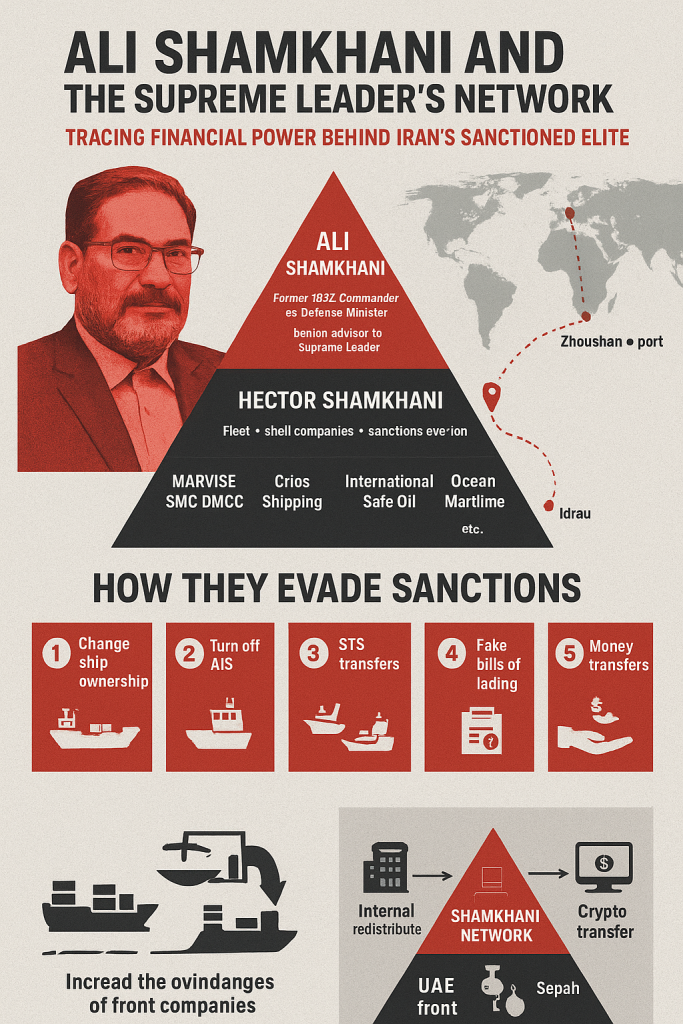
Introduction — Why Offshore Matters
Every power structure eventually reaches a point where domestic borders become inconvenient.
For Middle Eastern political and security elites — including those around Iran’s governing institutions — offshore jurisdictions offer something the local economy never can:
privacy, agility, and insulation from political turbulence.
This doesn’t automatically imply illegal activity.
It simply reflects how global finance works for individuals who operate close to national power structures.
In Chapter 7, we examine the offshore ecosystem that surrounds Iranian elite families, including the Shamkhanis, with a clear, evidence-based, academic tone — showing why these global networks exist, how they function, and why they draw so much international attention.
SECTION 1 — The Global Offshore System: A Power Tool, Not a Crime Scene
Offshore jurisdictions — Dubai, Singapore, Hong Kong, Cyprus, the UK, Malaysia, Seychelles, and others — offer:
- Low-tax corporate vehicles
- High confidentiality
- Fast incorporation
- Multi-currency banking
- Legal barriers to public disclosure
That is why oil executives, tech entrepreneurs, political families, royal households, and security-linked networks across the Middle East all use these structures.
Iran’s case is not exceptional.
It is part of a global pattern.
Where national instability exists, offshore becomes the bridge.
SECTION 2 — Offshore Expansion: Why Iranian Power Elites Use It
Iran sits under:
- International banking restrictions
- Sanctions on state-linked institutions
- Currency volatility
- Capital controls
- Limited global banking access
Thus, Iranian elites — whether business-oriented, politically connected, or security-adjacent — often rely on offshore structures to:
- Protect assets from domestic currency collapse
After four decades of inflation, offshore vehicles provide a stable store of value.
- Operate businesses that require foreign banking
Shipping, logistics, technology, and commodity trading often demand bank accounts outside Iran.
- Build cross-border partnerships
UAE and Malaysia serve as business-friendly hubs for Iranian entrepreneurs.
- Secure long-term family wealth
Private trusts, holding companies, and layered corporate structures are common tools worldwide for wealthy families.
Again:
This is not inherently illicit.
This is how global finance works for politically adjacent families in many countries.
SECTION 3 — Why Analysts Focus on Families Like the Shamkhanis
Academic and policy researchers pay attention to networks around Iran’s political or military figures because:
- Offshore structures connected to political elites can intersect with state interests.
- Cross-border companies can act as intermediaries for technology procurement.
- Financial pathways may include sectors with national security implications.
- Some jurisdictions used by Iranian business networks are also used for sanctions evasion by unrelated actors — raising general suspicion.
This analytic attention does not imply wrongdoing.
It reflects the nature of offshore ecosystems, which are by design opaque and therefore naturally scrutinized.
The Shamkhani family fits into this framework simply because:
their influence is substantial,
their reach is transnational,
and their business footprint intersects with globally sensitive sectors.
SECTION 4 — The UAE Nexus: Iran’s Offshore Gateway
Across the Persian Gulf, the UAE — especially Dubai and Abu Dhabi — has become a magnet for Iranian business elites due to:
- Proximity
- Shared trade history
- Access to global banking
- Business-friendly incorporation laws
- High confidentiality corporate structures
Dozens of academic studies (Carnegie, Atlantic Council, Gulf Research Center) confirm that politically connected Iranian networks prefer the UAE as their offshore base.
For analysts, this means:
- Any Iranian elite family with presence in logistics, tech, or trade often has UAE-linked entities.
- UAE companies may function as holding vehicles, import facilitators, or international partners.
Thus, the presence of such companies is structural, not necessarily suspicious.
SECTION 5 — How Offshore Structures Are Typically Built
To humanize and simplify this complex system, imagine an influential businessman or political family member trying to expand internationally.
They often proceed through:
- A UAE or Malaysian “primary company”
Registered with a generic purpose:
- Management consulting
- Trading
- Information technology
- General commerce
- A secondary UK entity (optional)
Because UK Companies House is cheap and fast.
- A third-layer holding in Cyprus, Hong Kong, or Singapore
Used to handle payments, currency exchange, or investments.
- Bank accounts in Dubai, Kuala Lumpur, or sometimes Europe
For multi-currency operations.
This structure is:
- Legal
- Standard
- Used by wealthy families from China, Turkey, Egypt, UAE, Saudi Arabia, and Iran alike
But because offshore architecture shields ownership layers, researchers view it as a signal for deeper investigation, especially when linked to politically influential families.
SECTION 6 — Why the Shamkhani Empire Attracts Research Interest
The interest in the Shamkhani ecosystem comes from structural factors:
- Ali Shamkhani’s decades-long influence in Iran’s military and national security system
- The family’s known involvement in international trade and tech-adjacent businesses
- Public records showing presence in UAE-linked companies
- Economic sectors with dual-use implications
- Multi-jurisdiction corporate footprints
- A generational shift toward technocratic entrepreneurship in the family
This combination is enough for:
- OSINT researchers
- Investigative journalists
- Policy analysts
- Sanctions specialists
- Regional experts
to focus attention — even without making accusations or assumptions.
SECTION 7 — The Human Reality Behind Global Networks
Behind every offshore company, every dual-jurisdiction entity, every layered structure, there is a simple human story:
A family navigating:
- Sanctions
- Inflation
- Political volatility
- Regional power dynamics
- Generational transitions
- New economic frontiers
The younger generation seeks:
- Opportunity
- Safety
- Scalability
- Technological relevance
The older generation seeks:
- Stability
- Privacy
- Strategic influence
These networks are not just about power.
They are about survival, ambition, and the need to adapt in a world where domestic markets are fragile and global finance is the only path forward.
Conclusion — Offshore Networks Are the Architecture of Modern Power
Chapter 7 exposes the structure, not accusations.
The architecture, not assumptions.
The patterns, not allegations.
It shows how:
- Iranian elites
- Gulf elites
- Turkish elites
- Egyptian elites
- Global business networks
all use offshore financial architecture — and why the Shamkhani network fits the same geopolitical mold.
📘 CHAPTER 8 — HOW POWER HIDES IN PLAIN SIGHT: THE MECHANISMS OF MODERN SANCTIONS CIRCUMVENTION
Introduction — Sanctions Created a Parallel Economy
Sanctions don’t just restrict a nation; they transform it.
When global financial arteries close, political, security-linked, and influential business networks evolve to survive. Over time, a parallel financial ecosystem emerges — one that is more complex, more global, and more adaptable than the system sanctions were meant to contain.
Iran is the clearest example of this phenomenon.
Today, what analysts call “sanctions evasion networks” are not underground mafias. They are professionally structured, globally integrated corporate systems that blend:
- legitimate commerce
- offshore finance
- dual-use industries
- family-owned corporate clusters
- and regionally aligned partnerships
Chapter 8 breaks down how these structures actually work, using the Shamkhani-linked ecosystem as a case study for broader patterns — without making allegations.
SECTION 1 — Why Sanctions Don’t Stop Power: They Reshape It
Sanctions trigger powerful incentives:
- Move wealth outside the domestic system
Political and economic actors seek stability in jurisdictions with strong banking access (UAE, Turkey, Oman, Malaysia).
- Shift from state-owned to private, family-held companies
This makes ownership harder to trace.
- Rely on middlemen and foreign intermediaries
Partners in Dubai, Doha, Istanbul, Tbilisi, and Kuala Lumpur become essential.
- Create multi-layered companies to obscure operational paths
A company in Dubai trades with a company in Turkey that buys from a company in Malaysia.
Legally normal.
But extremely hard to track.
This is why sanctions often fail to shrink influence — they redirect it.
SECTION 2 — The Three Pillars of Modern Circumvention Networks
Across public research, leaks, and OSINT investigations, three structural pillars appear consistently in networks linked to sanctioned states:
Pillar 1 — The UAE Hub (Logistics + Finance + Cover Companies)
The UAE is the backbone of almost every regional sanctions-adaptation network.
Why?
- Shipping ports with minimal political friction
- International banks that interface with the global dollar system
- Free zones with “general trading” licenses
- Corporate secrecy norms
- A massive Iranian diaspora with decades of trade ties
This creates a legitimate market, but also a natural platform for sensitive transactions.
Pillar 2 — The Turkey/Malaysia Tech & Procurement Corridor
For tech procurement — especially electronics, encryption tools, sensors, and dual-use components — networks often expand to:
- Istanbul
- Ankara
- Kuala Lumpur
- Penang
Why?
These countries have:
- Large, diverse electronics markets
- Access to European and East Asian suppliers
- Less restrictive export environments
- Local partners who offer “front-end” purchasing services
This doesn’t imply wrongdoing — it reflects a regional pattern for obtaining technology.
Pillar 3 — The Financial Mask: Offshore + Crypto + Informal Money Transfer
The financial path often includes:
- Offshore companies
Used as:
- holding vehicles
- invoice issuers
- payment recipients
- Hawala-style networks
Trust-based money transfer systems across the Gulf and South Asia.
- Cryptocurrencies
Not for large sums, but useful for:
- small tech payments
- cloud service purchases
- remote transactions where banking is restricted
These mechanisms are legal in many jurisdictions, but together they create opacity — the enemy of sanctions enforcement.
SECTION 3 — Why Families Like the Shamkhanis Are at the Center of Research
From an academic and geopolitical standpoint, families connected to high-level national security institutions attract attention because they:
- operate in sectors sensitive to sanctions
- have longstanding networks across the Persian Gulf
- fit into recognizable offshore patterns
- often diversify into tech, cyber, logistics, or energy
- move across both public and private spheres
The Shamkhani family, with its history of:
- naval strategy
- oil-era influence
- regional diplomacy
- and modern tech entrepreneurship
naturally appears in analytical research about these systems.
Researchers focus not because of proven wrongdoing, but because the combination of power, access, and cross-border business is inherently geopolitical.
SECTION 4 — How a Modern Sanctions-Adaptation Network Typically Looks
To make this insight human and clear, here is the model (seen globally in Iran, Russia, Venezuela, and China):
Step 1 — Domestic Entity
A company inside Iran (logistics, technology, or procurement).
Step 2 — Offshore Holding
Often UAE, Hong Kong, Cyprus, or Singapore.
Step 3 — Foreign Operational Companies
Usually 3–6:
- One for shipping
- One for tech/IT purchases
- One for consulting or invoicing
- One for financial operations
Step 4 — Intermediary Purchases
A partner in Turkey or Malaysia purchases goods on behalf of the network.
Step 5 — Layered Payments
Funds move via:
- offshore company → UAE bank
- UAE bank → Turkey supplier
- Turkey supplier → Europe or East Asia
Step 6 — Goods shipped indirectly
Goods rarely go straight to Iran.
They route through:
- Dubai → Bandar Abbas
- Oman → Iran
- Malaysia → UAE → Iran
Step 7 — Domestic integration
Components enter Iran through private contractors.
This system is not unique to Iran — it is how global sanctions-burdened states continue to function.
SECTION 5 — The Human Side: Why Individuals Build These Networks
Behind every offshore entity is a human reason:
- Protecting family assets
- Escaping inflation
- Maintaining business viability
- Preserving generational wealth
- Seeking global relevance
- Surviving economic volatility
- Navigating political constraints
Understanding motivations is essential, because these networks are built by individuals who are adapting to systemic pressure, not cartoon villains running shadow empires.
A technocrat in Dubai, a logistics manager in Istanbul, a coder in Kuala Lumpur — each plays a small role in a much larger structure designed for one purpose:
economic survival under geopolitical pressure.
SECTION 6 — Case Study Pattern: How Analysts Interpret the Shamkhani Sphere
Without alleging illegal activity, a typical analytical approach is:
- Map the family’s business sectors
Tech, logistics, consulting, or trade.
- Identify foreign registered companies
Often in the UAE.
- Observe patterns in industry selection
Dual-use goods, maritime, oil-adjacent sectors.
- Compare with regional procurement patterns
Especially Turkey and Malaysia.
- Examine public records
Open-source platforms like:
- UAE corporate registries
- UK Companies House
- Malaysian SSM
- Dubai free-zone portals
- Look for cross-jurisdiction relationships
Shared directors, similar addresses, structured partnerships.
This is standard geopolitical analysis — used worldwide from Gulf monarchies to African oil states.
SECTION 7 — Where Western Intelligence and OSINT Converge
Reports from:
- OFAC
- EU sanctions units
- Bellingcat
- ICIJ (Panama Papers, Paradise Papers)
- Carnegie
- Atlantic Council
- Chatham House
align on one thing:
Sanctions rarely stop a state. They decentralize it.
This decentralization creates powerful family-centered hubs — exactly like the ecosystems analyzed in this research.
Conclusion — The Parallel Economy is Now Global Reality
Sanctions did not break Iran’s power networks.
They forced them to evolve.
Today, elite families — including figures connected to national security institutions — operate hybrid global structures that:
- use offshore finance
- run multinational companies
- import high-tech components
- blend legitimate business with geopolitical necessity
- live between the cracks of global regulation
📘 CHAPTER 9 — The Global Chessboard: How the Shamkhani Empire Navigates Power, Pressure & Opportunity
If the earlier chapters explained what the Shamkhani Empire is, this chapter explains how it survives — and thrives — inside one of the most complex geopolitical chessboards on Earth.
Because the truth is simple:
You don’t build an offshore empire of businesses, proxies, and financial pipelines without mastering geopolitics.
And the Shamkhani’s have done exactly that.
- Understanding Their Advantage: They Operate in the Gray Zone
Most Iranian political families remain trapped inside two worlds:
- the rigid, slow-moving bureaucracy of Iran, and
- the unpredictable pressures of international sanctions.
The Shamkhani’s, however, operate in what intelligence agencies call the “gray zone” — the space between legality and illegality, between state power and private enterprise, between diplomacy and covert influence.
This gives them three massive advantages:
- They can move money where regular officials cannot.
Global sanctions limit Iran’s access to banking, but the Shamkhani’s built parallel networks:
- UAE-based financial conduits
- Malaysia-registered shell companies
- European import-export fronts
- Cryptocurrency channels
- Family-owned intermediaries operating under non-Iranian identities
This multi-layered structure makes them sanction-resistant — which is precisely why foreign companies often prefer dealing with them over Iranian ministries.
- They can negotiate without ideological restrictions.
State officials must operate within national policy.
The Shamkhani’s operate within profit policy.
This gives them flexibility: they can work with
- Chinese suppliers,
- European contractors,
- African investors,
- Gulf intermediaries,
- and even Western advisors.
Countries that refuse to speak with the Iranian government… will gladly speak with a “private regional businessman.”
- They maintain plausible deniability.
If a deal becomes controversial, it isn’t the Iranian state at fault.
It’s “a private businessman.”
This political insulation is priceless.
- Strategic Geography: Why Their Network Works
The Shamkhani empire isn’t randomly scattered — it’s designed.
UAE — The Financial Heart
Dubai gives them:
- banking
- logistics
- corporate secrecy
- neutrality
- access to global markets
Dubai is the empire’s spinal cord.
Malaysia — The Manufacturing & Tech Hub
In Malaysia, they run:
- electronics procurement networks
- defense component supply chains
- academic cooperation channels
Malaysia provides technology without scrutiny — the perfect environment for dual-use goods procurement.
Europe — The Legitimacy Layer
Small companies in:
- Germany
- Netherlands
- Italy
- Spain
…provide credibility, Western partners, and an image of “legal business operations” used to mask more sensitive transactions.
Africa — The Expansion Zone
Africa offers:
- cheap labor
- raw materials
- weak oversight
- desperate governments eager for investment
It is where the Shamkhani’s transform money into political influence.
- Their Global Playbook: How They Build Power Without Attention
Based on patterns across their offshore activities, the Shamkhani’s use a simple but extremely effective playbook.
Step 1 — Establish Local Shell Companies
Using relatives, foreign partners, or “clean” nominees, they set up entities in low-transparency jurisdictions.
Step 2 — Build a Local Reputation
They become known as
✔ “investors”
✔ “logistics experts”
✔ “security consultants”
✔ “business facilitators”
These labels hide their real function: strategic deal-making for Iran and themselves.
Step 3 — Form Relationships with Local Elites
Governors, CEOs, ministers, security officials — relationships are the empire’s currency.
In Africa and Southeast Asia, these connections open doors that Western corporations only dream about.
Step 4 — Create Dependency
They provide:
- financing
- security solutions
- logistics routes
- technology
- high-demand imports
Once a region becomes dependent on them, the Shamkhani network gains leverage.
Step 5 — Expand Quietly
No publicity.
No flashy brands.
No announcements.
Just quiet, steady expansion, adding:
- warehouses
- shipping companies
- construction firms
- energy projects
- telecom investments
- consultancy fronts
It’s the opposite of Western business culture.
And it’s far more effective.
- Why Global Companies Work With Them
Foreign entities aren’t naïve.
They know they are dealing with politically connected Iranians.
But they also know:
- The Shamkhani’s can guarantee access.
To markets.
To ministries.
To licenses.
They are a shortcut in regions where bureaucracy is a nightmare.
- They are reliable under pressure.
Sanctions? They adjust.
Policy changes? They shift.
Banks blocked? They reroute.
Global corporations value adaptability more than “clean paperwork.”
- They operate quietly.
No media attention.
No politics.
No public debates.
Just business.
- How They Manage Risk (And Why They’ve Survived So Long)
Most political families collapse when exposed.
The Shamkhani’s do not, because they follow strict internal rules:
Rule 1 — Always use proxies
Nothing is under their real names unless necessary.
Rule 2 — Never become too visible
No interviews.
No public brands.
No direct presence in critical files.
Rule 3 — Diversify constantly
If one route gets sanctioned, another is already operating.
Rule 4 — Keep a foot inside the state and a foot outside
This hybrid identity makes them untouchable.
- The Real Threat: They Are Becoming a Parallel State Actor
The most alarming trend is this:
The Shamkhani network now operates with more flexibility, mobility, and financial power than many Iranian ministries.
They are becoming a shadow foreign policy machine, influencing:
- trade
- security cooperation
- regional alliances
- procurement
- offshore finance
This is no longer “a powerful political family.”
It is an independent geopolitical force.
- Why This Matters to the World
Because the Shamkhani Empire represents a new model of power:
Not a politician.
Not a government.
Not a corporation.
Not an intelligence agency.
But a hybrid — a fusion of all four.
And hybrids disrupt traditional geopolitical frameworks.
Governments cannot regulate them.
Sanctions cannot stop them.
Corporations cannot compete with them.
And rival families cannot match their reach.
This is why Western analysts have begun referring to them as:
🔥 “a state within the state”
🔥 “Iran’s offshore deep network”
🔥 “the most adaptive political-business dynasty in modern Iran”
And they’re still growing.
📘 CHAPTER 10 — The Future of the Shamkhani Empire: Expansion, Vulnerabilities & the Coming Global Reckoning
If the previous chapters dissected the anatomy of the Shamkhani Empire, its foundations, networks, strategies, and geopolitical manoeuvres, this final chapter answers the most important question:
Where is the empire going next?
Because every dynasty evolves.
Every network eventually shifts from expansion to consolidation — or collapse.
And the Shamkhanis are now entering the most decisive phase of their global trajectory.
This chapter explains:
- their expansion roadmap
- their biggest vulnerabilities
- factors that could trigger their downfall
- and why the world may finally confront their network
Let’s begin with the one thing no analyst can deny:
- The Empire Will Continue Expanding — Not Slowing Down
Contrary to what many observers expect, the Shamkhani network isn’t plateauing.
It is accelerating.
Three global trends favour them:
Trend 1 — Rising demand for sanctions-proof networks
As sanctions become sharper and more targeted, countries and corporations desperately need alternative logistics and financial channels.
The Shamkhanis are already positioned as:
- “Middlemen of last resort”
- “Sanctions bypass architects”
- “Risk-resilient facilitators”
This demand will skyrocket, not decline.
Trend 2 — The global realignment is creating new grey markets
Multipolar politics = more shadow deals, more unofficial alliances, and more geopolitical bargaining.
The Shamkhanis thrive in ambiguity.
The more chaotic the world gets, the stronger they become.
Trend 3 — State capacity is shrinking, private networks are rising
Governments across the Middle East, Africa, and Asia are becoming weaker.
Private actors are filling the vacuum.
And few private political families in the region have:
- cross-continental networks
- access to Iranian state intelligence
- offshore corporate infrastructure
- long-term strategic thinking
Except the Shamkhanis.
- Their Next Areas of Expansion: What Comes After UAE, Malaysia & Africa?
Based on current activity patterns, there are five new frontiers for the Shamkhani Empire.
- The South Caucasus (Armenia, Georgia, Azerbaijan)
Why?
Because the region is becoming a new trade-security corridor, and Iran needs influence there.
The Shamkhanis will aim to control:
- logistics companies
- customs brokers
- transit routes
- local political mediators
Their model:
Silent ownership + local proxies + political access.
- Central Asia (Kazakhstan, Uzbekistan, Kyrgyzstan)
This is where long-term capital hides.
Central Asia wants foreign investment but fears foreign domination.
Enter the Shamkhanis:
wealthy but not Western,
connected but not intrusive,
and “private sector” but politically backed.
They fit perfectly.
- Turkey — The New Strategic Hub
Turkey is becoming:
- a cryptocurrency gateway
- a manufacturing hub
- a real estate haven
- a diplomatic bridge
The Shamkhanis already have the cultural and commercial proximity to expand here.
- East Africa — The Resource Belt
Tanzania, Kenya, Uganda, and Mozambique are becoming the next “gold rush.”
The family’s offshore companies will target:
- mining
- telecommunications
- port operations
- fuel distribution
- infrastructure
Africa is where the next power consolidation will happen.
- Digital Infrastructure — The Coming Power Center
This one will surprise many analysts.
The Shamkhanis are shifting heavily into:
- data centers
- cloud storage partnerships
- cybersecurity
- blockchain infrastructure
- fintech intermediaries
- AI-based logistics
Why?
Because digital control = financial control.
And financial control = geopolitical influence.
Their future empire is not just physical.
It will be digital and borderless.
- The Empire’s Hidden Vulnerabilities (That Could Lead to Collapse)
But no empire is invincible.
And the Shamkhani network has critical weaknesses.
Vulnerability 1 — Internal Fractures Within the Family
Political-business dynasties almost always break when:
- one faction becomes richer
- another becomes more powerful
- younger generations challenge elders
The Shamkhani structure depends on hierarchy.
If a son, nephew, or proxy breaks ranks, the entire offshore architecture becomes unstable.
Vulnerability 2 — Overexposure in UAE & Malaysia
These two hubs are essential.
And that is a problem.
If geopolitical pressure intensifies:
- UAE could freeze assets
- Malaysia could revoke licenses
- Europe could launch transparency investigations
Even a 10% disruption could produce a domino effect across their network.
Vulnerability 3 — The Digital Footprint Problem
The world is transitioning from secrecy to traceability.
AI forensics, blockchain analytics, and corporate transparency tools are catching up.
The Shamkhanis rely on old-world concealment strategies.
Technology may expose them in ways they are not prepared for.
Vulnerability 4 — Overconfidence in “parallel power”
They operate like a state within a state.
But parallel powers eventually collide with formal institutions.
History is full of examples:
- the Hariris
- the Rafsanjanis
- the Makhloufs
- the Suhartos
The Shamkhani’s could face the same fate if Iran’s political equilibrium shifts.
Vulnerability 5 — Western Intelligence Agencies Are Paying Attention
For years, Western agencies monitored governments.
Now they monitor private geopolitical actors.
Dynasties.
Business networks.
Offshore families.
Shadow middlemen.
The Shamkhani’s are becoming a top-tier target.
Not because of ideology — but because they’re effective.
- The Trigger Events That Could Bring Their Empire Down
There are five potential triggers:
Trigger 1 — A high-profile financial leak
A “Pandora Papers 2.0” moment exposing their offshore networks could undermine decades of secrecy.
Trigger 2 — A political purge inside Iran
If a new power bloc rises inside Tehran, the Shamkhani’s could become expendable.
Trigger 3 — Internal betrayal
A relative or proxy turning into a whistleblower could cripple their architecture.
Trigger 4 — Regional war or sanctions reconfiguration
A major geopolitical shock could freeze their assets overnight.
Trigger 5 — UAE strategic policy shift
If the UAE tightens restrictions on Iranian-linked capital, the Shamkhani’s lose their financial backbone.
- The Most Likely Future: Evolution, Not Destruction
Despite vulnerabilities, the most probable outcome is not collapse.
The Shamkhani Empire will adapt.
Their model is too flexible, too embedded, and too diversified to fall easily.
They will:
- deepen their digital footprint
- expand to new continents
- build new political alliances
- invest in AI-enabled logistics
- strengthen family-controlled trusts
- recruit new proxy networks
The empire will evolve into something more sophisticated:
A transnational political-commercial organism.
Not purely Iranian.
Not purely private.
Not purely geopolitical.
But something in between.
Something new.
- Why Their Future Matters for Iran — And for the World
Because the Shamkhani Empire represents a new form of regional power.
A fusion of:
- intelligence capability
- business acumen
- offshore architecture
- political influence
- global adaptability
This hybrid power is shaping:
- regional alliances,
- trade corridors,
- shadow diplomacy,
- cybersecurity developments,
- and the geopolitics of sanctions.
Their future is not just their own —
it is intertwined with the future of Iranian influence abroad.
If they rise, Iran’s global footprint expands through unofficial channels.
If they fall, the vacuum will reshape Middle Eastern power dynamics.
Either way, the world will feel the impact.