
Introduction
For more than four decades, the Islamic Republic of Iran has operated under one of the most comprehensive and enduring sanctions regimes ever imposed on a modern state. Designed to constrain Tehran’s access to global markets, isolate its financial system, and deprive the regime of revenue for destabilising regional activities, Iran sanctions evasion in the oil, petrochemical and metals sectors has targeted Iran’s economic lifelines with increasing precision. Yet despite this unprecedented pressure, Iran has not only survived—it has adapted, recalibrated, and in many cases, systematically outmanoeuvred the very mechanisms meant to contain it.
Nowhere is this contradiction more visible than in Iran’s oil, petrochemical, and metals sectors—three industries that together form the backbone of the regime’s hard-currency generation and strategic resilience. While official export figures suggest decline and restriction, the reality unfolding beneath the surface tells a far more troubling story: a sophisticated, state-directed architecture of sanctions evasion, built on opacity, coercion, and global complicity.
This article examines how Iran evades sanctions in key sectors, focusing on the methods that allow high-value commodities to be exported, revenues to be repatriated, and financial exposure to be concealed. Through barter trade arrangements, local-currency settlement mechanisms, and complex triangular transactions spanning multiple jurisdictions, Tehran has transformed sanctions from a barrier into a logistical challenge—one it has learned to manage with alarming efficiency.
Sanctions Pressure vs. Sanctions Reality
Sanctions are often presented as binary instruments: imposed or enforced, effective or failing. In practice, they operate within a far messier ecosystem shaped by commercial incentives, regulatory fragmentation, and uneven political will. Iran’s leadership understands this reality intimately. Rather than seeking reintegration into the global financial system, the regime has invested heavily in parallel trade infrastructures designed to function outside it.
Oil shipments move through shadow fleets and falsified documentation. Petrochemical products are rebranded, relabeled, and rerouted through intermediary firms operating in permissive jurisdictions. Metals—critical for both civilian infrastructure and military production—are exported through neighbouring states under distorted customs declarations. In each case, the objective is the same: preserve revenue streams while erasing Iran’s fingerprints from the transaction.
These practices are not the work of rogue traders or isolated criminal networks. They reflect coordinated state policy, often facilitated by entities tied to the Islamic Revolutionary Guard Corps (IRGC), state-owned enterprises, and regime-aligned financial institutions. Sanctions evasion, in this context, is not a deviation from governance—it is governance.
Why Oil, Petrochemicals, and Metals Matter
Iran’s reliance on these sectors is not incidental. Oil remains the regime’s most politically sensitive and financially potent asset, funding both domestic patronage networks and regional proxy operations. Petrochemicals offer a quieter alternative—less visible than crude oil, harder to track, and increasingly lucrative amid global demand for industrial inputs. Metals, meanwhile, play a dual role: generating export revenue while feeding Iran’s domestic industrial and military supply chains.
Together, these industries form a sanctions-resistant triad. When restrictions tighten in one sector, activity shifts to another. When financial channels close, trade-based mechanisms expand. When transactions attract scrutiny, complexity can become a camouflage.
This adaptability poses a direct challenge not only to sanctions policy but to the institutions tasked with enforcing it. Financial intelligence units, customs authorities, and compliance teams are often structured to detect conventional money laundering—not the trade-based, multi-jurisdictional schemes Iran now relies upon.
The Hidden Cost of Global Blind Spots
Iran’s success in navigating sanctions is not solely the result of internal ingenuity. External blind spots also enable it—and, in some cases, willful negligence—across the global economy. Third-country intermediaries, lightly regulated free trade zones, under-resourced customs agencies, and corporations eager to preserve market access all play a role in sustaining these illicit flows.
Local-currency trade agreements, promoted as tools of economic sovereignty and de-dollarisation, have become particularly effective shields. By settling transactions in yuan, rubles, rupees, or regional currencies, Iran reduces reliance on the dollar-based financial system that underpins most sanctions enforcement. Barter trade further complicates oversight, replacing monetary transfers with commodity exchanges that leave little financial trace.
Triangular transactions—where goods, payments, and documentation move through separate jurisdictions—add yet another layer of deniability. In such structures, Iran may never appear as the exporter, the buyer, or the beneficiary on paper, even as it remains the central actor in reality.
Purpose and Scope of This Analysis
This article offers a sector-specific risk assessment of Iran’s sanctions evasion strategies across oil, petrochemicals, and metals. Rather than treating sanctions circumvention as an abstract policy failure, it dissects the concrete mechanisms that make it possible—identifying patterns, actors, and vulnerabilities relevant to international companies, financial institutions, regulators, and policymakers.
The analysis is grounded in open-source intelligence, investigative reporting, regulatory disclosures, and enforcement actions, with a focus on recent and verifiable sources. It does not seek to normalize Iran’s conduct or frame it as a clever workaround to unjust pressure. Instead, it treats sanctions evasion for what it is: a deliberate effort by an authoritarian regime to preserve power, finance repression, and project influence beyond its borders.
Why This Matters Now
As geopolitical fragmentation deepens and enforcement fatigue grows, the risk is not merely that sanctions against Iran will weaken—but that their erosion will set a precedent. If a heavily sanctioned state can sustain high-value exports, repatriate funds, and integrate itself into global supply chains through deception, the credibility of sanctions as a policy tool comes into question.
For international businesses and financial institutions, the stakes are immediate. Exposure to Iranian sanctions evasion carries legal, financial, and reputational consequences that extend far beyond any single transaction. For regulators and policymakers, the challenge is strategic: adapt enforcement frameworks to a reality where trade, not banking, has become the primary vehicle of illicit finance.
What follows is a detailed examination of how Iran does this—sector by sector, mechanism by mechanism—and why confronting these practices requires more than incremental adjustments. It requires acknowledging that sanctions evasion is no longer a side effect of global trade. In Iran’s case, it is a system.
Chapter 1: Oil Under Sanctions — How Iran Keeps Its Primary Revenue Engine Alive
No sector illustrates the failure—and manipulation—of international sanctions more clearly than Iran’s oil industry. Despite decades of restrictions targeting crude exports, shipping insurance, financial settlement, and energy investment, the Islamic Republic has preserved oil as its most reliable source of strategic income. This endurance is not accidental. It is the result of a deliberate, state-engineered system designed to obscure origin, disguise ownership, and repatriate revenue beyond the reach of regulators.
Iran’s oil sanctions evasion model is now mature, institutionalised, and exportable. It combines physical concealment at sea, legal distortion on paper, and financial invisibility on balance sheets—transforming oil exports into a covert logistics operation rather than a conventional commercial activity.
1.1 Oil as Regime Survival Capital
For the Islamic Republic, oil is not merely an economic commodity; it is political oxygen. Revenue from crude exports underwrites:
- regime patronage networks,
- IRGC foreign operations,
- domestic security forces,
- subsidies that suppress social unrest,
- and strategic alliances with sanction-tolerant states.
This reality explains why oil sanctions have never aimed to stop exports entirely, but rather to raise costs and reduce scale. Tehran understands this calculation—and has responded by prioritizing volume persistence over transparency, even at steep discounts.
Rather than seeking sanctions relief through compliance, the regime has invested in sanctions-proof oil logistics, accepting lower margins in exchange for uninterrupted cash flow.
1.2 The Shadow Fleet: Iran’s Floating Evasion Infrastructure
At the core of Iran’s oil sanctions evasion strategy lies one of the largest “dark fleets” operating anywhere in the world.
These tankers:
- disable or spoof AIS transponders,
- Repeatedly change names, flags, and ownership records,
- conduct ship-to-ship (STS) transfers in international waters,
- falsify voyage histories,
- and rely on opaque insurance arrangements or none at all.
Many vessels cycle through registries in jurisdictions with weak maritime oversight, often linked to shell companies that exist only on paper. When one tanker is sanctioned, it is reflagged, renamed, and redeployed—sometimes within weeks.
This is not rogue shipping behavior. It is a state-tolerated maritime strategy, coordinated through entities tied to the National Iranian Tanker Company (NITC) and IRGC-linked logistics operators.
1.3 Ship-to-Ship Transfers and Origin Laundering
Iran rarely delivers sanctioned oil directly to its final buyer. Instead, crude is transferred at sea—often multiple times—blurring origin and ownership.
Common STS patterns include:
- transfers in the Gulf of Oman,
- exchanges near Malaysian and Indonesian waters,
- blending with non-Iranian crude,
- re-documentation at intermediary ports.
Once transferred, oil is relabeled as originating from another country or as a blended product, making forensic tracking difficult and enforcement legally contentious.
This technique allows Iranian oil to enter global markets under false identities—often purchased by refineries that maintain plausible deniability while benefiting from discounted supply.
1.4 China: The Anchor Market Iran Will Not Lose
China has become the central pillar of Iran’s oil sanctions evasion strategy. Despite formal compliance statements, Chinese refiners—particularly independent “teapot” refineries—remain major consumers of Iranian crude.
Key features of this relationship include:
- imports under alternative country labels,
- use of intermediaries registered outside Iran,
- settlement in yuan rather than dollars,
- payments routed through small banks or shadow financial systems,
- oil-for-goods barter arrangements.
Beijing does not need to openly defy sanctions. Its tolerance for ambiguity is sufficient. Iranian oil flows because Chinese enforcement prioritizes strategic interest over compliance rigor.
Without China, Iran’s oil sanctions evasion model would collapse. With China, it remains viable.
1.5 Barter Trade: Turning Oil Into Untraceable Value
When monetary transactions attract scrutiny, Iran increasingly relies on barter trade—exchanging oil for:
- infrastructure projects,
- industrial equipment,
- consumer goods,
- military-relevant materials,
- or services provided by foreign contractors.
Barter removes the need for cross-border payments, bypasses banking oversight, and reduces documentation trails. For compliance systems built around financial monitoring, barter is a blind spot—and Iran exploits it aggressively.
These arrangements are often framed as “strategic cooperation” or “development partnerships,” masking their true function as sanctions circumvention mechanisms.
1.6 Local-Currency Settlements and De-Dollarisation Tactics
Iran has actively pursued local-currency trade frameworks to escape dollar-denominated exposure. Oil transactions are increasingly settled in:
- Chinese yuan,
- Russian rubles,
- Indian rupees,
- regional currencies held in escrow accounts.
These funds are often trapped domestically within buyer countries, forcing Iran to spend locally—another incentive for barter-style arrangements.
While marketed as economic sovereignty, these systems primarily serve one purpose: to evade sanctions detection and enforcement thresholds embedded in Western financial infrastructure.
1.7 Revenue Repatriation Without Visibility
Getting paid is only half the challenge. Moving value back into the Iranian system is where evasion becomes most sophisticated.
Methods include:
- over-invoicing imports to extract value,
- under-invoicing oil to shift margins offshore,
- IRGC-controlled exchange houses,
- gold transfers and cash couriers,
- reinvestment through proxy companies abroad.
The result is a fragmented revenue trail that frustrates auditors, regulators, and investigators alike. Funds rarely return to Iran as identifiable “oil revenue”—they return as equipment, influence, or leverage.
1.8 Risk Implications for International Actors
For international companies, insurers, shipping firms, traders, and financial institutions, exposure to Iranian oil sanctions evasion is rarely obvious—and often indirect.
Risk indicators include:
- inconsistent shipping data,
- sudden changes in vessel ownership,
- unexplained price discounts,
- opaque intermediary firms,
- unusual payment structures,
- Refusal to disclose end users.
Engaging—even unintentionally—with this ecosystem carries significant legal and reputational consequences. Iran’s oil trade thrives not because enforcement is absent, but because complexity shields culpability.
1.9 The Reality Sanctions Must Confront
Oil sanctions against Iran have not failed because they are too weak. They struggle because they are enforced against a regime that has fully accepted illegality as policy.
Iran no longer treats sanctions as obstacles to overcome.
It treats them as design constraints—and builds systems around them.
Until enforcement strategies address trade-based evasion, maritime opacity, and third-country tolerance, Iran’s oil revenues will continue to flow—quietly financing a regime that has long abandoned any pretence of transparency or accountability.
Chapter 2: Petrochemicals — Iran’s Quiet Sanctions Loophole and the Illusion of “Civilian Trade”
If crude oil is Iran’s most visible sanctions battlefield, petrochemicals are where the regime operates with far greater stealth—and far less scrutiny. While oil exports attract headlines, tanker tracking, and political attention, petrochemicals flow through global markets under the misleading label of “non-sanctioned industrial trade,” allowing Tehran to generate billions in revenue with comparatively low enforcement risk.
This is not a gap in sanctions architecture.
It is a loophole the Islamic Republic has learned to weaponize.
2.1 Why Petrochemicals Matter More Than the West Admits
Petrochemicals occupy a strategic sweet spot for sanctions evasion:
- high global demand,
- fungible products,
- civilian end-use narratives,
- fragmented supply chains,
- and weaker political sensitivity than oil.
Products such as methanol, polyethylene, urea, ammonia, and polypropylene are embedded deep within global manufacturing—plastics, fertilizers, construction materials, textiles, and packaging. Once exported, they are nearly impossible to trace back to their origin.
For Tehran, petrochemicals offer what oil no longer can:
Revenue generation without constant geopolitical confrontation.
2.2 The IRGC’s Hidden Hand in Petrochemical Exports
While many petrochemical firms appear civilian on paper, ownership and control often trace back to:
- IRGC-linked holding companies,
- regime-controlled pension funds,
- religious foundations (bonyads),
- or shell entities tied to sanctioned individuals.
These structures allow the regime to:
- obscure ultimate beneficiaries,
- distance exports from formal state branding,
- and shield profits from direct designation.
The result is a parallel petrochemical economy—commercial in appearance, militarized in function—where profits quietly reinforce the same power centers driving repression and regional destabilization.
2.3 Product Laundering Through Third-Country Processing
Iran rarely exports petrochemicals directly to Western markets. Instead, it relies on transformation laundering—shipping products to third countries where they are:
- repackaged,
- lightly processed,
- blended,
- re-certified,
- or re-exported under a different origin.
Common transit and processing hubs include:
- China,
- Turkey,
- the UAE,
- Malaysia,
- Oman,
- and parts of Southeast Asia.
Once processed, Iranian-origin petrochemicals enter global supply chains legally, often indistinguishable from compliant sources. Customs documentation reflects the last processing location—not the origin of feedstock.
From a compliance standpoint, this is catastrophic: the sanctionable origin disappears on paper.
2.4 Misclassification and Commodity Code Abuse
Petrochemical sanctions evasion also thrives on customs misclassification.
Iranian exporters routinely:
- alter HS codes,
- downgrade product grades,
- mislabel chemical compositions,
- Declare industrial chemicals as consumer inputs,
- or bundle restricted items with non-sanctioned goods.
These practices exploit the technical complexity of chemical trade, where enforcement agencies lack the capacity—or incentive—to chemically verify bulk shipments.
For regulators, proving intent becomes nearly impossible. For Iran, ambiguity is the business model.
2.5 China Again: Buyer, Processor, and Shield
As with oil, China sits at the center of Iran’s petrochemical exports—but in a more structurally embedded way.
Chinese firms:
- import Iranian petrochemicals at a discount,
- process or blend them domestically,
- re-export finished or semi-finished products,
- or absorb them into domestic manufacturing supply chains.
Payments are settled through:
- yuan-based transactions,
- barter arrangements,
- small regional banks,
- or offshore intermediaries.
Chinese authorities can plausibly claim ignorance because the trade is fragmented across thousands of small firms. In reality, the system functions because enforcement tolerance is politically useful.
Petrochemicals give China cheap industrial inputs.
Iran provides them without question.
2.6 Petrochemicals as a Sanctions-Resilient Revenue Stream
Unlike oil, petrochemical facilities are:
- less visible,
- harder to monitor,
- more geographically dispersed,
- and easier to justify as “civilian industry.”
This makes them ideal for:
- sustaining cash flow during oil crackdowns,
- stabilizing foreign currency inflows,
- and funding IRGC-linked commercial empires.
In recent years, petrochemicals have quietly replaced oil as Iran’s most sanctions-resilient export sector—precisely because Western enforcement frameworks still underestimate their strategic role.
2.7 Financial Obfuscation and Revenue Recycling
Petrochemical revenues rarely return to Iran as direct transfers. Instead, they are:
- reinvested offshore,
- used to pay suppliers abroad,
- converted into goods and machinery,
- routed through front companies,
- or absorbed into foreign joint ventures.
This creates a closed financial loop where value circulates internationally while reinforcing Iran’s industrial and military capacity—without triggering obvious sanctions alerts.
From a financial crime perspective, this is advanced trade-based money laundering disguised as industrial commerce.
2.8 Compliance Red Flags International Firms Ignore at Their Peril
For global companies and financial institutions, petrochemical exposure to Iran is often indirect—but no less dangerous.
Key red flags include:
- unusually discounted pricing,
- vague supplier ownership,
- rapid changes in trading partners,
- reluctance to disclose feedstock origin,
- processing in high-risk jurisdictions,
- inconsistent documentation trails.
The petrochemical trade rewards willful blindness. Firms that ask fewer questions get better margins. Iran depends on this commercial complacency.
2.9 The Strategic Miscalculation of Treating Petrochemicals as “Low Risk”
Western sanctions frameworks continue to treat petrochemicals as secondary to oil. This is a strategic error.
Petrochemicals:
- fund the same power structures,
- sustain the same regime,
- enable the same regional aggression,
- and reinforce the same internal repression.
The difference is optics—not impact.
As long as petrochemicals remain framed as “civilian trade,” Iran will continue to exploit that narrative to keep money flowing—quietly, legally on paper, and devastatingly in practice.
Chapter 3: Metals and Mining — The Industrial Backbone of Iran’s Sanctions Evasion Strategy
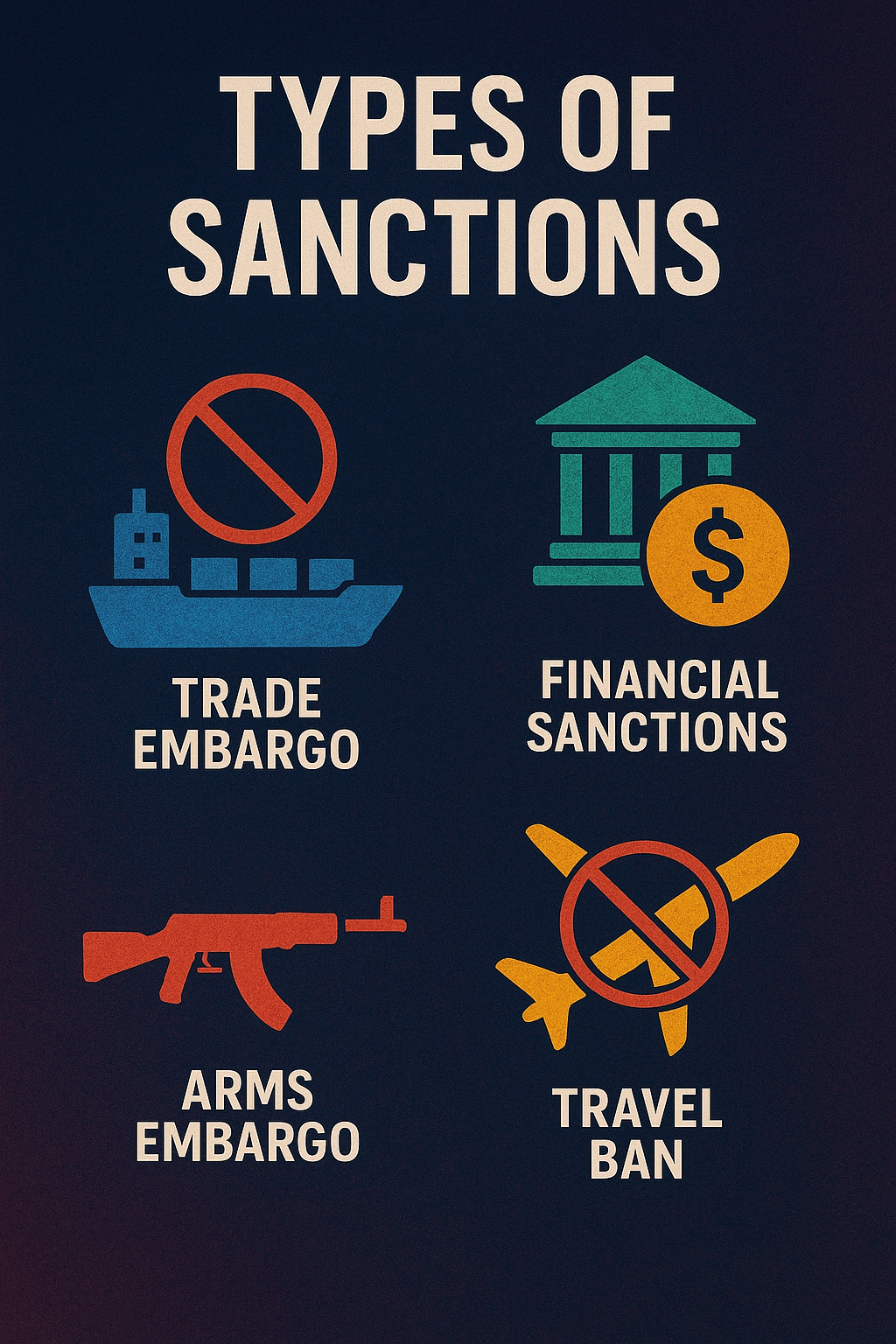
If oil funds the regime and petrochemicals conceal the money flow, metals and mining give the Islamic Republic its physical power.
Steel, aluminum, copper, zinc, and specialty alloys form the backbone of Iran’s industrial, military, and infrastructure ecosystem. These materials are not peripheral exports; they are strategic enablers—essential for missile production, drone manufacturing, armored vehicles, energy infrastructure, and domestic repression apparatuses.
Yet despite their clear dual-use value, Iran’s metals sector continues to operate with surprisingly low global scrutiny, allowing the regime to transform raw minerals into hard currency and strategic leverage.
3.1 Why Metals Are Sanctions Gold for Tehran
Unlike oil, metals offer Iran several structural advantages:
- easier storage and transport,
- fragmented global markets,
- diverse civilian applications,
- and weaker political signalling than energy exports.
Steel billets, aluminium ingots, copper cathodes, and ferroalloys can be sold quietly, rerouted easily, and blended into global supply chains with minimal traceability. Once melted, processed, or reshaped, origin becomes irrelevant.
For Iran, metals are not just commodities—they are sanctions-resistant assets.
3.2 The Regime’s Grip on the Metals Sector
Iran’s metals industry is dominated by state-linked conglomerates and IRGC-connected holding companies operating under layers of civilian branding.
Major actors include:
- state-owned mining and steel giants,
- military-affiliated construction firms,
- pension funds tied to security forces,
- and opaque investment vehicles controlled by political elites.
These entities enjoy preferential access to:
- subsidized energy,
- state financing,
- regulatory immunity,
- and export privileges.
In return, they function as reliable revenue generators for the regime—largely shielded from domestic accountability and international pressure.
3.3 Steel: The Workhorse of Sanctions Evasion
Steel is Iran’s most exported metal—and the most underestimated.
Products such as:
- semi-finished billets,
- slabs,
- rebar,
- and wire rods
are sold across:
- the Middle East,
- North Africa,
- Central Asia,
- Southeast Asia.
Export methods mirror those used in oil and petrochemicals:
- falsified certificates of origin,
- re-export through third countries,
- rebranding via free trade zones,
- and misclassification of grades.
Once Iranian steel is melted or rolled abroad, its sanctionable identity disappears.
3.4 Aluminium and Copper: Dual-Use by Design
Aluminium and copper are particularly valuable to Iran’s defense sector.
Aluminium is essential for:
- missile airframes,
- UAV bodies,
- lightweight military vehicles,
- and aerospace components.
Copper underpins:
- electronics,
- power systems,
- communications infrastructure,
- and weapons guidance technologies.
Iran exports these materials through layered intermediaries—often selling to traders rather than end-users—to break the traceability chain.
From a compliance standpoint, the risk is systemic: dual-use metals enter civilian supply chains without scrutiny.
3.5 Sanctions Evasion Through Scrap and Recycling Markets
One of the regime’s most effective tactics is exploiting global scrap markets.
Iran:
- imports scrap metals labeled as recycling inputs,
- processes them domestically,
- Exports finished metals under different classifications,
- or swaps scrap for finished goods abroad.
Scrap markets are notoriously opaque, lightly regulated, and rarely audited. This allows Iran to:
- bypass material tracking,
- disguise feedstock origins,
- and avoid export-control thresholds.
For regulators, scrap equals invisibility.
3.6 Third-Country Laundering and Industrial Masking
Iran rarely sells metals directly to high-compliance jurisdictions. Instead, exports flow through:
- Turkey,
- Iraq,
- Oman,
- the UAE,
- Armenia,
- Georgia,
- Malaysia.
In these jurisdictions, metals are:
- repackaged,
- mixed with local production,
- re-certified,
- or lightly processed.
By the time they reach global markets, Iranian-origin metals carry clean paperwork—despite dirty origins.
This is not smuggling.
It is industrial-scale origin laundering.
3.7 Energy Subsidies: The Regime’s Hidden Competitive Weapon
Iran’s metals sector survives not through efficiency, but through massive state subsidies—especially energy.
Electricity and gas prices for steel and aluminium producers are often:
- a fraction of global market rates,
- absorbed by state-owned utilities,
- or compensated through opaque budget transfers.
This allows Iranian producers to:
- undercut global competitors,
- dump products abroad,
- and maintain profitability even under sanctions.
In effect, foreign buyers benefit from Iranian repression subsidies—whether they acknowledge it or not.
3.8 Metals Revenue and the Military–Industrial Complex
Profits from metals exports do not remain within the civilian industry.
They are funnelled into:
- IRGC construction arms,
- missile and drone programs,
- domestic surveillance infrastructure,
- and regional proxy operations.
This makes metals trade inseparable from Iran’s security and coercive apparatus.
Every steel billet exported helps finance a system that:
- represses its population,
- destabilizes its neighbors,
- and undermines global nonproliferation norms.
3.9 Compliance Blind Spots in Global Metals Trade
International companies frequently underestimate metal exposure because:
- products appear civilian,
- markets are price-driven,
- suppliers operate through traders,
- And documentation looks compliant.
But metals are among the highest-risk sectors for indirect sanctions exposure.
Key warning signs include:
- pricing below production cost,
- inconsistent supplier histories,
- routing through high-risk jurisdictions,
- reluctance to disclose energy inputs,
- links to state-affiliated funds.
Ignoring these signals is not neutrality—it is complicity.
3.10 The Strategic Reality: Metals Keep the Regime Standing
Sanctions aimed at Iran’s economy often focus on oil headlines and financial institutions. Meanwhile, metals quietly:
- generate revenue,
- sustain industry,
- support weapons programs,
- and stabilize regime-controlled employment.
As long as Iran’s metals sector remains under-enforced, sanctions will remain porous.
The Islamic Republic does not survive sanctions because it is resilient.
It survives because global enforcement tolerates its industrial camouflage.
Chapter 4: Financial Engineering Under Sanctions — Barter, Local Currencies, and Trade-Based Money Laundering
When traditional banking channels are cut off, the Islamic Republic does not retreat.
It re-engineers finance itself.
Iran’s most dangerous innovation under sanctions is not technological—it is financial. Over the past two decades, the regime has constructed a parallel system of trade-based money laundering (TBML), barter arrangements, and local-currency settlements that allow it to export high-value commodities while quietly repatriating funds beyond the reach of regulators.
This is not improvisation.
It is deliberate financial engineering, refined through years of confrontation with the global compliance regime.
4.1 Why Banking Sanctions Failed to Stop Iranian Trade
Sanctions architects assumed one core vulnerability:
Cut Iran off from dollars, and trade would collapse.
That assumption was wrong.
Iran adapted by:
- eliminating reliance on Western correspondent banking,
- shifting value transfer into trade structures,
- embedding payments inside commodity flows,
- and replacing cash with obligations.
In Iran’s system, goods move instead of money, and money moves disguised as goods.
4.2 Barter Trade: Sanctions-Evasion in Its Purest Form
Barter trade is Iran’s oldest and most resilient sanctions-evasion tool.
Under barter arrangements:
- Oil, petrochemicals, or metals are exported,
- Imports (food, machinery, electronics, construction materials) are received in return,
- No financial transaction crosses borders,
- No bank transfer triggers compliance filters.
These deals are especially common with:
- China,
- Russia,
- Venezuela,
- Iraq,
- Syria,
- Central Asian states.
Barter contracts are intentionally opaque, often governed by:
- confidential government-to-government memoranda,
- state-owned enterprises,
- or military-affiliated trading arms.
From a compliance perspective, barter is a nightmare:
There is value transfer without a traceable payment.
4.3 Local Currency Agreements: De-Dollarization as a Shield
Iran has aggressively promoted bilateral trade settled in local currencies to neutralize dollar-based enforcement.
Examples include:
- yuan–rial arrangements with China,
- ruble–rial trade with Russia,
- lira–rial settlements with Turkey,
- rupee–rial structures with India (historically).
These mechanisms:
- trap funds inside restricted financial ecosystems,
- force Iran to spend earnings on approved imports,
- and reduce exposure to SWIFT or U.S.-linked banks.
But the real advantage lies elsewhere:
local currency systems fragment oversight and dilute accountability across multiple jurisdictions.
No single regulator sees the full transaction.
4.4 The Illusion of “Humanitarian Trade”
Iran frequently masks financial engineering under humanitarian narratives.
Food, medicine, and medical equipment imports are:
- used to justify trade channels,
- leveraged to unlock restricted accounts,
- mixed with non-humanitarian goods,
- or used as political cover for larger commodity deals.
In practice:
humanitarian trade becomes a financial Trojan horse, allowing value extraction under moral protection.
Western hesitation to restrict these channels has repeatedly been exploited by Tehran.
4.5 Triangular Transactions: Disappearing the Money Trail
The most sophisticated sanctions evasion occurs through triangular—or multi-leg—transactions.
A typical structure:
- Iran exports oil or metals to Country A.
- Country A pays Country B for unrelated goods.
- Country B ships goods or credits to Iran.
- No direct payment ever touches Iranian accounts.
In some cases:
- funds never return to Iran,
- Instead they finance overseas assets,
- proxy operations,
- or foreign procurement.
The transaction is complete without a visible money loop.
This is financial laundering through geometry.
4.6 Trade-Based Money Laundering (TBML) as State Policy
TBML is not incidental in Iran—it is institutionalized.
Common techniques include:
- over-invoicing imports to move money out,
- under-invoicing exports to hide revenue,
- false commodity descriptions,
- phantom shipments,
- duplicate invoicing across shell companies.
These practices are coordinated by:
- IRGC-linked trading firms,
- state-owned exporters,
- intelligence-managed intermediaries,
- Foreign brokers paid to ignore red flags.
TBML allows Iran to convert trade flows into financial instruments—outside the banking system.
4.7 The Role of Free Trade Zones and Offshore Hubs
Iran’s financial engineering relies heavily on jurisdictions where:
- Customs oversight is weak,
- Beneficial ownership is hidden,
- And enforcement is politically constrained.
Key hubs include:
- UAE free zones,
- Turkish logistics corridors,
- Omani and Iraqi border trade,
- Malaysian offshore structures,
- Caucasus transit states.
In these zones:
- invoices are rewritten,
- cargo is reclassified,
- Contracts are reassigned,
- and financial obligations are reshuffled.
What emerges is a “clean” transaction with a contaminated origin.
4.8 How International Companies Become Unwitting Enablers
Many multinational firms insist they do not trade with Iran.
Technically, they may be correct.
But they still:
- buy products sourced from Iranian commodities,
- sell goods into laundering hubs,
- finance supply chains that intersect with Iranian exports,
- rely on traders who mask the origin.
This creates indirect sanctions exposure—often invisible until regulators intervene.
Plausible deniability does not equal compliance.
4.9 Regulatory Fragmentation: Iran’s Greatest Advantage
Iran exploits one fundamental weakness of the global system:
Sanctions enforcement is fragmented by design.
Customs agencies, banks, export-control offices, and trade regulators:
- operate in silos,
- rely on incomplete data,
- and rarely coordinate in real time.
Iran understands this better than most governments.
Its financial engineering strategies are designed to:
- fall below reporting thresholds,
- exploit jurisdictional gaps,
- and overwhelm compliance capacity.
The result is systemic leakage.
4.10 The Strategic Outcome: Sanctions Without Financial Isolation
Despite decades of sanctions, Iran:
- continues exporting,
- repatriates value,
- finances its security apparatus,
- and sustains regional operations.
This is not a sanctions failure by accident.
It is a failure of structural design.
As long as financial enforcement focuses on banks rather than trade structures, Iran’s engineered economy will continue to function.
Sanctions that cannot see the value hidden inside trade
Are sanctions Iran already knows how to beat?
Chapter 5: Risk Mapping for International Firms — Where Exposure to Iran Actually Begins
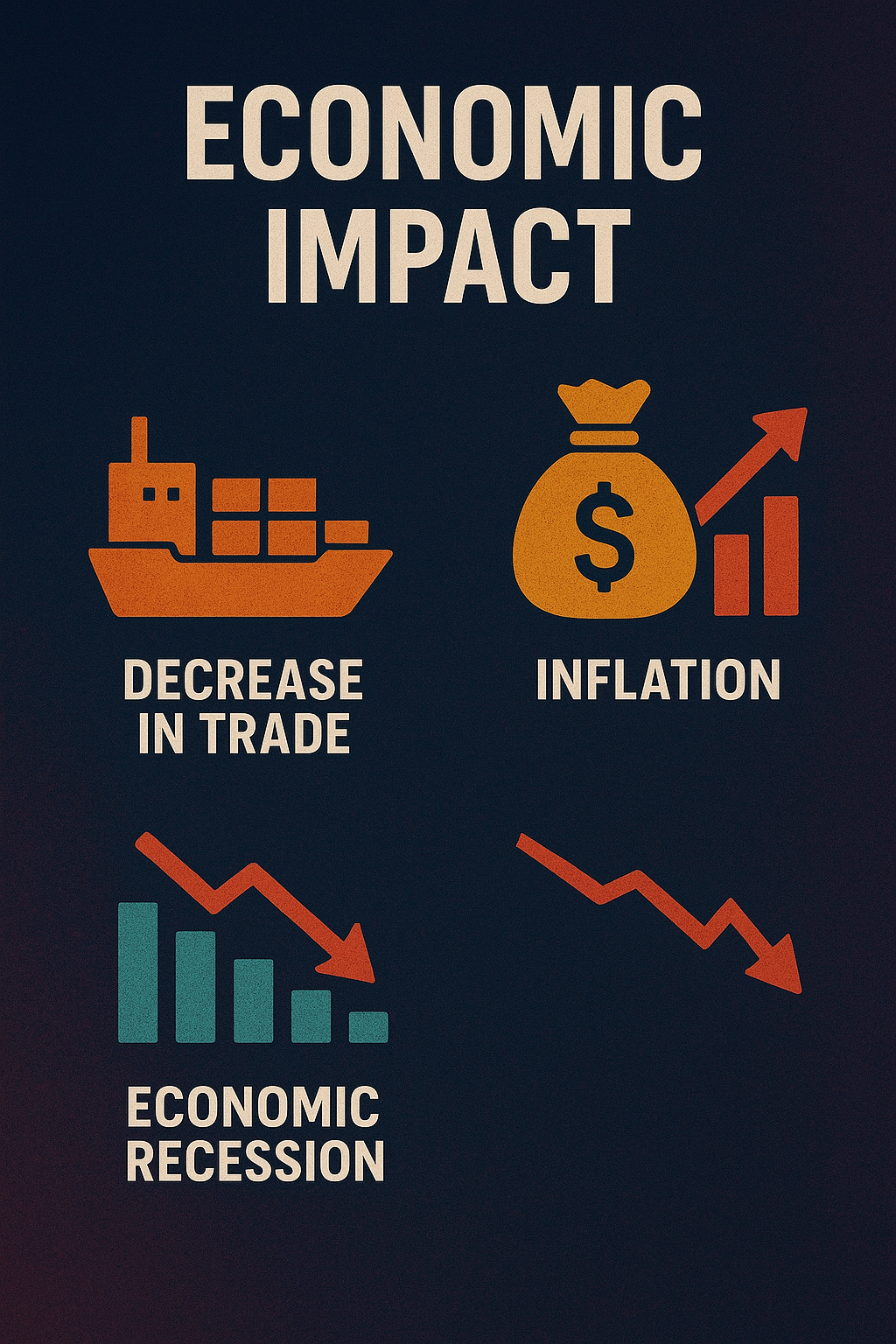
One of the Islamic Republic’s greatest advantages is not secrecy.
It is deniability engineered into global commerce.
Most international firms that become entangled in Iran-linked sanctions violations do not believe they are trading with Iran. Many never see an Iranian counterparty, bank, or port. Yet exposure occurs anyway—quietly, structurally, and repeatedly.
This chapter dismantles the myth of “distance” from Iran and maps where sanctions risk truly begins.
5.1 The Dangerous Illusion of Directness
Sanctions compliance programs often focus on a single question:
“Are we doing business directly with Iran?”
This is the wrong question.
Iran’s economy under sanctions is designed precisely to ensure that:
- Direct transactions are rare,
- intermediaries absorb visibility,
- and responsibility is diffused.
Exposure now occurs indirectly, through:
- traders,
- distributors,
- logistics partners,
- free-zone entities,
- and commodity aggregators.
If a firm believes sanctions risk only starts at a named Iranian entity, it has already failed.
5.2 High-Risk Sectors Most Commonly Exposed
Iran-linked exposure clusters around specific industries—especially those that intersect with the regime’s export strengths.
The highest-risk sectors include:
- energy services and shipping,
- petrochemicals and polymers,
- metals and mining,
- industrial machinery,
- construction materials,
- electronics and electrical components,
- Maritime insurance and reinsurance.
These sectors overlap directly with Iran’s sanctions-evasion revenue streams.
If your supply chain touches these markets, Iran is not peripheral—it is structurally present.
5.3 Traders and Aggregators: The First Point of Contamination
Commodity traders are Iran’s preferred laundering layer.
Why?
Because traders:
- consolidate supply from multiple origins,
- operate through spot transactions,
- rely on speed rather than deep due diligence,
- and prioritise price arbitrage.
Iranian-origin goods are frequently:
- blended with non-Iranian supply,
- sold through intermediaries,
- relabeled as “regional” products,
- or stripped of origin metadata.
Once aggregated, compliance visibility collapses.
5.4 Free Trade Zones: Compliance Blind Spots by Design
Free trade zones are not neutral spaces.
They are risk multipliers.
Iranian-linked goods routinely enter free zones where:
- Customs controls are relaxed,
- origin rules are flexible,
- Documentation can be amended,
- beneficial ownership is obscured.
Zones in the UAE, Turkey, Oman, Malaysia, and the Caucasus function as:
- laundering hubs,
- re-export staging points,
- documentation rewriters.
If a supplier’s operations are centered in these zones and pricing is unusually competitive, the question is not if Iran is involved—but how.
5.5 Pricing Signals: When the Numbers Don’t Add Up
One of the most reliable indicators of Iran-linked exposure is price distortion.
Iranian exporters benefit from:
- subsidized energy,
- state-backed logistics,
- sanctions-driven desperation to sell,
- and tolerance for razor-thin margins.
Red flags include:
- pricing below regional production costs,
- unexplained discounts,
- inconsistent freight charges,
- refusal to break down cost structures.
Cheap supply often has a geopolitical explanation.
5.6 Documentation Games: Clean Paper, Dirty Reality
Iran’s sanctions evasion thrives on paperwork manipulation.
Common tactics include:
- vague product descriptions,
- recycled certificates of origin,
- inconsistent HS codes,
- mismatched shipping timelines,
- sudden changes in counterparties.
Documents may appear compliant individually—but collapse when viewed together.
Compliance failures occur not because firms lack documents, but because they trust them too much.
5.7 Financial Institutions: Exposure Without Transactions
Banks often assume that if no Iran-linked payment is processed, exposure does not exist.
This is false.
Banks face sanctions risk through:
- trade finance instruments,
- letters of credit tied to contaminated goods,
- commodity-backed lending,
- shipping finance,
- insurance-linked cash flows.
When value moves through goods rather than wires, financial institutions still facilitate the transaction—even if no Iranian account appears.
5.8 Insurance and Reinsurance: The Silent Enablers
Maritime and trade insurers are among the most exposed actors in Iran-linked networks.
Coverage is often extended to:
- vessels involved in commodity transport,
- shipments routed through high-risk corridors,
- cargoes with falsified origin.
Insurers rarely see the full trade chain.
But when claims arise, exposure becomes unavoidable.
Silence is not protection—it is delayed liability.
5.9 Plausible Deniability Is Not a Defense
A recurring pattern in enforcement actions is this:
firms insist they “did not know.”
Regulators increasingly respond:
“You should have.”
The compliance standard is no longer ignorance—it is a reasonable inference.
If risk indicators accumulate and firms choose not to look deeper, they assume liability by omission.
5.10 The Reality Check: Iran Is Embedded, Not Isolated
The Islamic Republic has not been isolated by sanctions.
It has been embedded into global trade at angles that avoid detection.
For international companies, the choice is stark:
- Invest in deep, trade-based risk analysis,
- or accept recurring exposure to enforcement, reputational damage, and legal risk.
Iran does not hide in the shadows anymore.
It hides in plain sight—inside the structures global commerce relies on.
Sanctions compliance that stops at names and lists
will never stop a regime that weaponizes the system itself.
Chapter 6: Oil, Shipping, and Maritime Laundering — How Iran Keeps Energy Revenues Alive
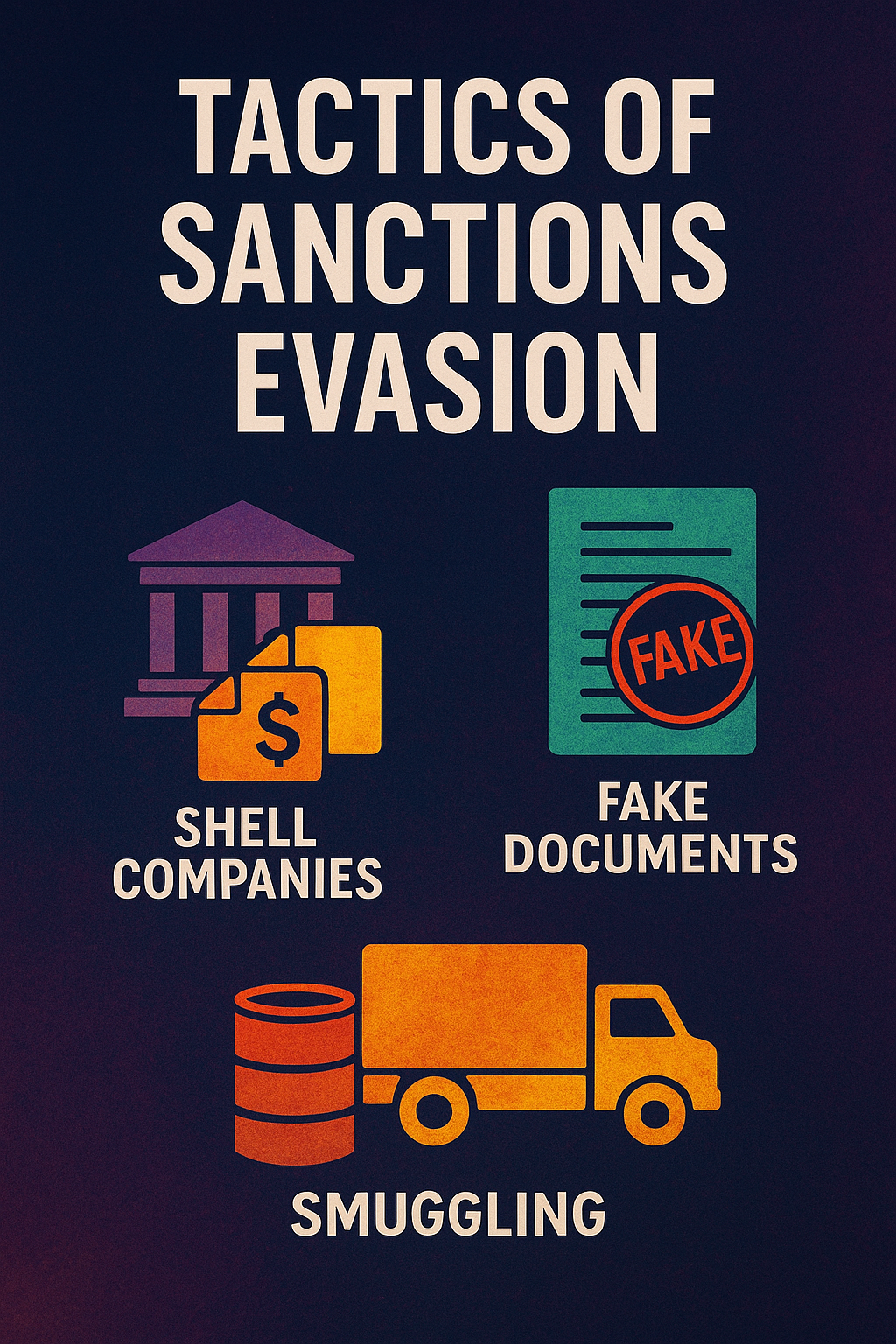
If oil is the lifeblood of the Islamic Republic, then maritime deception is its circulatory system.
Despite being one of the most heavily sanctioned energy exporters in the world, Iran continues to move millions of barrels of crude and refined products across global waters. This is not the result of lax enforcement—it is the product of a sophisticated, state-directed maritime laundering machine that exploits the structural weaknesses of international shipping, insurance, and port oversight.
Sanctions did not stop Iran’s oil trade.
They forced it underground—where it became more adaptive, more opaque, and more dangerous.
6.1 The Ghost Fleet: Iran’s Floating Sanctions Network
At the center of Iran’s oil-export survival is its fleet of so-called “ghost tankers.”
These vessels:
- regularly disable AIS transponders,
- spoof GPS locations,
- change names and flags repeatedly,
- operate through shell ownership structures,
- and cycle through obscure registries.
Some tankers change identity multiple times in a single year.
This fleet allows Iran to:
- hide vessel movements,
- obscure port calls,
- evade tracking by regulators and analysts,
- and continue ship-to-ship (STS) transfers at sea.
From a compliance standpoint, the ghost fleet represents a moving blind spot.
6.2 Ship-to-Ship Transfers: Oil Without a Port
One of the most critical evasion techniques is ship-to-ship transfer.
Iranian crude is often:
- transferred at sea,
- blended with other grades,
- rebranded under different origin claims,
- and delivered to final buyers as “non-Iranian” oil.
STS transfers occur:
- in international waters,
- near Malaysia, Singapore, and Indonesia,
- off the coast of Oman,
- near Fujairah and the Gulf of Oman.
Once oil is blended, chemical fingerprinting becomes complex, time-consuming, and politically sensitive.
For buyers, deniability increases.
For Iran, traceability collapses.
6.3 Flag Hopping and Ownership Obfuscation
Iran’s maritime network relies on constant identity fragmentation.
Tankers are registered under:
- flags of convenience,
- short-lived registries,
- jurisdictions with weak enforcement,
- Companies with nominee directors.
Ownership chains often involve:
- offshore holding companies,
- trusts,
- shell corporations,
- and straw owners.
By the time regulators identify a sanctioned vessel, it has already changed its legal identity.
Sanctions enforcement becomes reactive by design.
6.4 Insurance, Reinsurance, and Silent Coverage
Oil does not move without insurance—or at least the appearance of it.
Iran solves this through:
- state-backed insurers,
- shadow reinsurance arrangements,
- falsified coverage certificates,
- and insurers in permissive jurisdictions.
Some shipments sail uninsured, accepting a higher risk in exchange for continued trade.
Others rely on front insurers that mask the true beneficiary.
When incidents occur, responsibility is diffused—often leaving victims without recourse and regulators without leverage.
6.5 China: The Anchor Buyer No One Confronts
No analysis of Iran’s oil trade is complete without addressing China.
China remains:
- the primary buyer of discounted Iranian crude,
- the ultimate destination for many ghost shipments,
- The geopolitical shield that sustains Iran’s energy revenues.
Oil is often:
- imported under falsified origin declarations,
- blended before customs clearance,
- labeled as “Malaysian” or “Omani” crude,
- routed through intermediaries to preserve plausible deniability.
Beijing benefits from:
- cheap energy,
- leverage over Tehran,
- and strategic ambiguity.
Iran benefits from a buyer too powerful to be sanctioned effectively.
6.6 Ports, Terminals, and Complicit Silence
Ports play a critical—often overlooked—role in sanctions evasion.
Some terminals:
- ignore AIS inconsistencies,
- fail to verify cargo origin,
- accept falsified documentation,
- Prioritise throughput over compliance.
In regions dependent on energy trade, enforcement becomes negotiable.
Ports that claim ignorance often function as enablers by omission.
6.7 Revenue Repatriation: From Crude to Cash
Exporting oil is only half the challenge.
The real question is: how does Iran get paid?
Payment structures include:
- offshore escrow accounts,
- barter arrangements,
- local-currency settlements,
- triangular trade structures,
- goods-for-oil swaps.
Revenue is often:
- trapped abroad but strategically spent,
- redirected to procurement networks,
- used to fund foreign operations,
- or recycled through trade-based laundering.
Money does not need to return to Tehran to serve the regime.
6.8 Environmental and Safety Risks as Externalised Costs
Iran’s maritime evasion creates risks that go far beyond sanctions compliance.
Ghost tankers:
- lack proper maintenance,
- sail without credible insurance,
- pose environmental hazards,
- increase accident risks in crowded waterways.
When disasters occur, responsibility evaporates.
The global maritime system absorbs the cost—financially, environmentally, and legally.
6.9 Why Maritime Sanctions Remain Structurally Weak
The core problem is not enforcement capacity.
It is enforcement fragmentation.
Shipping oversight is split across:
- flag states,
- port states,
- insurers,
- classification societies,
- and private registries.
Iran exploits these seams with precision.
As long as no single authority controls the full maritime lifecycle, Iran’s oil will keep moving.
6.10 The Strategic Bottom Line: Oil Still Pays for Power
Despite sanctions, Iran’s oil revenues:
- finance the IRGC,
- sustain proxy militias,
- fund missile and drone programs,
- underwrite domestic repression.
The regime has proven a harsh truth:
sanctions that stop banks but not ships
Do not stop oil states.
Until maritime enforcement becomes integrated, proactive, and politically courageous, Iran’s energy trade will remain sanctions-resistant—and the regime will continue to monetise the world’s tolerance.
Chapter 7: Petrochemicals as Sanctions Armour — Iran’s Quiet Export Empire
Why global compliance systems repeatedly fail to stop illicit trade
If oil is visible and politically sensitive, petrochemicals are Iran’s sanctions-proof shadow economy.
Over the past decade, the Islamic Republic has deliberately shifted emphasis from crude oil exports to downstream petrochemical production—not as an economic modernization strategy, but as a calculated response to sanctions pressure. Petrochemicals offer what oil no longer does: fragmented supply chains, diversified buyers, and far weaker enforcement scrutiny.
This is not accidental.
It is systemic design.
7.1 Why Petrochemicals Matter More Than Ever
Petrochemical products—polymers, methanol, urea, polyethylene, polypropylene, and other derivatives—are:
- lower-profile than crude oil,
- harder to trace to the origin,
- used across civilian industries,
- sold in smaller, more frequent shipments,
- and traded by a far wider range of intermediaries.
This makes them ideal vehicles for sanctions dilution.
Iran is now one of the largest petrochemical producers in the Middle East, and a significant share of its foreign currency inflows comes from this sector—not despite sanctions, but because of them.
7.2 State Control Disguised as Commercial Activity
Iran’s petrochemical industry is not a free market.
Key producers are:
- directly owned by the state,
- controlled by the IRGC,
- or operated through regime-linked holding companies.
Many firms present themselves as “private exporters,” yet their boards, financing, and logistics are deeply entangled with sanctioned entities.
This allows Iran to:
- shield state involvement,
- outsource risk to intermediaries,
- and deny government responsibility when violations occur.
For foreign buyers, this creates the illusion of distance from sanctioned actors.
7.3 Fragmented Exports, Infinite Buyers
Unlike oil, petrochemical exports are atomized.
Instead of a few large buyers, Iran sells to:
- regional traders,
- mid-sized manufacturers,
- commodity brokers,
- distributors in Asia, Africa, and Latin America.
Shipments are:
- smaller,
- less visible,
- routed through multiple ports,
- re-exported after minimal processing.
By the time goods reach end users, Iranian origin is often legally obscured—even when physically unchanged.
7.4 Trade-Based Money Laundering in Plain Sight
Petrochemical trade is a textbook environment for trade-based money laundering (TBML).
Common techniques include:
- under-invoicing exports,
- over-invoicing imports,
- phantom shipments,
- manipulated quality declarations,
- mismatched customs data.
These distortions allow Iran to:
- move value without moving money,
- settle accounts offshore,
- and bypass financial monitoring systems.
Banks see “chemicals.”
Customs see “plastic resins.”
What moves unseen is strategic capital.
7.5 Free Zones and Re-Labelling Hubs
Special economic zones play a critical role.
Petrochemicals are often:
- exported to free trade zones,
- repackaged or relabeled,
- blended with non-Iranian goods,
- re-exported under new documentation.
Jurisdictions with weak origin verification effectively launder the product.
Compliance failure here is structural—not incidental.
7.6 China, Southeast Asia, and the Demand Loop
China remains the dominant buyer—but not the only one.
Iranian petrochemicals flow into:
- Chinese manufacturing supply chains,
- Southeast Asian processing hubs,
- regional construction and packaging industries.
Unlike oil, these buyers often lack sanctions expertise or the incentive to investigate origin.
The result is distributed complicity—where no single buyer feels responsible, yet the system functions smoothly.
7.7 Financial Settlement Without Dollars
Petrochemical trade rarely settles in USD.
Instead, Iran relies on:
- local currency arrangements,
- offshore clearing accounts,
- barter exchanges,
- goods-for-goods swaps,
- intermediary-held balances.
This keeps transactions outside traditional sanctions chokepoints.
The money may never “return” to Iran—but it does not need to.
7.8 Regulatory Blind Spots and Enforcement Gaps
Petrochemicals fall between regulatory regimes:
- not as strategic as oil,
- not as restricted as weapons,
- not as scrutinized as nuclear-related goods.
Sanctions lists struggle to keep pace with:
- new derivatives,
- reclassified products,
- evolving HS codes.
Iran exploits this lag aggressively.
7.9 How Revenues Feed the Regime
Petrochemical income:
- funds IRGC-affiliated enterprises,
- sustains domestic patronage networks,
- supports foreign proxies,
- offsets oil revenue volatility.
It is quiet money—less politicized, less visible, but just as consequential.
7.10 The Strategic Reality: Sanctions Without Scope
Western sanctions policy has focused on headline commodities.
Iran has responded by monetizing complexity.
Petrochemicals are not a loophole—they are the new center of gravity.
As long as enforcement remains oil-centric and bank-centric, Iran’s petrochemical empire will continue to operate largely unchallenged, providing the regime with a resilient financial backbone in defiance of international pressure.
Chapter 8: Metals, Minerals, and the Hidden Backbone of Iran’s Sanctions Economy
If petrochemicals provide Iran with liquidity, metals provide durability.
Steel, aluminium, copper, and speciality alloys are the unglamorous foundations of modern industry—and of Iran’s sanctions survival strategy. These sectors sit at the intersection of civilian infrastructure, military production, and ballistic missile development, making them ideal dual-use revenue engines that operate below the political radar.
Unlike oil, metals are not seen as geopolitical flashpoints.
That perception is dangerously outdated.
8.1 Why Metals Are Strategically Critical
Metals serve three functions simultaneously for the Islamic Republic:
- export revenue generation,
- domestic industrial self-sufficiency,
- Supply input for missile, drone, and defence programs.
This triple-use nature allows Tehran to argue civilian necessity while quietly sustaining military capability.
Sanctions regimes that treat metals as “commercial” rather than “strategic” inadvertently reinforce this advantage.
8.2 State and IRGC Dominance Behind Corporate Facades
Iran’s major metal producers are rarely independent.
Key steel, aluminium, and copper firms are:
- state-owned,
- controlled by quasi-governmental foundations,
- or linked to IRGC investment arms.
Ownership structures are intentionally opaque, often routed through:
- pension funds,
- holding companies,
- or export consortiums presented as private enterprises.
For international buyers, tracing ultimate beneficiaries is deliberately difficult—and often avoided altogether.
8.3 Steel: Volume, Scale, and Obfuscation
Steel is Iran’s most important metal export.
It is:
- bulky,
- widely used,
- difficult to trace once processed,
- and rarely sanctioned at the product level.
Iran exports steel billets, slabs, and semi-finished products that are later:
- melted down,
- reshaped,
- incorporated into third-country manufacturing.
By the time steel becomes a finished product, Iranian origin is legally and practically erased.
8.4 Aluminium and Aerospace-Relevant Alloys
Aluminium is more sensitive—but not sensitive enough.
Iranian aluminium exports are often framed as:
- construction inputs,
- packaging materials,
- general industrial supplies.
Yet, aluminium alloys are critical for:
- aerospace components,
- missile casings,
- UAV structures,
- lightweight military platforms.
Sanctions enforcement struggles to distinguish between benign and strategic end-use, especially when intermediaries are involved.
8.5 Copper and the Infrastructure-Military Nexus
Copper occupies a similar grey zone.
It is essential for:
- power grids,
- telecommunications,
- industrial machinery,
- and weapons systems.
Iran exports copper cathodes and semi-finished products through:
- regional traders,
- offshore commodity brokers,
- free-zone intermediaries.
Once integrated into wiring, electronics, or mechanical systems, Iranian copper becomes indistinguishable.
8.6 Re-Export Chains and Processing Laundering
A common pattern across metal exports:
- Iran exports semi-finished metals.
- A third country performs minimal processing.
- The product is reclassified and re-exported.
- Origin documentation shifts accordingly.
This “processing laundering” is legally convenient and strategically effective.
Compliance frameworks rarely capture it.
8.7 Trade Misinvoicing as Financial Infrastructure
Metal trade is highly susceptible to misinvoicing due to:
- price volatility,
- quality grading flexibility,
- regional price disparities.
Iran exploits this by:
- underpricing exports to favored intermediaries,
- overpricing imports to move capital,
- balancing accounts outside the banking system.
Metals become financial instruments—not just commodities.
8.8 China, Eurasia, and the Normalization of Risk
China remains a primary destination for Iranian metals, but not alone.
Exports also flow to:
- Eurasian markets,
- Central Asia,
- parts of Eastern Europe,
- and emerging economies with limited sanctions enforcement capacity.
In these environments, dealing with Iranian metals is seen as routine—not risky.
This normalization is a strategic victory for Tehran.
8.9 How Metal Revenues Reinforce Strategic Autonomy
Metal exports:
- stabilize foreign currency inflows,
- support domestic heavy industry,
- insulate military production from import dependency,
- reduce vulnerability to oil-market shocks.
They quietly fund resilience.
While oil sanctions generate headlines, metal exports generate continuity.
8.10 The Enforcement Illusion
Sanctions policymakers often assume:
- metals are replaceable,
- markets are transparent,
- Enforcement is scalable.
Iran has demonstrated the opposite.
By embedding sanctioned value deep into global supply chains, the regime ensures that stopping Iranian metals would require confronting the industrial ecosystems of multiple countries—a political cost few are willing to pay.
8.11 Strategic Blindness and the Cost of Delay
Every year that metal sanctions remain fragmented:
- Iran strengthens domestic metallurgy,
- refines export networks,
- and deepens military-industrial integration.
This is not a loophole awaiting closure.
It is a pillar already bearing weight.
Chapter 9: Triangular Trade, Barter Systems, and the Architecture of Non-Cash Settlement
When the Islamic Republic was cut off from the global financial system, it did not collapse.
It mutated.
Unable to rely on dollar clearing, correspondent banking, or transparent trade finance, Tehran engineered a parallel settlement architecture—one designed to move value without moving money in ways that regulators can easily see.
At the heart of this system lie three interlocking mechanisms:
triangular trade, structured barter, and non-cash settlement frameworks.
Together, they form the invisible circulatory system of Iran’s sanctions economy.
9.1 From Banking Isolation to Financial Engineering
Sanctions did not merely restrict Iran’s access to finance; they forced innovation.
Rather than attempting to re-enter the Western financial system, the regime pursued a more durable solution:
- eliminate reliance on cash transfers,
- fragment transactions across jurisdictions,
- and embed value inside the trade itself.
This approach shifts risk from banks to supply chains, where oversight is weaker, and accountability is diffuse.
9.2 Triangular Trade: The Disappearing Origin Problem
Triangular trade allows Iran to sell goods to one country, receive value from another, and settle accounts elsewhere—without any bilateral transaction revealing the full picture.
A simplified structure:
- Iran exports oil, petrochemicals, or metals to Country A.
- Country A sells unrelated goods to Country B.
- Country B settles payments through intermediaries tied to Iran.
- No single transaction exposes Iranian origin or Iranian beneficiaries.
This fragmentation is intentional—and devastatingly effective.
9.3 The Role of Trading Hubs and Free Zones
Triangular trade thrives in jurisdictions that specialize in:
- re-exports,
- free-trade zones,
- flexible customs regimes.
These hubs:
- decouple goods from origin,
- allow documentation to be rewritten,
- normalize opaque ownership structures.
Once commodities pass through these zones, compliance systems lose traction.
9.4 Barter as Strategic Finance, Not Primitive Trade
Barter is often misunderstood as a fallback for weak economies.
In Iran’s case, it is a strategic financial design.
Barter arrangements allow Iran to:
- exchange oil for machinery, food, or infrastructure,
- avoid currency conversion,
- bypass sanctioned banks entirely.
These are not informal swaps.
They are contract-based, state-backed, and often long-term.
9.5 Oil-for-Goods and the Sanitization of Revenue
In barter frameworks:
- oil becomes a payment instrument,
- goods become settlement,
- and revenue becomes invisible.
By the time goods arrive in Iran—or Iranian commodities are resold—the financial trail has evaporated.
This model neutralises:
- transaction monitoring,
- currency controls,
- and traditional sanctions triggers.
9.6 Local Currency Agreements and Managed Convertibility
Where barter is impractical, Iran relies on local currency mechanisms.
These include:
- bilateral clearing accounts,
- controlled currency swaps,
- settlement in non-convertible or restricted currencies.
Funds remain trapped inside partner countries, but Iran converts them through:
- imports,
- re-exports,
- or investment vehicles.
Value moves, even when money does not.
9.7 The Banking System’s Peripheral Role
In these structures, banks are no longer central actors.
Instead, they become:
- document processors,
- escrow holders,
- or passive intermediaries.
The real action occurs between:
- trading companies,
- logistics providers,
- and state-aligned brokers.
This reduces banks’ ability—and responsibility—to detect sanctions evasion.
9.8 Layered Intermediaries and Intentional Complexity
Every additional intermediary serves a purpose:
- diluted liability,
- fragmented compliance,
- plausible deniability.
Iran’s system is designed so that:
- No single actor sees the whole transaction,
- No single jurisdiction has enforcement authority,
- No single document tells the full story.
Complexity is not a side effect.
It is the strategy.
9.9 Why These Systems Persist
Triangular trade and barter persist because they:
- deliver value efficiently,
- spread risk broadly,
- and generate profits for non-Iranian actors.
Many participants are not ideologically aligned with Tehran.
They are simply compensated enough to look away.
9.10 The Compliance Gap for Global Firms
For international companies and financial institutions, this creates a structural blind spot.
Traditional controls focus on:
- direct counterparties,
- currency flows,
- and explicit Iranian identifiers.
But Iran’s architecture avoids all three.
This leaves companies exposed to:
- indirect sanctions violations,
- reputational damage,
- secondary sanctions risk.
9.11 Strategic Consequences
Non-cash settlement mechanisms do more than sustain trade.
They:
- undermine sanctions credibility,
- encourage imitation by other regimes,
- and weaken the deterrent power of financial isolation.
Iran has effectively demonstrated that modern sanctions can be out-engineered.
Chapter 10: Sector-by-Sector Risk Mapping — Where Sanctions Exposure Actually Lives
By this stage, one conclusion is unavoidable:
Sanctions evasion is not abstract. It is sector-specific, structurally embedded, and operationally predictable.
Different Iranian industries evade sanctions in different ways—not because of chance, but because each sector has unique:
- revenue profiles,
- logistics needs,
- documentation patterns,
- and exposure points.
This chapter translates Iran’s evasion architecture into sector-level risk maps—designed for compliance teams, insurers, banks, traders, and multinational firms that still underestimate how deeply Iranian exposure can penetrate global supply chains.
10.1 Why Sector-Specific Analysis Matters
Generic sanctions screening fails because Iran does not operate generically.
An oil shipment does not behave like a petrochemical consignment.
A steel export does not move like aluminium billets.
A mining transaction does not settle like refined fuel.
Each sector:
- uses different intermediaries,
- exploits different loopholes,
- and leaves different forensic traces.
Treating them uniformly guarantees blind spots.
10.2 Oil Sector: The Gold Standard of Evasion
Iran’s oil sector is the most advanced sanctions-evasion operation ever constructed by a state actor.
Primary Risk Vectors
- Ship-to-ship (STS) transfers at sea
- Ghost tankers with spoofed AIS signals
- Reflagging and renaming cycles
- Blended crude to erase chemical signatures
- Documentation laundering through intermediaries
Red Flags for Firms and Insurers
- Inconsistent port call histories
- Sudden changes in vessel ownership
- Cargo blending without commercial rationale
- Pricing anomalies far below market rates
- Charterers with opaque ownership
Strategic Insight
Oil revenues do not simply fund the state budget—they directly finance:
- the IRGC,
- foreign proxy operations,
- missile and drone programs.
Any exposure to Iranian oil is exposure to the regime’s coercive power projection.
10.3 Petrochemicals: The Sanctions Gray Zone
Petrochemicals occupy a dangerous middle space:
- civilian on paper,
- strategic in practice.
This ambiguity makes enforcement uneven—and exploitation easy.
Common Evasion Techniques
- Mislabeling products (e.g., polymers as industrial plastics)
- Routing through third-country processors
- Use of private trading firms instead of state entities
- Settlements through barter or local currencies
Why This Sector Is Expanding
Petrochemicals offer:
- smaller shipment sizes,
- faster turnover,
- Fewer headline risks than oil.
They are ideal for sanctions fatigue environments.
Compliance Vulnerability
Many companies underestimate how quickly petrochemical exposure can escalate into:
- secondary sanctions,
- export control violations,
- or material support risks.
10.4 Metals and Mining: The Quiet Revenue Engine
Iran’s metals sector—steel, aluminium, copper, zinc—is one of the least scrutinized and most abused.
Structural Advantages for Iran
- High global demand
- Easy reprocessing
- Minimal end-use verification
- Simple misclassification
Evasion Patterns
- Export via regional trading hubs
- Rebranding as recycled or semi-finished goods
- False country-of-origin certificates
- Integration into third-country manufacturing chains
Why This Matters
Metals revenues are often used to:
- stabilize foreign reserves,
- fund procurement networks,
- pay intermediaries involved in sensitive technology acquisition.
This is not a low-risk trade.
It is a deferred-risk trade.
10.5 Downstream Manufacturing: The Exposure Multiplier
Once Iranian commodities enter downstream supply chains, exposure multiplies exponentially.
A single sanctioned-origin input can contaminate:
- automotive supply chains,
- construction projects,
- infrastructure financing,
- government procurement contracts.
Downstream firms often claim ignorance—but regulators increasingly reject that defense.
10.6 Financial Institutions: Indirect Exposure Is Still Exposure
Banks and insurers are rarely directly tied to Iranian entities.
Instead, they are exposed through:
- trade finance instruments,
- shipping insurance,
- receivables financing,
- commodity-backed lending.
Key Failure Points
- Overreliance on client representations
- Weak beneficial ownership verification
- Inadequate trade-document scrutiny
- Failure to analyse the transaction purpose
Iran’s model depends on this complacency.
10.7 Risk Matrix: Where to Expect Maximum Exposure
| Sector | Sanctions Risk | Detection Difficulty | Regulatory Consequence |
| Oil | Extreme | High | Severe |
| Petrochemicals | High | Medium | High |
| Metals | Medium–High | High | Escalating |
| Manufacturing | Variable | Very High | Cumulative |
| Finance & Insurance | Indirect but Critical | High | Systemic |
10.8 The Cost of Underestimating Iran
Iran does not need access to global markets.
It needs access to your market—quietly, indirectly, and profitably.
Every transaction that:
- ignores origin ambiguity,
- accepts implausible pricing,
- or tolerates documentation inconsistencies
becomes a node in Iran’s sanctions-evasion network.
10.9 Strategic Takeaway for Global Actors
Sanctions compliance is no longer about checking lists.
It is about understanding systems.
Iran’s success proves that:
- sanctions fail when enforcement is fragmented,
- evasion thrives where sectors are misunderstood,
- and risk accumulates where accountability is diluted.
The question for global firms is no longer:
“Are we doing business with Iran?”
It is:
“Can we prove that we are not?”
Chapter 11: Why Sanctions Enforcement Keeps Failing — Western Blind Spots, Bureaucratic Lag, and Strategic Self-Deception
If Iran’s sanctions-evasion ecosystem is sophisticated, it is only because enforcement remains structurally weak.
The persistence of Iranian oil exports, petrochemical sales, metals trading, and financial repatriation is not evidence of Tehran’s brilliance alone. It is also an indictment of Western enforcement regimes that are:
- reactive instead of anticipatory,
- siloed instead of integrated,
- legalistic instead of strategic.
Sanctions are imposed with political theatre—but enforced with bureaucratic caution.
11.1 The Sanctions Paradox: Strong Laws, Weak Execution
On paper, Iran faces one of the most comprehensive sanctions architectures ever assembled.
In practice:
- enforcement is inconsistent,
- Penalties are uneven,
- and violators often face delayed or symbolic consequences.
This creates a dangerous paradox:
Sanctions appear strict enough to deter compliant actors, yet porous enough to accommodate determined evaders.
Iran has learned to operate precisely within this gap.
11.2 Fragmented Enforcement: No One Owns the Whole Problem
One of the West’s most critical weaknesses is institutional fragmentation.
Different agencies oversee:
- export controls,
- financial sanctions,
- maritime compliance,
- Customs enforcement,
- corporate regulation.
These bodies rarely share real-time intelligence, risk models, or operational data.
As a result:
- Shipping anomalies go unnoticed by financial regulators,
- Financial red flags are invisible to customs authorities,
- Export violations are discovered years after the fact.
Iran exploits this fragmentation by designing transactions that look benign within any single regulatory silo—but illicit when viewed holistically.
11.3 The Illusion of Compliance: Box-Ticking Over Risk Analysis
Western compliance culture has become procedural, not analytical.
Many institutions prioritize:
- checklist completion,
- formal representations,
- legal disclaimers.
Iran understands this psychology perfectly.
Its procurement networks do not aim to pass deep scrutiny.
They aim to pass a superficial review.
As long as:
- The paperwork looks plausible,
- The counterparties are not explicitly sanctioned,
- and the transaction structure is “technically legal,”
Many institutions proceed—despite obvious red flags.
This is not compliance.
It is self-administered blindness.
11.4 Secondary Sanctions Fatigue
Secondary sanctions were once a powerful deterrent.
Today, they are increasingly diluted by political hesitation.
Western governments:
- threaten enforcement loudly,
- enforce selectively,
- retreat quietly under diplomatic pressure.
This inconsistency teaches global actors a dangerous lesson:
The probability of punishment is low if the transaction is indirect, complex, and politically inconvenient.
Iran thrives in this ambiguity.
11.5 China, Russia, and the Enforcement Deadlock
Sanctions enforcement cannot succeed while major powers actively undermine it.
China and Russia:
- block multilateral enforcement initiatives,
- refuse cooperation on investigations,
- Provide alternative financial and logistical channels.
Western policymakers often pretend this is a temporary challenge.
It is not.
It is a structural reality of multipolar competition—one in which Iran is a willing proxy.
11.6 Legal Overreach Fear: When Enforcement Paralyzes Itself
Western regulators often hesitate because they fear:
- legal challenges,
- trade retaliation,
- diplomatic escalation,
- corporate backlash.
This leads to enforcement paralysis.
Iran, by contrast, faces no such constraints.
Its system:
- criminalises dissent,
- Shields officials
- frame evasion as patriotic resistance.
This asymmetry is devastating.
11.7 The Cost of Delayed Action
When enforcement finally occurs, it is often:
- years too late,
- after networks have restructured,
- Once facilitators have disappeared.
Sanctions designations become symbolic rather than disruptive.
Iran factors this delay into its strategy.
Exposure is treated as a cost of doing business.
11.8 Western Hypocrisy: The Unspoken Complicity
Perhaps the most uncomfortable truth is this:
Sanctions evasion persists because it is economically convenient.
Discounted oil stabilises inflation.
Cheap petrochemicals support industry.
Low-cost metals feed construction booms.
Many governments quietly tolerate this reality while publicly condemning Tehran.
This duality undermines enforcement credibility and emboldens Iranian networks.
11.9 Why Reform Has Stalled
Calls for better enforcement often fail because they require:
- political courage,
- inter-agency integration,
- confrontation with powerful economic interests.
These reforms are unpopular, complex, and disruptive.
So they are postponed—again and again.
Iran does not need to defeat sanctions.
It only needs them to remain unreformed.
11.10 Strategic Reality Check
Sanctions do not fail because they are illegal.
They fail because they are misaligned with reality.
Iran operates:
- systemically,
- transnationally,
- adaptively.
Western enforcement remains:
- episodic,
- jurisdiction-bound,
- politically constrained.
Until this mismatch is addressed, sanctions will continue to signal resolve—without delivering results.
11.11 The Central Question
The problem is no longer Iran’s behavior.
That is predictable.
The real question is:
How long will enforcement regimes continue pretending that incremental fixes can stop a system designed to exploit them?
Chapter 12: What Effective Sanctions Enforcement Would Actually Require — And Why It Hasn’t Happened
If Chapters 1–11 demonstrated how Iran evades sanctions, this chapter confronts a more uncomfortable reality:
The international community already knows how to disrupt Iran’s sanctions-evasion networks.
What it lacks is the political will to implement those measures consistently.
Effective enforcement is not a mystery.
It is a choice.
12.1 The First Requirement: Treat Sanctions Evasion as a System, Not a Crime
Western enforcement frameworks still approach sanctions violations as:
- isolated legal infractions,
- compliance failures,
- or regulatory oversights.
Iran’s evasion architecture is none of these.
It is:
- state-directed,
- strategically coordinated,
- and operationally adaptive.
Effective enforcement would require recognizing sanctions evasion as a national security threat, not a compliance issue.
That means shifting ownership away from:
- under-resourced regulators,
- overburdened customs agencies,
- and risk-averse legal departments,
and toward integrated intelligence-led enforcement.
12.2 Centralized Intelligence Fusion — Ending Institutional Blindness
One of the most damaging weaknesses in sanctions enforcement is data fragmentation.
Iran exploits the fact that:
- shipping intelligence,
- trade data,
- banking records,
- customs filings,
- and export licenses
are analyzed in isolation.
Effective enforcement would require:
- centralized fusion cells combining financial, maritime, trade, and intelligence data,
- real-time anomaly detection,
- cross-border intelligence sharing beyond diplomatic niceties.
This already exists for counterterrorism.
It has not been prioritized for sanctions enforcement.
That omission is political, not technical.
12.3 Aggressive Use of Beneficial Ownership Transparency
Iran’s procurement networks survive because ownership opacity is tolerated.
Shell companies function because:
- Beneficial ownership registries are incomplete,
- enforcement is lax,
- Nominee structures are legal in many jurisdictions.
Effective enforcement would require:
- mandatory, verified beneficial ownership disclosure,
- criminal penalties for falsification,
- denial of market access for non-compliant entities.
Many governments resist this—not because it is unworkable, but because it would expose domestic financial ecosystems built on secrecy.
12.4 Financial Pressure Where It Actually Hurts
Iran does not fear sanctions designations.
It fears transaction disruption.
Effective enforcement would focus on:
- correspondent banking choke points,
- clearing currency dependencies,
- insurance and reinsurance access,
- shipping classification societies,
- commodity trading hubs.
Instead of sanctioning front companies after exposure, enforcement would:
- target facilitators upstream,
- penalise service providers,
- and deny repeat offenders access to global markets.
This would be devastatingly effective.
It is also economically disruptive—hence avoided.
12.5 Secondary Sanctions Without Diplomatic Apologies
Secondary sanctions only work when they are predictable, automatic, and apolitical.
Currently, they are:
- discretionary,
- selectively enforced,
- Often delayed for diplomatic convenience.
Iran’s partners have learned that enforcement depends more on politics than law.
Effective enforcement would mean:
- Automatic penalties for repeat facilitators,
- No exemptions for “strategic partners,”
- No quiet waivers for politically connected firms.
This would strain alliances.
But deterrence without discomfort is an illusion.
12.6 Maritime Enforcement: Ending the Theater
Iran’s ghost fleet operates openly because maritime enforcement remains performative.
Effective enforcement would require:
- real-time AIS anomaly tracking,
- penalties for insurers and classification societies, enabling deception,
- port access denial for non-compliant vessels,
- seizure authority with follow-through.
None of this requires a new law.
It requires resolve.
12.7 Export Controls That Follow the Supply Chain, Not the Paperwork
Export controls currently focus on:
- declared end-users,
- licensing formalities,
- documentation compliance.
Iran exploits this by:
- falsifying end-use,
- layering intermediaries,
- repurposing dual-use goods.
Effective enforcement would:
- monitor post-export use,
- audit supply-chain continuity,
- penalize willful blindness by exporters.
This would fundamentally change global trade compliance.
Which is precisely why it has not happened.
12.8 Confronting China and Russia — Or Admitting Strategic Failure
Sanctions enforcement cannot succeed without confronting state-level enablers.
Effective enforcement would require:
- naming Chinese and Russian facilitation explicitly,
- sanctioning repeat offenders regardless of nationality,
- imposing costs on tolerance—not just participation.
Western governments hesitate here because:
- Escalation risks are real,
- Economic retaliation is costly,
- And strategic dependence is uncomfortable.
But refusing confrontation is not neutrality.
It is acquiescence.
12.9 Why Incremental Reform Will Not Work
The belief that:
- better compliance training,
- improved reporting forms,
- or expanded guidance notes
Will fix sanctions enforcement is dangerously naive.
Iran’s system is adaptive.
Incremental reform simply trains it to evade faster.
Only structural disruption changes behavior.
12.10 The Political Cost of Real Enforcement
True enforcement would:
- raise global energy prices,
- disrupt supply chains,
- anger at powerful corporations,
- provoke geopolitical retaliation.
These costs are real.
But they are deferred, not avoided.
Every year, enforcement fails, Iran:
- expands its missile programs,
- finances regional militancy,
- and normalizes illicit trade as statecraft.
12.11 The Strategic Truth
Sanctions do not fail because they are insufficiently complex.
They fail because they are insufficiently enforced.
Iran has built a parallel economy that thrives on Western hesitation.
Until enforcement becomes:
- integrated,
- intelligence-led,
- politically insulated,
Sanctions will remain symbolic tools against a regime that has already learned how to live beyond them.
Chapter 13: Sector-Specific Exposure Analysis — Where Iran’s Sanctions Evasion Still Works
Sanctions against Iran are often discussed in aggregate terms, as if “the economy” were a single target.
In reality, Iran survives by segmenting risk across key sectors—each engineered with distinct evasion techniques, financial pathways, and enforcement vulnerabilities.
Among these, three sectors are indispensable:
- Oil
- Petrochemicals
- Metals
Together, they form the financial backbone of the Islamic Republic’s sanctions-resilient economy.
13.1 Oil: The Core Revenue Engine That Never Stopped
Despite years of maximum-pressure sanctions, Iranian oil exports never collapsed.
They adapted.
Iran’s oil sector operates through:
- unregistered or repeatedly renamed tankers,
- ship-to-ship transfers in international waters,
- falsified certificates of origin,
- blended crude shipments,
- intermediaries operating in China, Malaysia, Oman, and the UAE.
China remains the primary destination—not because enforcement is weak, but because it is selectively ignored.
Key vulnerability:
Oil sanctions rely on maritime compliance and political resolve—both of which are unevenly applied.
13.2 Price Manipulation and Discount Warfare
Iran does not compete on transparency.
It competes on price.
By offering oil at steep discounts:
- 10–20% below market benchmarks,
- flexible payment terms,
- tolerance for delayed settlement,
Iran ensures buyer loyalty even under sanction risk.
This creates a perverse incentive:
The higher the sanctions pressure, the deeper the discount—and the stronger the buyer’s incentive to participate.
13.3 Payment Pathways: Beyond the Dollar System
Iran rarely receives oil revenue in dollars.
Instead, it relies on:
- local currency settlements (yuan, rubles),
- barter arrangements (oil-for-goods),
- escrow accounts with limited convertibility,
- triangular trade structures,
- reinvestment schemes inside buyer jurisdictions.
These mechanisms reduce traceability and shield transactions from Western financial controls.
13.4 Petrochemicals: High Volume, Low Visibility
Petrochemicals are Iran’s most under-scrutinized export sector.
Why?
Because:
- shipments are smaller and more frequent,
- product types are numerous and easily misclassified,
- end-users are harder to identify,
- The regulatory focus is weaker than for crude oil.
Products such as:
- methanol,
- polyethylene,
- urea,
- LPG derivatives
move through intermediaries in Asia with minimal inspection.
Petrochemicals generate billions annually—quietly.
13.5 Rebranding, Blending, and Relabeling
Iranian petrochemical exports frequently undergo:
- relabeling at intermediate ports,
- blending with non-Iranian products,
- re-export under third-country documentation.
Once blended, the chemical origin becomes nearly impossible to verify.
This allows Iranian products to enter:
- European markets,
- South Asian supply chains,
- African distribution networks.
Sanctions fail not because regulators are ignorant, but because chemical supply chains are inherently opaque.
13.6 Metals: Dual-Use Revenue With Strategic Value
Iran’s metals sector—steel, aluminium, copper—is both an economic and strategic asset.
Metals provide:
- export revenue,
- domestic industrial capacity,
- Input for military manufacturing.
Despite sanctions, Iran exports metals through:
- under-invoicing,
- third-country reprocessing,
- semi-finished product classification,
- disguised scrap exports.
Turkey, China, and parts of Southeast Asia remain key nodes.
13.7 Dual-Use Blind Spots in Metals Trade
Metal exports are rarely treated as proliferation risks.
This is a mistake.
High-grade aluminium alloys, speciality steels, and copper components feed:
- missile airframes,
- UAV systems,
- military infrastructure.
The failure to integrate export controls with sanctions enforcement leaves a critical gap that Iran exploits systematically.
13.8 Triangular Trade: The Evasion Multiplier
Across all three sectors, Iran relies heavily on triangular trade.
Typical structure:
- An Iranian product was sold to an intermediary in Country A
- Paperwork reissued
- Goods resold to the final buyer in Country B
- Payment routed through Country C
This fragmentation:
- obscures origin,
- breaks audit trails,
- disperses legal responsibility.
By the time the enforcement acts, the transaction is already complete.
13.9 The Role of Trading Houses and Commodity Brokers
Large commodity trading firms play a quiet but crucial role.
Even without direct Iranian contracts, some brokers:
- purchase blended commodities,
- rely on willful ignorance,
- accept implausible documentation,
- outsource compliance responsibility.
This creates a market for deniable participation.
Iran doesn’t need conspirators.
It needs silence.
13.10 Why Sector-Specific Enforcement Still Fails
Oil, petrochemicals, and metals persist as sanctions-resistant sectors because:
- enforcement is uneven,
- data is siloed,
- Penalties are delayed,
- facilitators are rarely sanctioned,
- and political considerations override compliance logic.
Iran exploits these asymmetries with precision.
13.11 Risk Implications for International Firms
For global companies, the risk is no longer limited to:
- direct Iranian exposure.
It includes:
- unknowingly handling Iranian-origin goods,
- financing transactions linked to sanctioned revenue,
- insuring tainted shipments,
- participating in blended commodity markets.
Ignorance is no longer a defense.
13.12 The Strategic Consequence
As long as these sectors remain porous, sanctions will:
- constrain,
- but not cripple,
- punish,
- but not deter.
Iran’s state economy has learned to live inside the cracks of global trade.
And those cracks are structural.
Chapter 14: A Practical Risk-Assessment Framework — How Institutions Can Detect, Disrupt, and Avoid Iranian Sanctions Exposure
By this stage, one conclusion should be unavoidable:
Traditional compliance frameworks are not designed to detect state-engineered sanctions evasion.
They were built for:
- isolated bad actors,
- static blacklists,
- linear trade flows,
- transparent ownership structures.
Iran’s system is none of those.
14.1 Stop Asking “Is Iran Involved?” — Start Asking “How Could Iran Be Hidden?”
The most dangerous compliance question is the wrong one.
Many institutions still ask:
“Is this counterparty Iranian or sanctioned?”
The correct question is:
“How could Iranian origin, ownership, or revenue be concealed in this transaction?”
Iranian exposure today is structural, not explicit.
14.2 Red Flags Are No Longer Enough
Static red-flag lists fail against adaptive evasion networks.
Institutions must shift from checklist compliance to pattern recognition, focusing on:
- transaction behavior,
- routing logic,
- economic inconsistencies.
Iranian-linked trade rarely looks illegal in isolation.
It looks illogical when viewed end-to-end.
14.3 Sector-Specific Risk Indicators
Oil & Energy
High-risk indicators include:
- vessels with frequent flag changes,
- AIS gaps near STS transfer zones,
- crude blending without chemical verification,
- unexplained discount pricing,
- buyers accepting opaque payment terms.
If the economics don’t make sense, assume concealment.
Petrochemicals
Key risk signals:
- inconsistent product descriptions,
- frequent re-export via free trade zones,
- sudden shifts in supplier geography,
- use of lightly regulated trading hubs,
- vague end-use declarations.
Petrochemical opacity is not accidental—it is engineered.
Metals
Critical indicators:
- semi-finished product misclassification,
- undervalued invoices,
- routing through reprocessing hubs,
- exports labeled as scrap or industrial waste,
- lack of clarity on alloy specifications.
Dual-use metals require dual-level scrutiny.
14.4 Trade Misinvoicing Detection: Follow the Numbers, Not the Paper
Institutions should treat pricing anomalies as primary risk signals.
Effective controls include:
- benchmarking against global commodity prices,
- flagging repeated under- or over-valuation,
- identifying circular trade patterns,
- correlating volume with declared end-use.
Iran’s evasion networks assume no one will check the math.
That assumption is often correct.
14.5 Beneficial Ownership Is Necessary—but Not Sufficient
Iranian networks rarely rely on single shell companies.
They use:
- layered ownership,
- rotating directors,
- nominee shareholders,
- jurisdiction hopping.
UBO analysis must be:
- dynamic,
- continuous,
- network-based.
One clean company means nothing if it sits inside a contaminated ecosystem.
14.6 Financial Institutions: Rethinking Transaction Monitoring
Banks and payment processors must evolve beyond sanctions-screening tools.
Critical upgrades include:
- network-level transaction mapping,
- behavioral anomaly detection,
- correlation of trade finance with shipping data,
- monitoring escrow accumulation patterns,
- scrutiny of local-currency settlement mechanisms.
Iran does not launder money.
It re-routes value.
14.7 Insurers and P&I Clubs: The Hidden Risk Carriers
Insurance often enables evasion unintentionally.
High-risk behaviors include:
- insuring vessels with opaque ownership,
- accepting incomplete voyage histories,
- tolerating repeated policy changes,
- ignoring sanctions exposure in blended cargoes.
Insurance is not neutral.
It is a force multiplier.
14.8 Commodity Traders: Plausible Deniability Is No Longer Defensible
Trading houses must abandon the fiction of “commercial ignorance.”
Best practices now require:
- chemical fingerprinting for oil blends,
- enhanced due diligence on intermediaries,
- independent verification of origin,
- refusal of unjustified discounts,
- internal sanctions escalation protocols.
Silence is complicity—legally and reputationally.
14.9 Technology as a Force Multiplier—If Used Properly
Effective institutions integrate:
- satellite AIS analysis,
- blockchain-based trade documentation,
- AI-driven anomaly detection,
- cross-platform intelligence sharing.
Technology is not a solution by itself.
But ignorance is no longer plausible.
14.10 Governance Failure: Why Boards Must Be Accountable
Sanctions exposure is not a compliance problem.
It is a governance failure.
Boards must:
- own sanctions risk,
- challenge revenue sources,
- demand end-to-end transparency,
- accept short-term losses to avoid long-term liability.
Iran’s model assumes Western institutions value profit over discipline.
That assumption is often justified.
14.11 From Defensive Compliance to Strategic Risk Management
Institutions must decide:
Do they want to avoid penalties or avoid exposure?
These are no longer the same thing.
Iran’s sanctions-evasion ecosystem is not static.
It learns, adapts, and tests defenses continuously.
Only institutions that do the same will remain clean.
14.12 The Reality Check
Sanctions compliance is no longer about following rules.
It is about understanding adversaries.
And Iran is not just evading sanctions.
It is studying the system designed to stop it—and exploiting its weaknesses relentlessly.
Chapter 15: Strategic Consequences and the Cost of Inaction — What Sanctions Evasion Reveals About Power, Accountability, and Global Trade
By now, the evidence is overwhelming.
The Islamic Republic of Iran has not merely survived sanctions across oil, petrochemicals, and metals—it has institutionalised its circumvention. What began as an ad hoc improvisation has matured into a durable, state-engineered economic model that converts restriction into leverage and opacity into profit.
This chapter confronts the uncomfortable truth:
Iran’s success is not accidental. It is enabled.
15.1 Sanctions Did Not Collapse Iran’s Core Industries—They Reshaped Them
Sanctions forced adaptation, not submission.
Iran’s key sectors now operate as:
- modular,
- decentralized,
- redundancy-rich systems.
Each export channel is designed to be:
- replaceable,
- deniable,
- and insulated from systemic failure.
Oil, petrochemicals, and metals no longer depend on any single route, buyer, or currency.
This is not resilience.
It is a strategic redesign.
15.2 Revenue Without Visibility: The Strategic Victory
The regime’s greatest achievement is not revenue generation—it is revenue opacity.
By fragmenting transactions and dispersing value across:
- barter deals,
- local-currency settlements,
- escrow accounts,
- offshore reinvestment loops,
Iran ensures that:
- Money is harder to trace,
- pressure is harder to apply,
- Accountability is easier to evade.
Sanctions cannot choke what they cannot see.
15.3 The Moral Hazard of Global Complicity
Iran’s evasion system thrives because global markets reward ambiguity.
Each participant rationalizes involvement:
- Brokers blame documentation,
- banks blame intermediaries,
- Governments blame enforcement limits.
Together, these rationalizations create a system where:
Everyone benefits, and no one is responsible.
This is not a regulatory failure.
It is a collective abdication.
15.4 Sanctions Without Enforcement Are Political Performance
Sanctions announcements create headlines.
Enforcement creates consequences.
Iran has learned to wait out:
- political cycles,
- diplomatic resets,
- enforcement fatigue.
Without sustained disruption, sanctions become symbolic gestures—signals of intent rather than instruments of power.
The regime understands this dynamic better than many policymakers.
15.5 Strategic Consequences for Global Security
Revenue from evasion does not disappear into social services.
It funds:
- missile programs,
- UAV production,
- proxy warfare,
- internal repression,
- and intelligence expansion.
Every barrel sold, every ton shipped, every transaction laundered carries geopolitical cost.
Sanctions evasion is not an economic issue.
It is a security issue.
15.6 The Enforcement Gap Will Widen—Not Shrink
Absent structural reform, the gap between sanction design and sanction reality will grow.
Iran is already:
- integrating AI into logistics obfuscation,
- experimenting with digital trade documentation manipulation,
- diversifying payment systems,
- deepening non-Western alliances.
Future evasion will be faster, cleaner, and harder to detect.
15.7 The Illusion of Containment
Western policy often frames sanctions as “containing” Iran.
But containment without disruption is not containment.
It is an accommodation.
Iran’s economy has not been frozen.
It has been rerouted.
15.8 What Real Pressure Would Actually Require
Effective sanctions enforcement would demand:
- real-time data integration across agencies,
- aggressive secondary sanctions enforcement,
- targeting facilitators—not just Iranian entities,
- political willingness to absorb economic fallout,
- confronting sanction-tolerant states directly.
These measures are available.
They are simply inconvenient.
15.9 The Choice Facing the International Community
The choice is no longer between escalation and restraint.
It is between:
- credible enforcement, or
- managed failure.
Iran has already chosen its path.
The question is whether the rest of the world is prepared to respond in kind.
15.10 Final Assessment
The Islamic Republic’s sanctions-evasion model is a warning—not just about Iran, but about the fragility of the global enforcement order.
If one of the world’s most heavily sanctioned regimes can:
- export at scale,
- repatriate funds,
- finance military expansion,
Then the problem is not Tehran alone.
It is a system that punishes transparency and rewards opacity.
15.11 Closing Statement
Sanctions are only as powerful as the political will behind them.
And today, Iran is not defeating sanctions.
It is outlasting the resolve to enforce them.
Executive Summary & Conclusion
Sanctions Evasion in Iran’s Oil, Petrochemical, and Metals Sectors
For more than four decades, international sanctions have sought to constrain the Islamic Republic of Iran’s access to global markets, capital, and strategic technology. Nowhere has this pressure been more intense—or more persistently undermined—than in Iran’s high-value export sectors: oil, petrochemicals, and metals. This investigation demonstrates that sanctions have not eliminated Iran’s export capacity; rather, they have reshaped it into a sophisticated, adaptive, and deliberately opaque system of evasion, managed through state-linked networks and tolerated—sometimes actively facilitated—by weak points in the global financial and trade architecture.
Across all three sectors, a consistent pattern emerges: sanctions evasion is not an ad hoc response, nor the work of rogue private actors. It is a systemic, state-enabled strategy, tightly aligned with the Islamic Republic’s broader political and security objectives. Revenues generated through these mechanisms directly or indirectly support regime survival, regional destabilization, and strategic weapons development—often while passing through jurisdictions that publicly claim compliance with international norms.
Key Findings
This article identifies several recurring mechanisms that underpin Iran’s sanctions evasion architecture:
- Barter trade and commodity swaps replace cash-based transactions, allowing oil, petrochemicals, and metals to be exchanged for food, machinery, construction materials, or military-relevant components.
- Local currency settlement agreements with sympathetic or economically dependent states reduce exposure to dollar-based enforcement and obscure transaction trails.
- Triangular and multi-layered trade routes disguise Iranian origin by routing goods through third countries, free zones, or re-export hubs.
- Trade misinvoicing and falsified customs documentation manipulate declared values, quantities, and end users to defeat detection.
- Front companies and shell entities, often registered in permissive jurisdictions, act as buffers between Iranian producers and international buyers.
- State-linked actors, including entities connected to the IRGC, remain deeply embedded across logistics, shipping, insurance, and financing.
Crucially, these practices are sector-agnostic. While operational details vary between oil tankers, petrochemical shipments, and metals exports, the underlying logic—concealment, fragmentation, and plausible deniability—remains constant.
Sector-Specific Implications
- Oil remains Iran’s most strategically critical revenue source. Despite extensive monitoring, Iranian crude continues to reach global markets under false flags, blended cargoes, and rebranded documentation.
- Petrochemicals benefit from less stringent oversight, enabling Iran to export high volumes of products with minimal scrutiny and rapid revenue recycling.
- Metals, often dismissed as lower-risk, have emerged as a vital channel for sanctions circumvention, supplying hard currency and supporting downstream military-industrial applications.
Together, these sectors form a resilient financial ecosystem capable of absorbing enforcement shocks while continuously adapting to new restrictions.
Risks for International Stakeholders
For international companies, banks, insurers, and commodity traders, the implications are severe. Engagement—direct or indirect—with these supply chains carries:
- Significant legal exposure under U.S., EU, and allied sanctions regimes
- Reputational damage stemming from association with authoritarian governance and human rights abuses
- Regulatory risk as enforcement bodies increasingly target facilitators, not just primary Iranian entities
The persistence of Iranian sanctions evasion underscores a critical reality: compliance failures are often systemic, not accidental. Complexity, opacity, and jurisdictional fragmentation have become shields behind which illicit trade continues to operate.
Strategic Conclusion
Sanctions against Iran have not failed—but they have been consistently outpaced by the regime’s willingness to exploit global vulnerabilities. The Islamic Republic has transformed sanctions pressure into an engine for innovation in illicit trade, embedding evasion tactics into the very structure of its export economy.
As long as enforcement gaps persist—particularly in shipping oversight, trade transparency, and third-country compliance—Iran’s oil, petrochemical, and metals sectors will continue to generate revenue that sustains authoritarian rule and regional instability.
For policymakers, regulators, and market participants, the lesson is clear: sanctions are only as effective as the weakest link in their enforcement chain. Addressing Iran’s evasion strategies requires not just new rules, but sustained political will, cross-border coordination, and a willingness to confront facilitators as aggressively as primary offenders.
In the absence of such measures, the Islamic Republic will continue to operate in the shadows of the global economy—extracting value, exporting risk, and undermining the very sanctions regime designed to restrain it.
References & Resources
Government & Intergovernmental Sources
- U.S. Department of the Treasury – Office of Foreign Assets Control (OFAC)
Sanctions programs, enforcement actions, advisories on Iran’s oil, petrochemical, and metals sectors - U.S. Department of State – Iran Sanctions and Energy Sector Reports
Official assessments of Iran’s export activities and sanctions evasion tactics - European Union External Action Service (EEAS)
EU restrictive measures and compliance guidance related to Iran - United Nations Panel of Experts on Iran (UNSC Resolution Reports)
Documentation of illicit procurement, shipping deception, and trade manipulation
Think Tanks & Policy Research Institutes
- Atlantic Council – Global Energy Center
Investigations into Iranian oil exports, tanker tracking, and shadow fleets - Foundation for Defense of Democracies (FDD)
Detailed research on Iran sanctions evasion, front companies, and IRGC-linked networks - Center for Strategic and International Studies (CSIS)
Analysis of sanctions effectiveness and Iran’s adaptive trade strategies - Royal United Services Institute (RUSI)
Sanctions enforcement gaps, trade-based money laundering, and dual-use risks
Blockchain, Trade & Financial Intelligence
- Global Financial Integrity (GFI)
Trade misinvoicing, illicit financial flows, and customs fraud analysis - Financial Action Task Force (FATF)
Risk assessments on Iran’s AML/CFT deficiencies and systemic financial abuse - Kpler
Shipping, tanker tracking, and commodity flow intelligence related to Iranian exports - Refinitiv / LSEG Risk Intelligence
Sanctions screening, beneficial ownership risks, and trade compliance analysis
https://www.lseg.com/en/risk-intelligence
Investigative Journalism & Media
- Reuters – Special Reports on Iran Sanctions Evasion
In-depth investigations into oil shipments, barter trade, and shadow intermediaries
https://www.reuters.com/investigates/section/iran/ - The Wall Street Journal – Iran Energy & Sanctions Coverage
Reporting on enforcement failures and global facilitators
https://www.wsj.com/topics/subject/iran-sanctions - Bloomberg Investigations
Data-driven reporting on commodities, shipping deception, and illicit finance
https://www.bloomberg.com/graphics/
Academic & Technical Sources
- Journal of Financial Crime
Peer-reviewed research on trade-based money laundering and sanctions evasion
https://www.emerald.com/insight/publication/issn/1359-0790 - Energy Policy Journal
Academic analysis of sanctions impact on oil and petrochemical markets
https://www.sciencedirect.com/journal/energy-policy - World Customs Organization (WCO)
Export control enforcement, customs fraud typologies, and trade transparency
Compliance & Industry Guidance
- UK Office of Financial Sanctions Implementation (OFSI)
Practical guidance for companies and financial institutions - OECD – Illicit Trade and Export Controls
Policy frameworks addressing global trade vulnerabilities