Blog

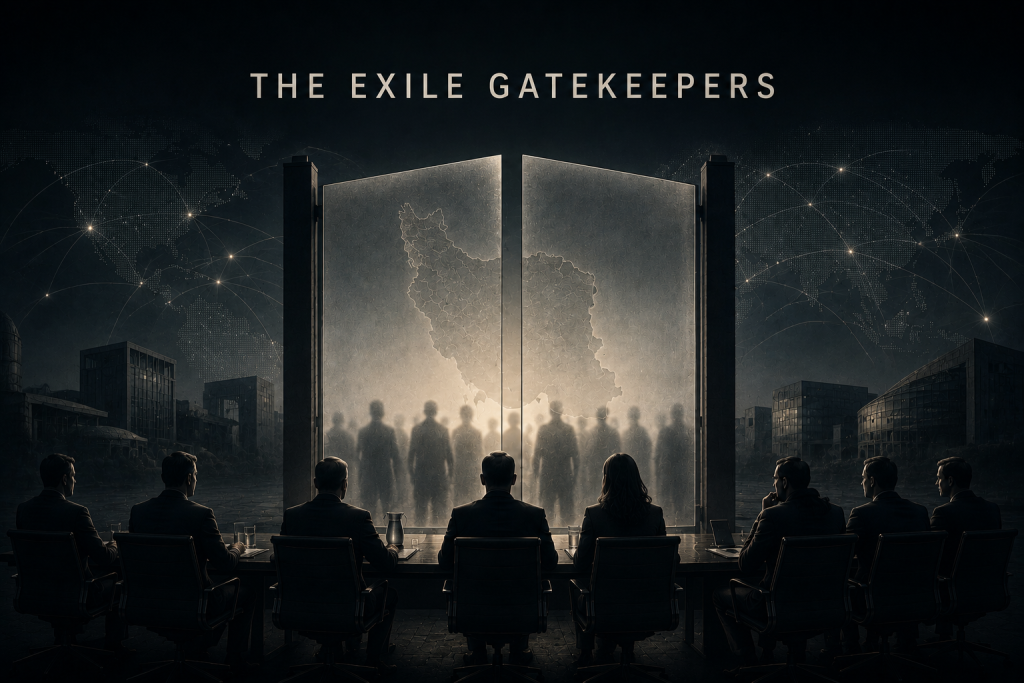
Dark institutional boardroom facing a frosted glass gate with a map of Iran and blurred Iranian silhouettes behind it. Iranian diaspora gatekeepers

The Exile Gatekeepers: Who Decides Which Iranian Voices Reach the World?

The Exile Gatekeepers Who Decides Which Iranian Voices Reach the World? Iranian diaspora gatekeepers do not usually describe themselves as political gatekeepers. When Western governments, universities, think tanks, media organisations and advocacy institutions seek an Iranian voice, the choice is usually presented as a professional decision: an editor needs an analyst, a parliamentary office needs

The Exile Gatekeepers: Who Decides Which Iranian Voices Reach the World? Read More »
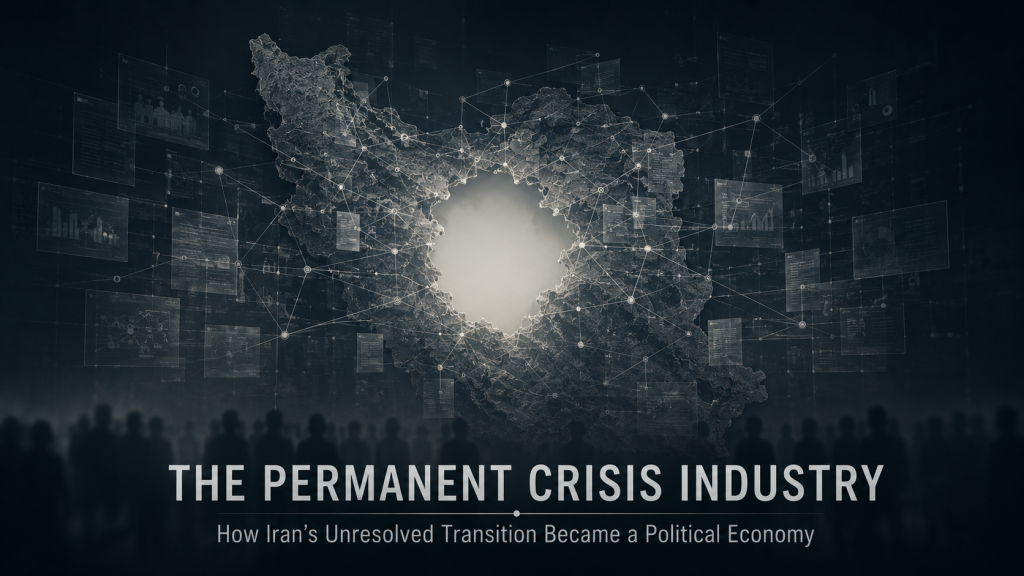
Abstract map of Iran surrounded by a network of policy, media and donor connections, illustrating the permanent crisis industry around Iran’s unresolved transition

The Permanent Crisis Industry

How Iran’s Unresolved Transition Became a Political Economy   Introduction The Transition That Never Arrives Iran’s unresolved transition has become one of the defining political conditions in the debate over the country’s future. For years, Iran has been described as standing on the edge of decisive change. Every major protest movement, mass killing, economic collapse,

The Permanent Crisis Industry Read More »

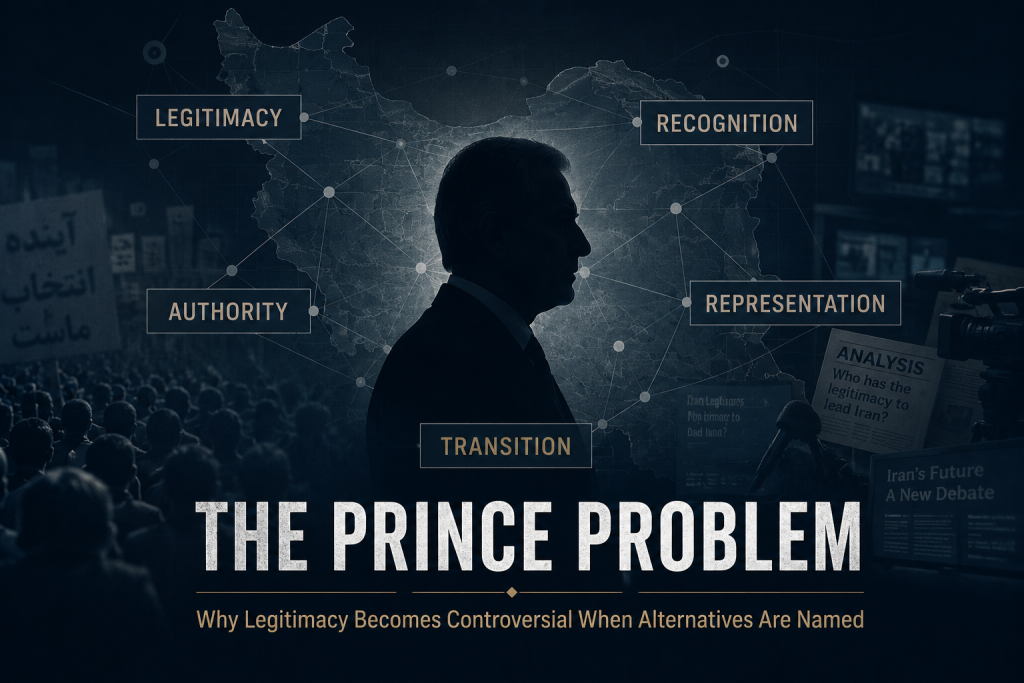
Conceptual illustration of Reza Pahlavi in silhouette against a faded map of Iran, surrounded by a network labelled legitimacy, authority, recognition, representation and transition.

The Prince Problem

Why Legitimacy Becomes Controversial When Alternatives Are Named   Introduction The Moment Transition Becomes Personal Reza Pahlavi legitimacy has become one of the most disputed subjects in discussions about Iran’s future. This is not because Iranians agree on him. It is because they do not. Few political figures generate comparable levels of support, opposition, scrutiny

The Prince Problem Read More »

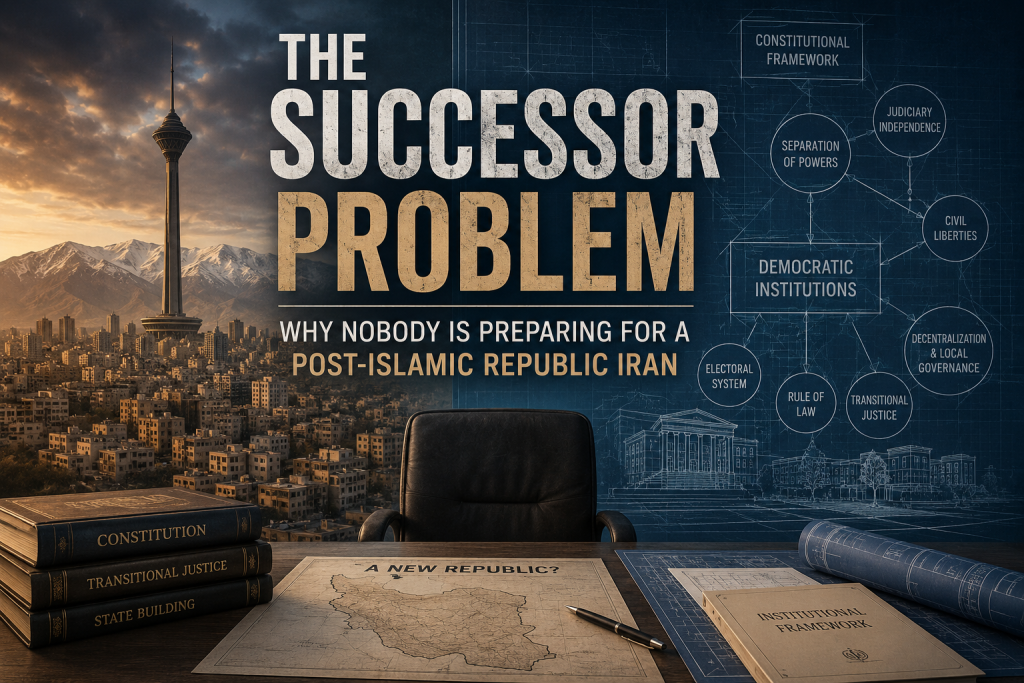
Conceptual illustration of a post-Islamic Republic Iran, showing Tehran alongside institutional blueprints, constitutional frameworks and transition planning concepts featured in The Successor Problem investigation by IranSTO.

The Successor Problem: Why Nobody Is Preparing for a Post-Islamic Republic Iran

Introduction: For more than four decades, the Islamic Republic has occupied a central position in international policy discussions. Governments negotiate with it. Intelligence agencies monitor it. Sanctions target it. Human rights organisations document its abuses. Think tanks analyse its behaviour. Universities study its political structure. Journalists report on its crises. Entire professional ecosystems have emerged

The Successor Problem: Why Nobody Is Preparing for a Post-Islamic Republic Iran Read More »

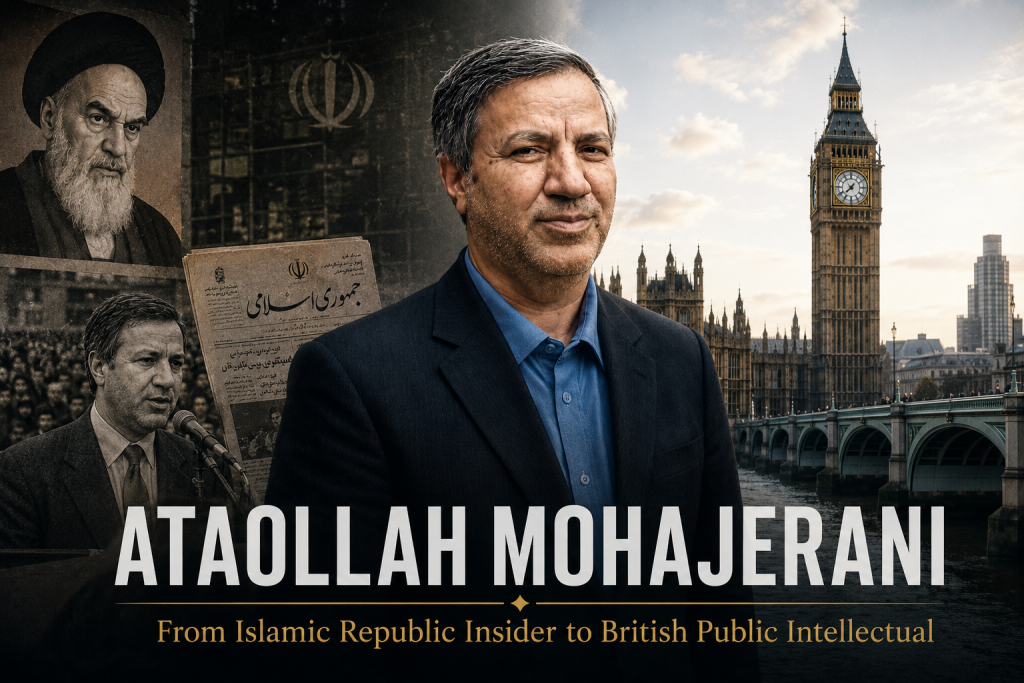
Ataollah Mohajerani featured in an IranSTO investigation examining his transition from Islamic Republic insider to British public intellectual and his role in legitimacy networks surrounding Iran.

Ataollah Mohajerani: From Islamic Republic Insider to British Public Intellectual

How Political Authority Built Inside the Islamic Republic Acquired a Second Life in Britain   Introduction: The Narrative Problem The survival of authoritarian systems is often explained through the language of force. Observers point to security services, prisons, intelligence agencies, censorship mechanisms and political repression. These instruments matter. The Islamic Republic has relied upon all

Ataollah Mohajerani: From Islamic Republic Insider to British Public Intellectual Read More »

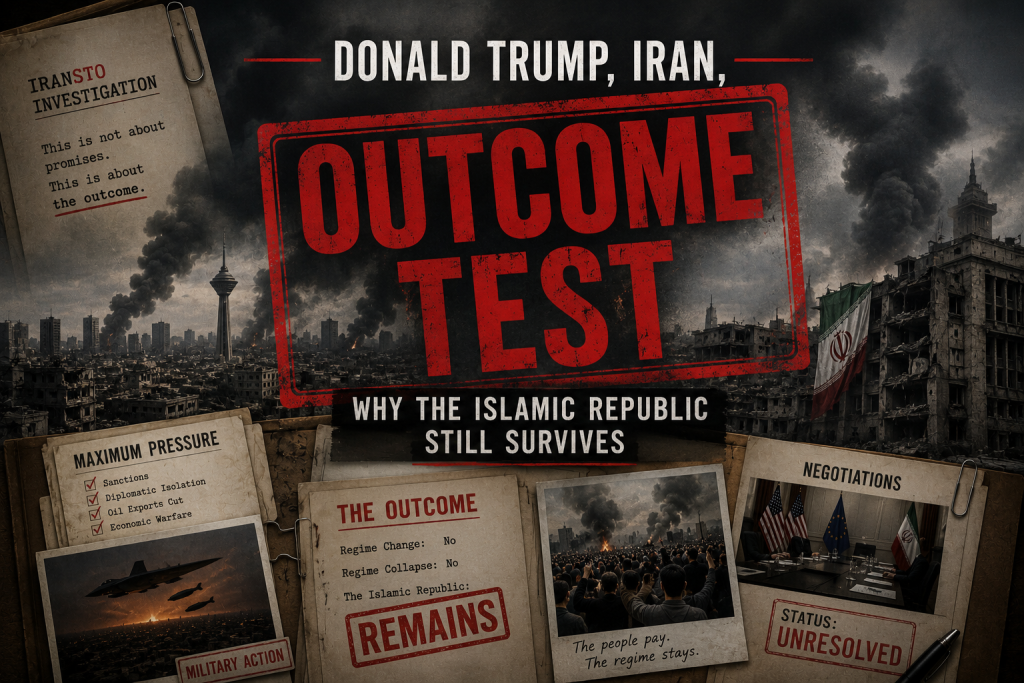
Donald Trump, Iran and the outcome test after Maximum Pressure, war, ceasefires and negotiations in 2026

Donald Trump, Iran, and the Outcome Test Why the Islamic Republic Still Survives

Introduction Trump’s Iran Policy. Donald Trump built his political case on a simple accusation: America’s Iran policy had failed. Barack Obama had failed. Joe Biden had failed. Diplomacy had failed. Negotiations had failed. Accommodation had failed. Again and again, Trump presented himself as the alternative. He promised strength where others had shown weakness. Pressure where

Donald Trump, Iran, and the Outcome Test Why the Islamic Republic Still Survives Read More »

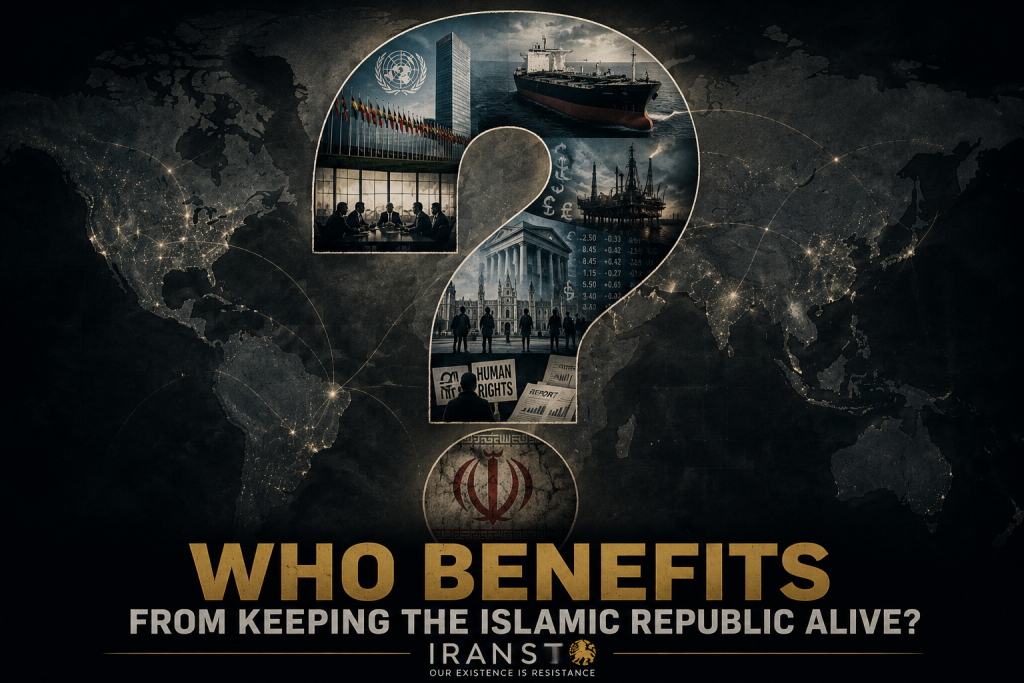
Who Benefits From Keeping the Islamic Republic Alive? Global question mark showing diplomacy, sanctions, security and human rights institutions linked to regime survival

Who Benefits From Keeping the Islamic Republic Alive? The International Incentive Structure Behind Regime Survival

Introduction   Who benefits from keeping the Islamic Republic alive? For decades, discussions about the Islamic Republic have revolved around a familiar question: Why does the regime survive? The answers usually focus on internal factors. Repression. Ideology. Security institutions. Patronage networks. Control of information. Economic coercion. Political fragmentation among opponents. Each explanation contains an element

Who Benefits From Keeping the Islamic Republic Alive? The International Incentive Structure Behind Regime Survival Read More »

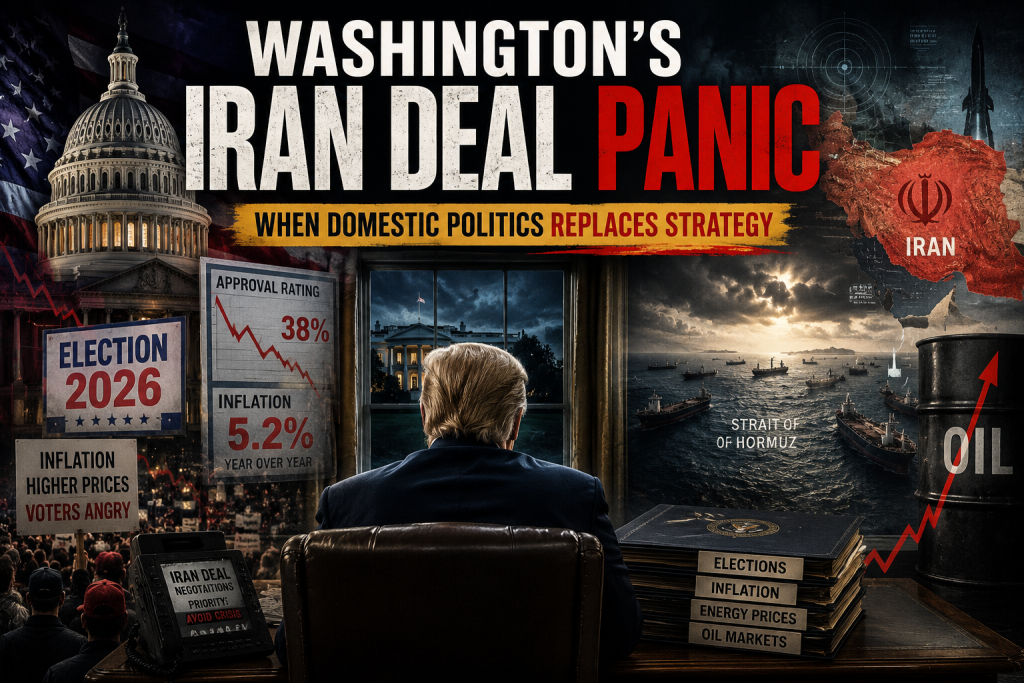
Political editorial graphic showing Washington, Iran, oil markets, the Strait of Hormuz, election pressure, inflation, and a leader facing strategic crisis.

Washington’s Iran Deal Panic: When Domestic Politics Replaces Strategy

Introduction Diplomacy or Damage Control?   Washington’s Iran Deal strategy is increasingly being presented as diplomacy. Yet behind the language of negotiation lies a growing effort to manage political risk rather than achieve strategic transformation. For months, political leaders, commentators and policy institutions across the West have framed negotiations with Tehran as a necessary mechanism

Washington’s Iran Deal Panic: When Domestic Politics Replaces Strategy Read More »

Architecture of impunity in Iran showing Evin Prison, UN headquarters and repression scene

The Architecture of Impunity: How UN Human Rights Procedure and Criminal Inaction Shield Atrocity in Iran

Executive Summary   The Architecture of Impunity: How UN Human Rights Procedure and Criminal Inaction Shield Atrocity in Iran   This paper examines a structural accountability failure: the conversion of documented atrocity into an administratively manageable diplomatic process. Over the past two decades, United Nations human rights mechanisms have built a dense record on Iran—resolutions,

The Architecture of Impunity: How UN Human Rights Procedure and Criminal Inaction Shield Atrocity in Iran Read More »

Illustration representing the transnational legitimacy of the Islamic Republic, showing diaspora mediation, Western institutional engagement, media amplification, and transnational repression dynamics.

Transnational Legitimacy: Diaspora Mediation and Western Institutional Enablement of the Islamic Republic

Introduction Diaspora as Political Arena, Not Moral Category   The transnational legitimacy of the Islamic Republic is not produced solely within Iran’s borders. It is mediated, amplified, and circulated through external institutional ecosystems that shape perception and dilute accountability. The term “diaspora” is often treated as a cultural or demographic descriptor. It implies displacement, memory,

Transnational Legitimacy: Diaspora Mediation and Western Institutional Enablement of the Islamic Republic Read More »